Assassin's Creed: The Ezio Collection review — The franchise at its best
Our review of the Ezio Collection — AC II, Brotherhood, and Revelations. The golden era of Assassin's Creed, before it ballooned into a giant RPG.
This post contains affiliate links. We may earn a commission if you make a purchase, at no extra cost to you. As an Amazon Associate, Dadnology earns from qualifying purchases.
The game that defined a franchise
There is a specific feeling that the original Assassin’s Creed promised but never quite delivered: standing on a cathedral spire, the whole of a real historical city sprawling beneath you, knowing you could climb down any wall, vanish into any crowd, and end a target’s life with a single hidden blade. The 2007 game had the idea. Assassin’s Creed II delivered it — and then Brotherhood and Revelations refined it into the most confident, focused trilogy the series has ever produced.
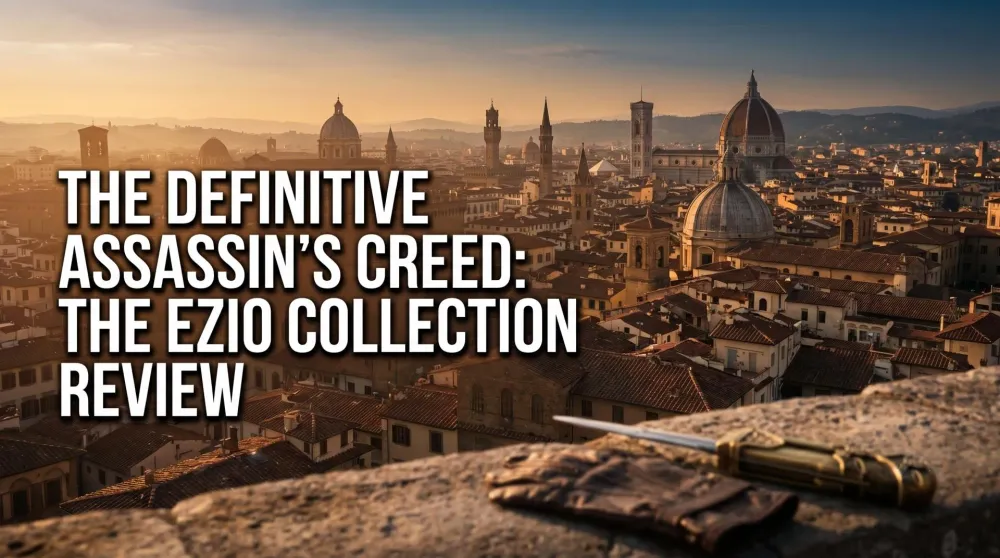
At Dadnology, we have a soft spot for this era that borders on the unreasonable. This is Assassin’s Creed at its best — this is how we love it. Before the series ballooned into 80-hour RPGs stuffed with loot tiers, skill trees, and map markers as far as the eye can see, there was the Ezio trilogy: lean, atmospheric, and built around one of the great character arcs in gaming. The Ezio Collection bundles all three games, and it remains the single best way to understand why this franchise mattered in the first place.
Our verdict is an honest 4/5. Not a perfect 5, and we’ll be upfront about why: these games are older now, and they show it. But the heart of them — the cities, the story, the man at the center — has aged beautifully. Let’s get into it.
Meet Ezio Auditore — The man who carries three games
The genius of this collection is that it isn’t three separate stories bolted together. It is one life, told across three games, and that life belongs to Ezio Auditore da Firenze.
When you first meet him in Assassin’s Creed II, Ezio is a cocky, privileged young nobleman in late-15th-century Florence. He brawls with rivals, chases women, and has no idea that his family carries a secret legacy. Then his world collapses — his father and brothers are executed in a political conspiracy — and the impulsive young noble is forced to grow up fast, learning the ways of the Assassins as he hunts the men responsible.
By the time you reach Revelations, Ezio is an old man traveling to Constantinople, weary, reflective, and searching for meaning at the end of a long campaign. Watching a character age across three games — from reckless youth to vengeful warrior to wise Master Assassin — is something almost no other franchise attempts, let alone pulls off. It is the closest gaming has come to a proper coming-of-age-to-old-age saga, and it is the single biggest reason the Ezio trilogy endures.
Assassin’s Creed II — Renaissance Italy and the revenge story
Assassin’s Creed II is the game that fixed everything wrong with the original and built the template the entire series would follow for a decade.
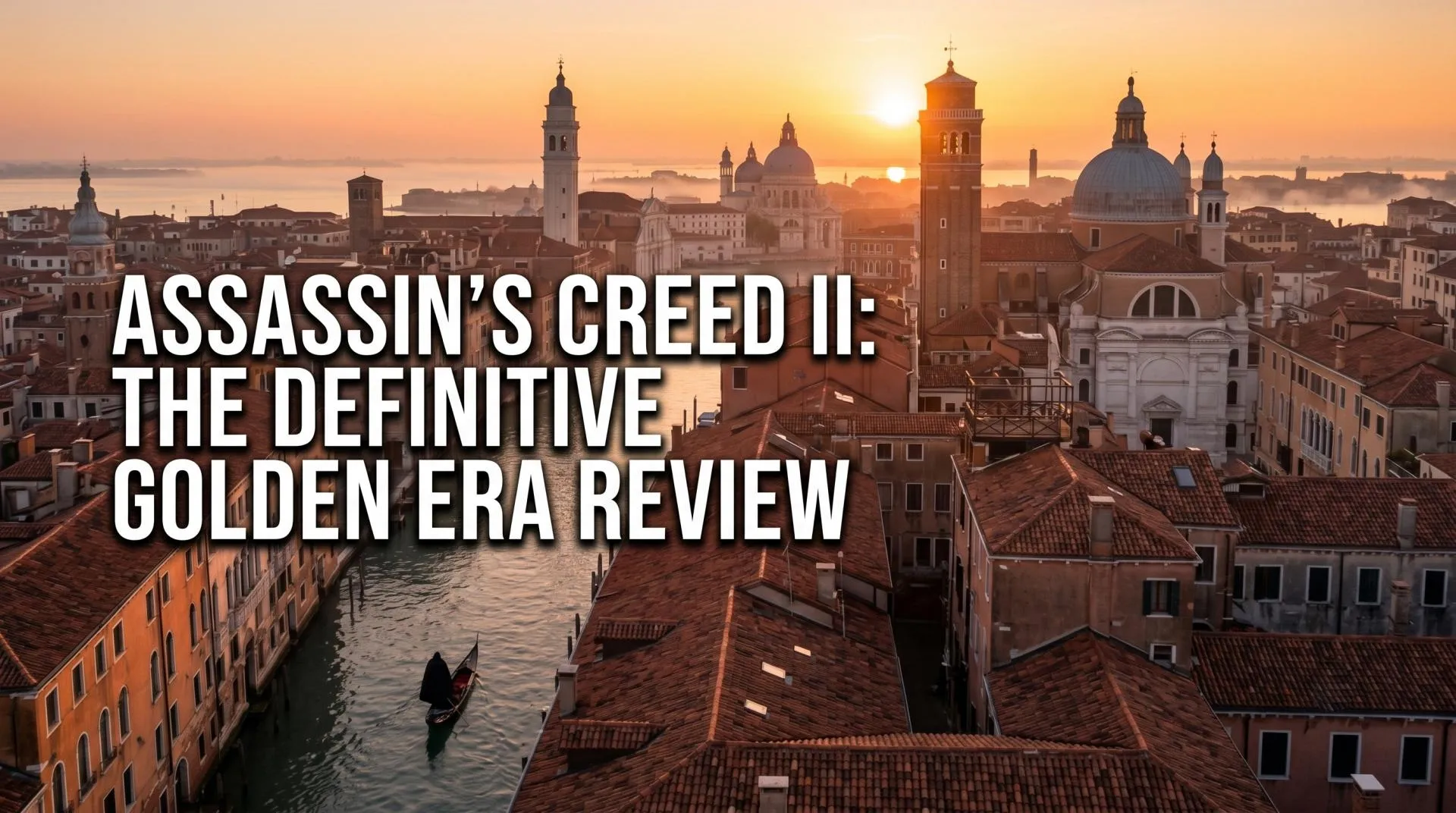
The setting alone is intoxicating. You move through a meticulously recreated Florence, Venice, and the Tuscan countryside, scaling the Duomo, sprinting across terracotta rooftops, and gliding into haystacks below. The architecture isn’t just a backdrop — it is the gameplay. Every building is a climbable puzzle, every plaza a chance to lose pursuers in the crowd.
The story is pure revenge, and it works because the game takes its time establishing what Ezio loses. You spend real hours in his pre-tragedy life — running errands for his father, flirting, picking fights with the neighbor’s son — before it all gets taken away. By the time you’re hunting down the conspirators one by one, the vendetta feels earned.
It is also where the series found its voice: the cheeky humor, the historical guest stars (Leonardo da Vinci builds your gadgets and is an absolute delight), and the conspiracy-thriller plotting that ties real history to the Assassin-Templar war. AC II is the most important game in the collection, full stop.
Brotherhood — The most polished of the three
If AC II built the template, Brotherhood perfected it. This is, mechanically, the best-playing game in the collection.
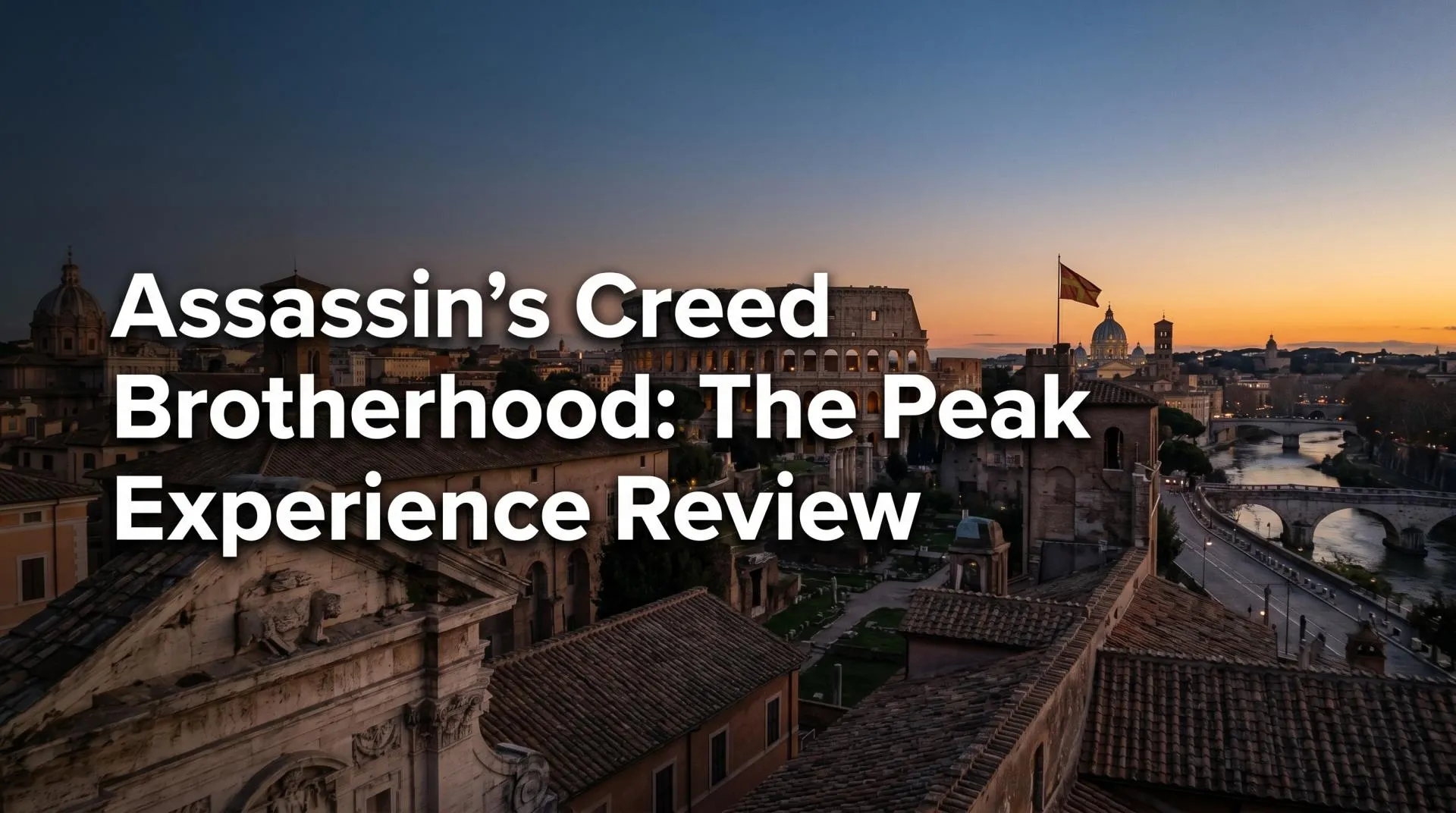
The action moves to Rome — a single enormous city rather than several smaller ones — and Ubisoft used the bigger canvas brilliantly. You don’t just liberate the city from Borgia control; you rebuild it, restoring shops and landmarks and watching the world come back to life around you. It is one of the most satisfying progression loops the series ever had.
Brotherhood also introduced the Assassin recruits — a system where you rescue civilians, train them into Assassins, and call them in to rain death on your enemies. It made you feel like the head of an order rather than a lone killer, and it added a layer of strategy the trilogy hadn’t had before.
Tighter combat, refined parkour, the best-realized single city in the set, and a story that escalates the personal stakes of AC II into something larger — Brotherhood is the connoisseur’s pick. When people say the Ezio games peaked, this is usually the one they mean.
Revelations — The send-off
Revelations is the most reflective and, honestly, the weakest of the three — but it earns its place because of what it does for Ezio.
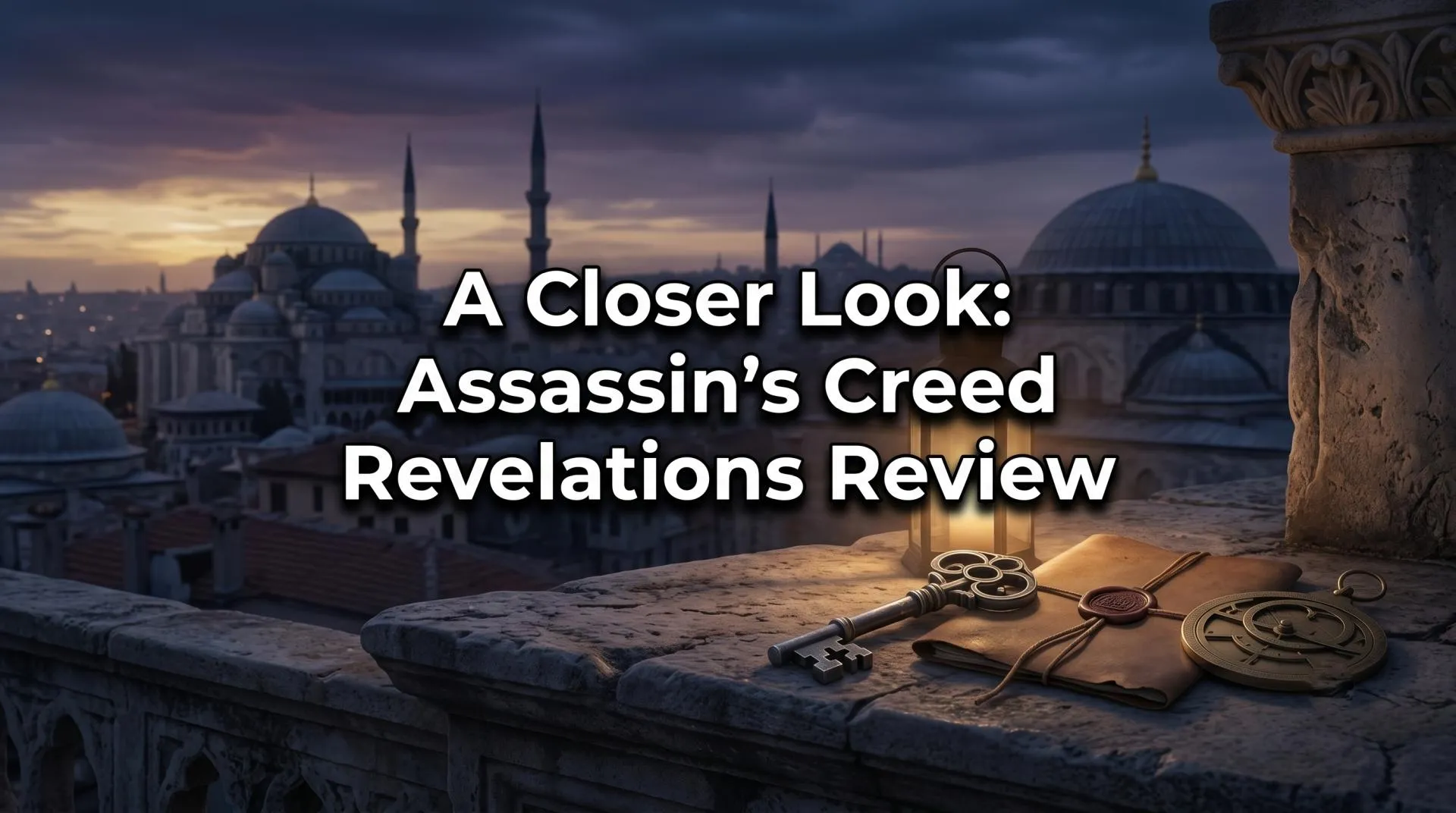
The setting is Constantinople, a gorgeous, layered city straddling Europe and Asia, and a refreshing change from the Italian backdrop of the first two games. Mechanically, it adds the hookblade for faster traversal and bomb-crafting for more varied stealth, both welcome.
Where it stumbles is the bloat. There’s a tower-defense minigame that nobody asked for, and the pacing sags in the middle. But the framing is the point: an aging Ezio retraces the footsteps of Altair, the original game’s hero, and the two stories quietly converge. It is a love letter to long-time fans, and Ezio’s final moments give the trilogy a genuinely moving conclusion. As a game, it’s the runt of the litter. As an ending, it’s perfect.
How the three games compare
| Feature | Assassin's Creed II | Brotherhood | Revelations |
|---|---|---|---|
| Setting | Florence, Venice, Tuscany | Rome | Constantinople |
| Ezio's Stage | Impulsive young noble | Established Assassin | Wise old Master |
| Best At | Story & revenge arc | Polish & city design | Emotional send-off |
| New Systems | The full AC template | Assassin recruits, city rebuild | Hookblade, bombs |
| Length | ~20 hours | ~15-18 hours | ~15 hours |
| Our Pick | Best story | Best to play | Best ending |
The pure, focused formula — Before the series ballooned
Here’s the thing modern Assassin’s Creed forgot, and why the Ezio trilogy hits so hard for those of us who grew up with it.
These games respect your time in a way the later entries don’t. There are no enemy levels gating you out of regions. No 100-hour grind to outscale a boss. No three competing currencies and a battle pass. You climb, you sneak, you stab, you escape — and the loop is clean. A mission is a self-contained set piece, not a checklist item on a map drowning in icons.
For a dad with ninety minutes after bedtime, this matters enormously. You can sit down, complete a meaningful chunk of story, and feel like you accomplished something — without committing to a second job. The later AC games (Origins, Odyssey, Valhalla) are bigger and in some ways more beautiful, but they ask for a level of investment that simply doesn’t fit a parent’s life. The Ezio games give you the entire fantasy — historical assassin, gorgeous cities, satisfying parkour — in tidy, digestible portions.
This is the formula a lot of us still mean when we say “Assassin’s Creed.” Not the RPG sprawl. This.
An honest look — What has and hasn’t aged
We rated this a 4, not a 5, and integrity demands we explain the gap clearly. These games are old, and the remaster polishes the visuals without touching the design underneath.
The mission design is dated. This was the era of the dreaded tailing mission — follow a target at walking pace, stay inside an invisible bubble, and restart the whole sequence if you bump a crowd or get spotted. There are too many of these, and they were tedious in 2010. They have not improved with age. Some story missions are also rigidly scripted, failing you the instant you deviate from the intended path, which clashes with the freedom the parkour otherwise promises.
The controls feel aged. Climbing is contextual and occasionally reads your inputs wrong — Ezio will leap off a building when you wanted him to shimmy sideways, or grab a ledge you were trying to ignore. Combat is a slow, counter-heavy rhythm that’s effective but never elegant; you’ll spend a lot of fights waiting to parry. Next to the responsive movement of modern action games, there’s friction here you have to make peace with.
But the atmosphere is untouchable. Jesper Kyd’s score, the Renaissance crowds, the sun on Florentine rooftops, the sheer place-ness of these cities — none of that has dated a day. And Ezio remains one of gaming’s most charismatic protagonists across all three games. The bones of these games are old; their soul is timeless. That tension is exactly what an 8 means: brilliant, essential, and honestly imperfect.
The dad angle — How and when to play it
This is an M-rated game, so the usual caveats apply: stabbing-based combat, blood, and some sexual themes mean it’s not a co-op-with-the-toddler situation. It’s an after-bedtime game. That said, the violence is far tamer than a modern open-world title, and the historical setting is genuinely educational — an older teen with an interest in the Renaissance can get real value from it.
For us specifically, the appeal is the bite-sized structure. You don’t need to remember a sprawling questline from three weeks ago. You boot it up, climb a tower, do a mission or two, and stop clean. Across the three games you’re looking at 45 to 60 hours of main story, but it never feels like an obligation because each session stands on its own.
If you have a PlayStation 5, the collection runs flawlessly via backward compatibility, with load times short enough that hopping between the three games is painless. Throw on a decent headset for Jesper Kyd’s score and the ambient bustle of Renaissance Italy, and you’ve got the ideal wind-down game for a tired Tuesday night.
Pros
- Three full games and one of gaming's great character arcs in a single package — exceptional value
- Florence, Venice, Rome, and Constantinople are gorgeous, atmospheric, climbable historical cities
- The pure, focused pre-RPG formula respects your time — clean missions, no grind, no bloat
- Ezio Auditore is one of the most charismatic protagonists in gaming, aging believably across the trilogy
- Jesper Kyd's score and the Renaissance atmosphere remain completely timeless
Cons
- Dated mission design — too many tedious tailing missions and rigidly scripted, insta-fail sequences
- Aged controls: contextual climbing misreads inputs and the slow counter-based combat shows its age
- Revelations sags in the middle and pads the runtime with an unwanted tower-defense minigame
The final verdict — Assassin’s Creed the way we love it
Assassin’s Creed: The Ezio Collection is the franchise at its absolute best. Before the series chased the open-world RPG trend into hundred-hour sprawl, these three games told one focused, beautifully realized story across the most atmospheric historical cities gaming has ever built — and at the center of it stood Ezio Auditore, one of the medium’s truly great characters.
It isn’t flawless. The mission design is dated, the tailing missions are tedious, and the controls show their years. But the atmosphere, the story, and Ezio himself are timeless, and the value of getting all three games in one package is hard to beat. For anyone who wants to understand why Assassin’s Creed mattered — or any dad chasing a clean, bite-sized historical adventure after bedtime — this is the one.
Final Rating: 4/5 — The Golden Era of Assassin’s Creed
Continuing the Living Novel
We’ve climbed Renaissance rooftops and traced one assassin’s life across three games. From here, the Living Novel Hall of Fame keeps growing — focused, story-driven action that respects both your time and your intelligence.
Ready for more? Explore the rest of our Living Novel Hall of Fame to find your next great adventure. Curious how the series evolved after Ezio? Read our Black Flag Resynced vs. the Original comparison.
FAQ — The Ezio questions
Which Ezio game is the best?
Is the Ezio Collection still worth playing today?
Do I need to play the first Assassin's Creed before the Ezio Collection?
How long does the whole Ezio Collection take to beat?
Is the Ezio Collection appropriate for kids?
Keep this in your inbox
One email a week: what we actually watched, built and reviewed — the stuff worth a dad's time. No hype, no daily spam.
Dadnology Weekly
One email a week: the LEGO, gaming and movie news worth a dad's time — plus what we actually reviewed. No hype, no daily spam.
Disclaimer: This review and its visuals were created with the help of AI. Some links may be affiliate links – we may earn a commission if you make a purchase, at no extra cost to you.
Current deals in Gaming
Verified live discounts tracked on Amazon

Gaming · Tested by Dadnology
Marvel’s Spider-Man 2 (PS5)
5/5“Bigger, bolder, near-perfect superhero storytelling”Read our review
Gaming · Tested by Dadnology
God of War Ragnarök (PS5)
4.5/5“The bold reinvention that rocked the PlayStation”Read our reviewPrice as of Oct 21, 09:11 PM UTC

Gaming · Tested by Dadnology