
Nikon Z birding guide: Z8, Z50II and the 180-600mm – The dream setup
The complete guide to birding with the Nikon Z 180-600mm on a Z8 or Z50II — the sweet spot between prime quality and real-world budget for serious bird photographers.
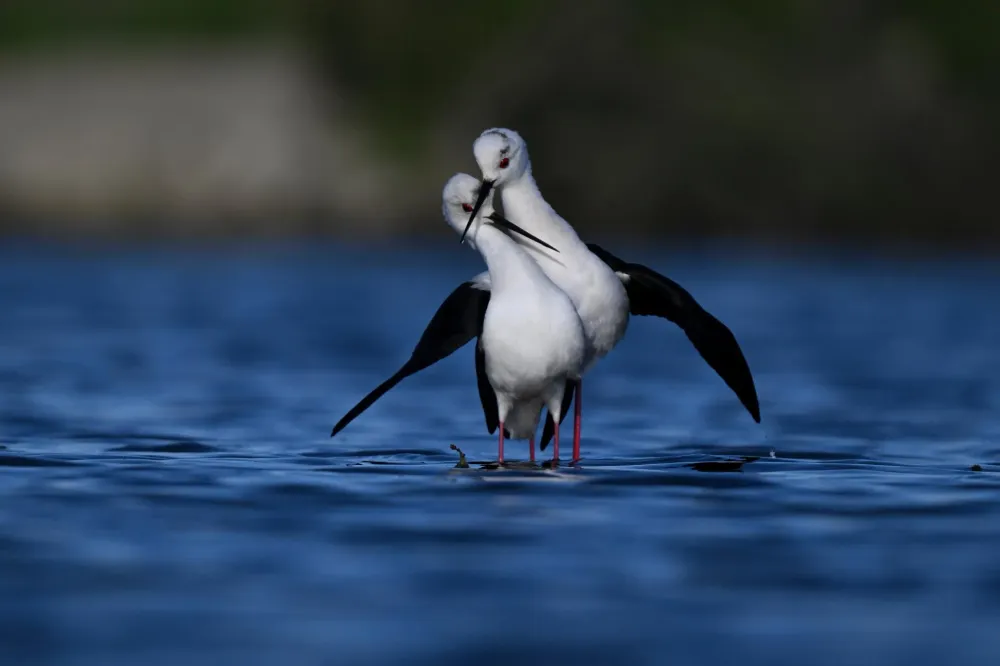
This post contains affiliate links. We may earn a commission if you make a purchase, at no extra cost to you. As an Amazon Associate, Dadnology earns from qualifying purchases.
📷 This guide is part of our Nikon Brand Hub — every Nikon Z body and lens we’ve tested, from wildlife glass to landscape and family photography kits.
There’s a version of this conversation that ends with you buying a 600mm prime. And if you have the budget and the obsession to match, more power to you. But most of us who are serious about bird photography are working inside a real-world constraint: the Nikon Z 400mm f/2.8 TC VR S costs more than many people’s entire camera system. The question isn’t whether primes are better — they are, at their focal length — it’s whether a zoom can get close enough that it stops mattering in practice.
The answer, with the Nikon NIKKOR Z 180-600mm f/5.6-6.3 VR on either a Z8 or a Z50II, is yes. We’ve reviewed the 180-600mm in depth after a season of wildlife work — this is the guide I wish I’d had when I was still shooting F-mount and wondering whether the jump to native Z was worth making.
This guide is for photographers who are serious about birds — who know what a common sandpiper looks like and why you need 600mm of reach to photograph one comfortably. It’s for Nikon Z shooters, or people considering the move from F-mount. And it’s for anyone who wants an honest comparison of the two Z body options alongside this lens, rather than a spec dump from someone who’s never actually stood in a reedbed at dawn.
Setup 1: The Z8 + 180-600mm — Resolution and versatility
The Nikon Z8 is not the obvious birding body at first glance. It’s a 45.7MP full-frame camera — more associated with landscape photography, architecture, or studio work where resolution is the headline. But that resolution is exactly what makes it a brilliant birding pairing with the 180-600mm.
The principle is simple: at 45.7MP on full-frame, you have enormous cropping latitude. When a kingfisher lands 150 metres away and 600mm still doesn’t fill the frame usefully, you crop hard in post — and at 45.7MP, a 50% crop still delivers a 22MP file, more than enough for large prints and most editorial use. You’re effectively creating reach in post that you couldn’t create optically. No other Z body in the current lineup gives you this cushion.
What makes the Z8 the birding resolution rig
The Z8’s stacked sensor also means the read speed is fast enough for the electronic shutter to work without the rolling shutter distortion that plagued earlier mirrorless cameras. Twenty frames per second of RAW with a blackout-free viewfinder means you can track a bird in flight and build a proper sequence, not guess at a frame rate and hope. The buffer is the deepest of any current Z body — deep enough that I’ve rarely hit the limit on a real shoot, even during a sustained burst on a displaying marsh harrier.
The EXPEED 7 subject-detection autofocus is native and direct — the 180-600mm communicates with the Z8’s AF system without any adaptation layer. This matters more than it sounds. The subject-detection tracking on the Z8 finds a bird’s eye, holds it through partial obstruction by vegetation, and recovers when it loses it faster than any system I used in the D500 era. It genuinely changes the experience of photographing birds in complex environments.
The trade-off
You pay for all of this in size and weight. The Z8 at ~910g with battery plus the 180-600mm at ~1,955g (without the tripod collar) is a 2.9kg combination before you’ve added a strap and an extra battery. For a full birding morning at a nature reserve, this is manageable. For a long hike to a remote location, you think about it harder. The 45.7MP files also demand more from your storage and post-processing workflow — if you’re shooting thousands of frames per session, expect a more serious editing task at the end of the day.
Who this setup is for
The Z8 + 180-600mm is the right combination for birders who also shoot landscape, portraits, or anything else where the camera needs to do more than one job. It’s the no-compromise do-everything setup that rewards the extra weight and cost with results that compete with anything in the zoom category.
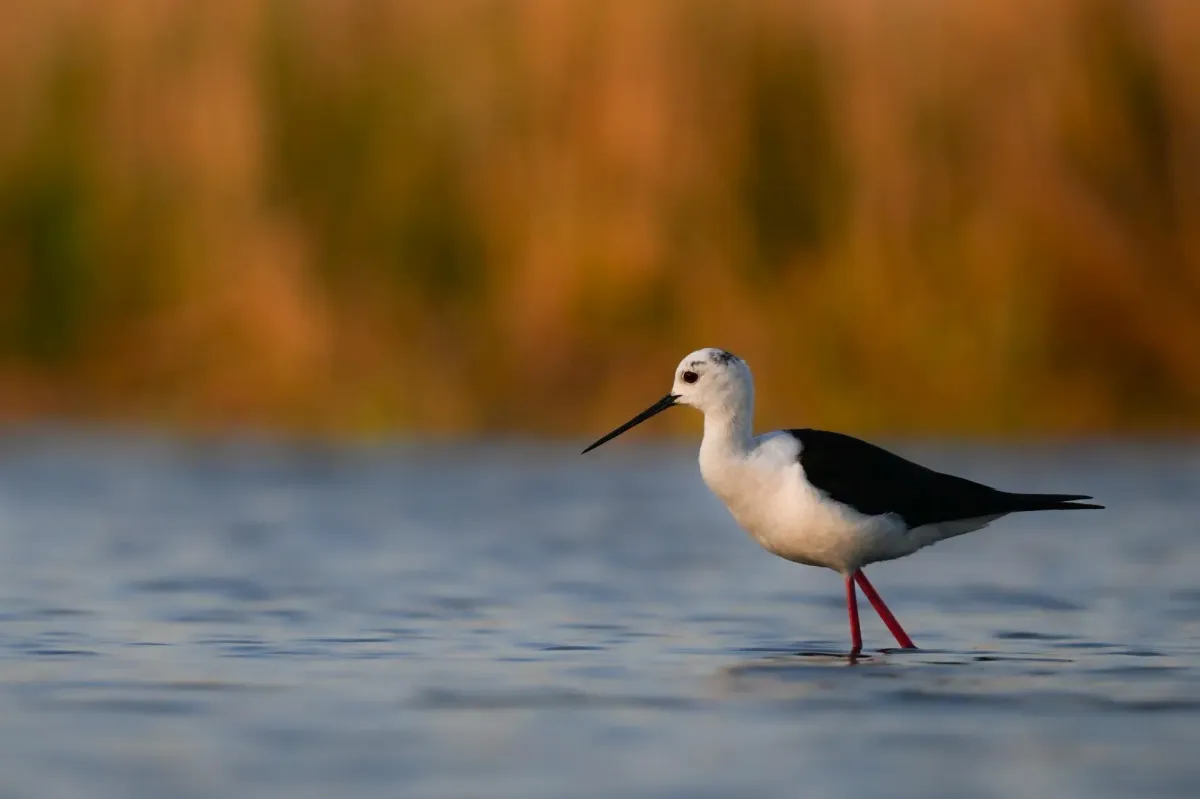
Setup 2: The Z50II + 180-600mm — The reach machine
If the Z8 setup is about resolution, the Z50II + 180-600mm is about reach. And it’s one of the most compelling value propositions in bird photography.
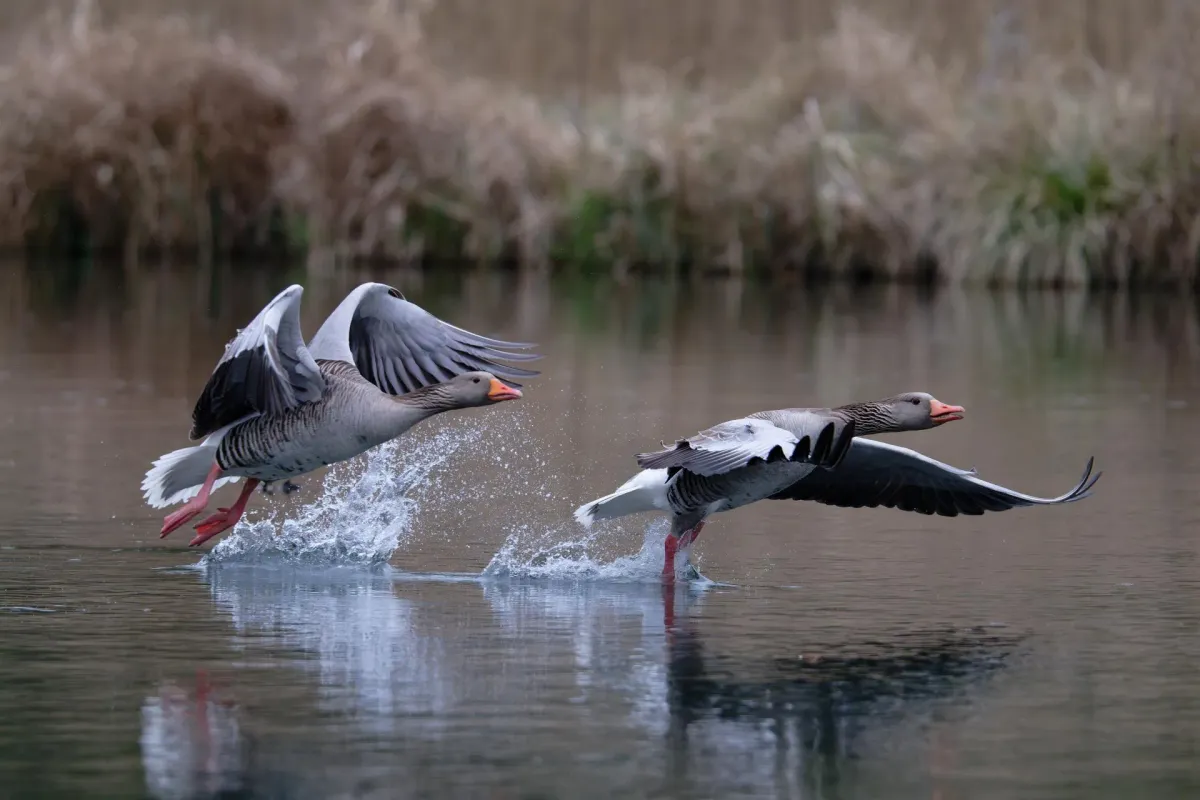
The Z50II is an APS-C (DX) camera with a 1.5× crop factor. Put a full-frame 600mm lens on it and you get 900mm of effective reach — the same as pointing a 900mm prime at a full-frame sensor, with identical autofocus and image quality (within the DX field of view). You don’t need a converter, you don’t lose autofocus speed, and you don’t compromise the 180-600mm’s image quality. You just point the same lens at a smaller section of the circle.
For bird photographers, 900mm effective reach is transformative. It means waders at a reserve lake, shore birds at distance, raptors in a thermal far above the hide — all become realistic targets. With the Z50II’s 20.9MP sensor, a 900mm effective frame is still delivering a meaningful file, not a heavily cropped mess.
What makes the Z50II the birding reach rig
The Z50II runs the same EXPEED 7 processor as the Z8 — the same subject-detection AF, the same bird-eye tracking, the same tracking algorithms. This is not a case of a budget body getting a cut-down version of the flagship experience. The AF is genuinely equivalent, which is remarkable at the Z50II’s price point.
The Z50II is also significantly lighter than the Z8. At around 550g with battery and card, combined with the 180-600mm, you’re carrying something you’ll still want to raise to your eye after four hours in a hide. The combination is physically more comfortable for sustained birding sessions than the Z8 version — and that comfort matters when the harrier finally shows up at hour three.
The DX crop also means you’re using the centre of the 180-600mm’s image circle — where a lens is almost always sharpest. You’re throwing away the edges of a lens that was designed for full-frame, and what remains is the best of what it can do.
The trade-off
The Z50II’s 20.9MP means you have less latitude for post-processing crops than the Z8. When a bird is already filling the frame at 900mm effective, that’s fine. When it’s small in the frame and you need to crop further, you’ll hit the resolution limit faster. The buffer is also shallower than the Z8 — adequate for most birding situations, but worth knowing before a sustained 20fps burst on an extended flight sequence.
Who this setup is for
The Z50II + 180-600mm is the right combination for dedicated bird and wildlife photographers who want maximum reach at minimum cost and weight. It’s also the ideal second body for a Z8 owner — the two combinations complement each other perfectly, with the Z50II as the reach specialist and the Z8 as the resolution rig.
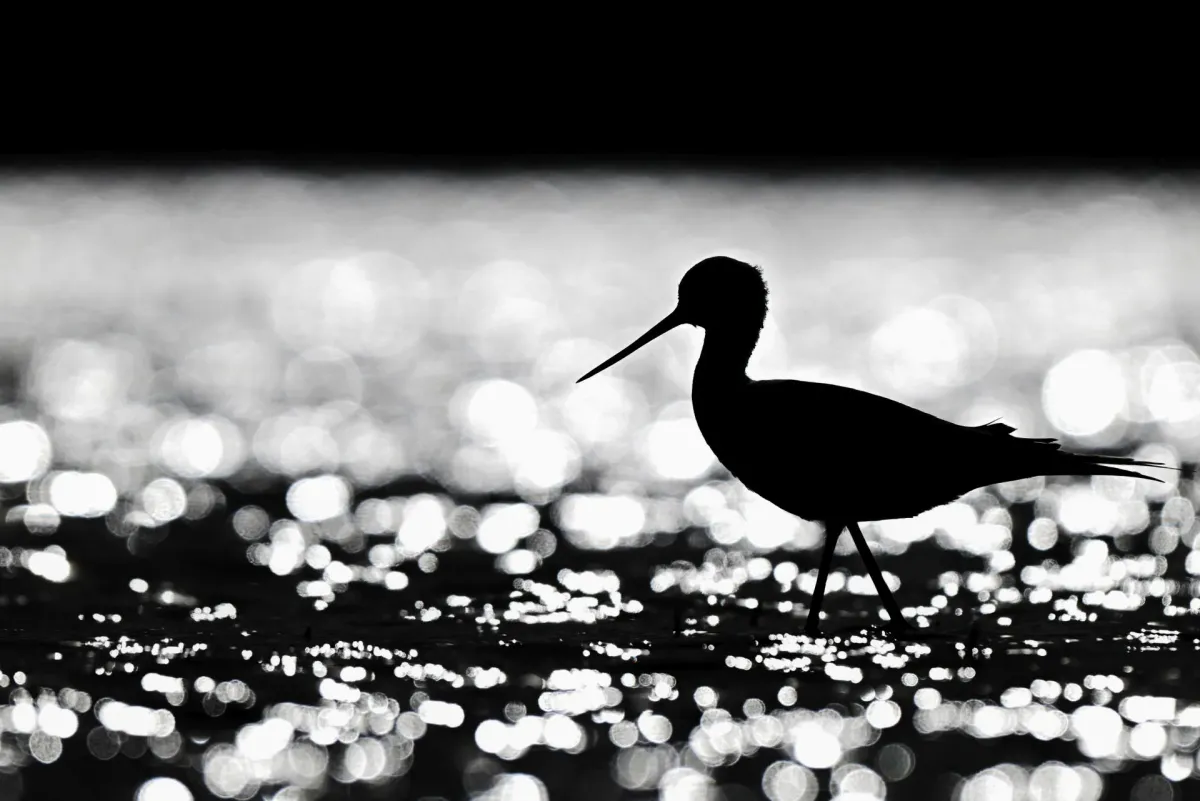
Setup 3: Adding the TC-1.4x — When 900mm isn’t enough
The Nikon Z TC-1.4x teleconverter is the logical next step when the base combination doesn’t quite reach far enough. Fitted to the 180-600mm, it gives you 252–840mm on the Z8 (or 378–1,260mm equivalent on the Z50II). Those numbers are significant: 1,260mm equivalent on a Z50II is genuinely rare territory for a zoom system.
The autofocus continues to work with the TC fitted, which is not guaranteed with all converter and lens combinations. It’s slower than without the converter — I would not rely on it for fast, erratic flight shots like swifts or swallows — but for perched birds, distant raptors soaring on a thermal, or any situation where the subject gives you a second, it performs well. The keeper rate drops compared to the base combination, but the frames you do get are sharp in good light.
The light loss is approximately one stop — so f/5.6–6.3 becomes f/8–9 maximum. On a bright morning, this is manageable. At dusk or under heavy cloud, you’ll hit the ISO ceiling faster and need to make trade-offs between shutter speed, ISO, and motion blur. The TC is a good-light specialist. Don’t reach for it in the dark.
As an add-on purchase, it’s exceptional value: the cost of unlocking 840mm or 1,260mm equivalent from hardware you already own.
The upgrade: D500 + 200-500mm vs the Z system
This section is for anyone still shooting F-mount who is wondering whether the jump to Z is genuinely worthwhile, or just marketing. I spent time with the Nikon AF-S 200-500mm f/5.6E ED VR on a D500, and I can give you an honest comparison.
| D500 + 200-500mm f/5.6E | Z50II + 180-600mm | Z8 + 180-600mm | |
|---|---|---|---|
| Effective reach | 750mm (DX) | 900mm (DX) | 600mm (FF) + crop |
| AF system | Phase-detect, good | EXPEED 7, subject detection | EXPEED 7, subject detection |
| Bird-eye tracking | None | Yes — class-leading | Yes — class-leading |
| Lens mount | F-mount (native) | Z-mount (native) | Z-mount (native) |
| Sharpness at 500/600mm | Very good | Excellent | Excellent + crop latitude |
| Buffer (RAW burst) | Decent, fills quickly | Adequate for birding | Deep — rarely a limit |
| Body weight (with battery) | ~860g | ~550g | ~910g |
| Upgrade cost | — | Lower | Higher |
| Verdict | The D500 era's best — still good | Best reach-per-euro in Z | The resolution flagship |
The D500 and 200-500mm was a genuinely brilliant combination in its time — the D500’s subject-tracking was fast for an F-mount camera, and the 200-500mm’s 750mm equivalent reach on DX was competitive. I shot birds I’m proud of with that setup.
But the Z50II + 180-600mm is demonstrably better in every area that matters for birding. The subject-detection AF is not a marginal improvement — finding and holding a bird’s eye automatically, through obstructions, without any manual AF point selection, changes the technique fundamentally. The 200-500mm via FTZ adapter on a Z body works, but it does not access EXPEED 7’s deepest subject-detection capabilities the way a native Z lens does. The 180-600mm, being native, does.
The sharpness gain at 600mm over the 200-500mm at 500mm is also real. When I started using the 180-600mm on a Z body and looked at the files at 100% next to the 200-500mm files, the difference was not subtle. On a 45.7MP Z8, that difference is amplified further. If you’re using the D500 and 200-500mm and wondering whether to make the move — the answer is yes.
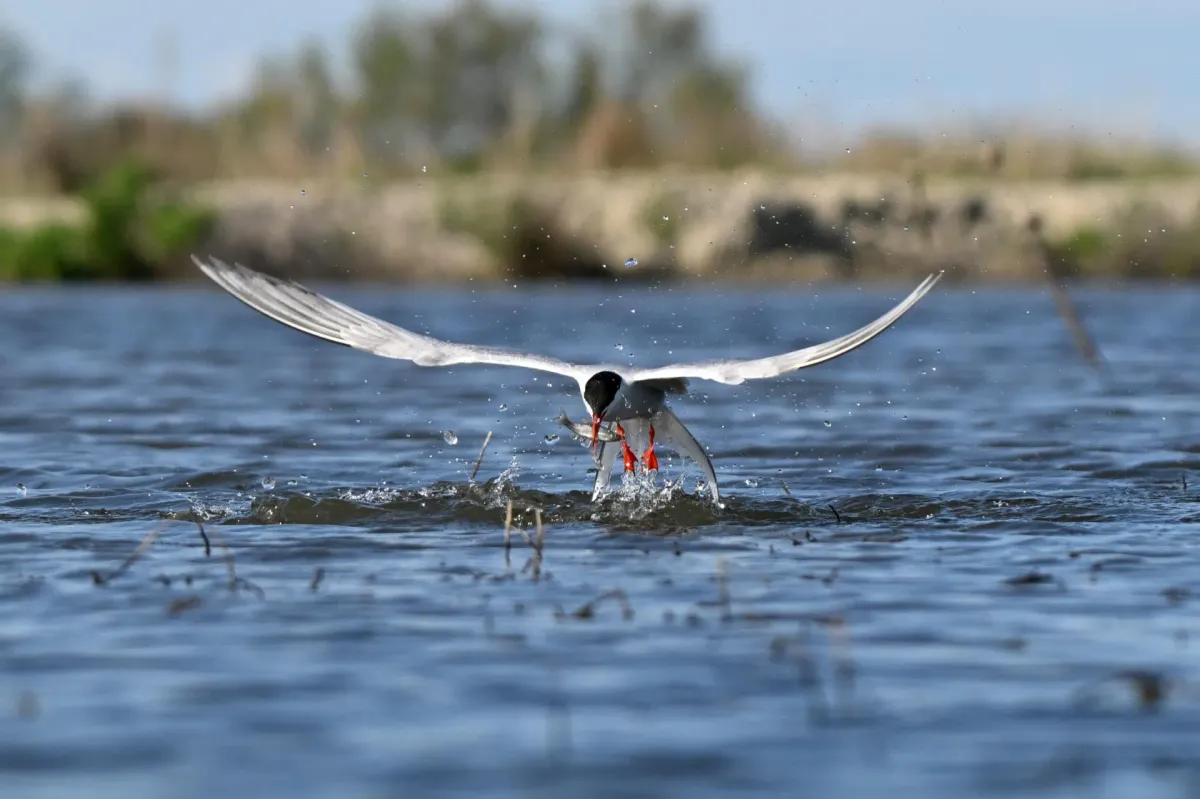
AF configuration: Getting the most out of EXPEED 7 for birds
Both the Z8 and Z50II run identical EXPEED 7 software, so the AF setup is the same on both bodies. These are the settings that have made the biggest practical difference to my keeper rate. For the complete step-by-step walkthrough — including button programming, the AF-handoff technique, and the full exposure approach — see our dedicated Nikon Z8 & Z9 Bird-in-Flight AF Settings guide.
Subject Detection: set to Animals/Birds. This sounds obvious, but the mode matters — the “Birds” or “Animals/Birds” setting activates a different detection network optimised for feathers, beaks, and avian eye geometry. The system finds bird eyes in situations where the generic people/animal mode would focus on body mass instead.
AF Area: Wide or Auto Area first, then narrow when needed. In open sky or simple backgrounds, the widest AF area mode lets EXPEED 7 find and lock the bird from anywhere in the frame without your input. In complex backgrounds — a bird in a reedbed, a raptor against a treeline — switch to a smaller zone (often a 3×3 grid point) and place it near the bird manually. The camera tracks from there. Trying to use wide-area AF against a cluttered background teaches the camera bad habits.
Tracking Sensitivity: high. For moving birds, maximum tracking sensitivity means the system doesn’t drop the subject when it briefly disappears behind a branch or reed. Some photographers dial this back for perched birds to avoid chasing distractions in the background; I find high sensitivity and good zone discipline a better combination than lowering sensitivity as a catch-all fix.
Pre-configure a custom button for “AF Area Mode Set” or “Subject Detection Toggle”. There are situations where you want to disable subject detection entirely — a branch-perched bird where the camera keeps finding a bird in the background, or a static intimate-landscape scene where you need precise manual AF point placement. A one-button toggle on the body means you never lose a shot hunting through menus.
Shutter speed: at least 1/1,600s for flight, 1/800s minimum for perched birds. The 180-600mm’s VR helps at slower speeds for static subjects, but a flying bird at 600mm needs the shutter to arrest motion — VR doesn’t help with subject motion, only camera shake. In lower light, raise ISO rather than dropping below 1/800s.
How to choose: Z8 or Z50II?
The honest answer to “which body?” is the one question you need to ask yourself: Is reach or resolution more important to you?
If you want maximum reach — you spend most of your time on small birds at distance, waders at a reserve, or raptors far overhead — buy the Z50II. The 900mm effective reach is the most reach you will get from this lens without a converter, and the AF is identical to the Z8. The Z50II costs significantly less and weighs significantly less, and the DX crop gives you the reach free of charge. For dedicated birders, this is the setup.
If you want one camera for everything — birding, landscape, family, events, portraits — buy the Z8. The 45.7MP sensor and full-frame versatility make it the camera that does every job. For birding specifically, the cropping latitude compensates for the smaller effective reach: you shoot full-frame at 600mm, crop to your subject in post, and still have a 20–30MP file to work with.
If you’re on a tighter budget: Start with the Z50II and the 180-600mm. This is the combination that gives you the highest birding capability per euro in the entire Z lineup. The Z8 can follow later.
If you already own a Z8 and are considering adding the Z50II as a second body: do it. The two cameras together — the Z8 for resolution, the Z50II as the 900mm reach specialist — cover every birding scenario without limitation.
Common mistakes to avoid
Buying the 200-500mm F-mount to use on a Z body via FTZ adapter. The lens works, but it doesn’t access the full depth of EXPEED 7’s subject detection. A native Z lens is not interchangeable with an F-mount adapted lens from an AF performance standpoint. If you’re investing in the Z system, invest in a native Z lens.
Expecting the TC-1.4x to replace a prime. The TC is an excellent reach extender in good light. It is not a substitute for a 400mm f/2.8 in low light, for fast-moving subjects, or for critically sharp results at 840mm. Use it as a situational tool, not as the permanent setup.
Shooting wide-open at f/6.3 in low light without adjusting expectations. The 180-600mm at 600mm with TC fitted, at f/8–9, in the blue hour, on a moving subject, is asking a lot. The results will often be disappointing — not because the lens is bad, but because physics is physics. Plan your shoots for good-light conditions when you’re pushing the reach envelope.
Underestimating how much the AF configuration matters. The difference between a poorly configured EXPEED 7 setup and a well-dialled one is not small. Subject detection mode, AF area selection, and custom button assignment together account for a meaningful share of your keeper rate. Spend twenty minutes before your next session getting the setup right.
Pros
- Native Z-mount AF gives both setups full EXPEED 7 subject-detection — finds and holds bird eyes automatically
- Z50II delivers 900mm effective reach for free via DX crop; Z8 delivers 45.7MP cropping latitude
- TC-1.4x extends to 840mm (Z8) or 1,260mm equivalent (Z50II) while keeping autofocus functional
- 180-600mm sharpness is a meaningful step over the F-mount 200-500mm — rewards the Z8's resolution
- Two complementary setups from one lens: max resolution on full-frame, max reach on APS-C
Cons
- Variable aperture (f/5.6–6.3, f/8–9 with TC) limits low-light and early-morning performance
- No prime will match at equivalent focal length — the gap closes substantially, but it doesn't disappear
- Combined Z8 + 180-600mm weight (~2.9kg) demands a serious strap and realistic expectations for long hikes
Conclusion: An absolute dream to shoot
There is a gap between what most birding photographers can afford and what a prime telephoto costs. The Nikon NIKKOR Z 180-600mm f/5.6-6.3 VR paired with a Z8 or Z50II closes that gap to a level that, in the field, mostly stops being noticeable.
On the Z50II, you get 900mm effective reach, EXPEED 7 subject-detection AF that locks onto a bird’s eye at distance, and results that have made me stop wishing I had a prime for most situations. On the Z8, you get 45.7MP of cropping latitude and a do-everything body that happens to be an exceptional birding camera. Both are a genuine step up from the D500 + 200-500mm era — more reach, better AF, sharper files.
The upgrade from the D500 era was worth making. Upgrading to the Z 180-600mm was worth saving for. The combination with a Z50II or Z8 is, without exaggeration, an absolute dream to shoot.
The Final Word: If primes are out of budget, this is your endgame birding setup. Start with the Z50II + 180-600mm for reach. Add the TC-1.4x when you need more. Add the Z8 when you need everything.
Is the Nikon Z8 or Z50II better for birding with the 180-600mm?
Does the Nikon Z 180-600mm focus fast enough for birds in flight?
Is the Nikon Z system a meaningful upgrade from the D500 + 200-500mm for birding?
What autofocus settings work best for birding on the Z8 and Z50II?
Is the TC-1.4x worth buying with the 180-600mm?
Should I upgrade from the D500 and 200-500mm to a Z system for birding?
Keep this in your inbox
One email a week: what we actually watched, built and reviewed — the stuff worth a dad's time. No hype, no daily spam.
Dadnology Weekly
One email a week: the LEGO, gaming and movie news worth a dad's time — plus what we actually reviewed. No hype, no daily spam.
Disclaimer: This review and its visuals were created with the help of AI. Some links may be affiliate links – we may earn a commission if you make a purchase, at no extra cost to you.
Current deals in Cameras
Verified live discounts tracked on Amazon

Cameras · Tested by Dadnology
Nikon Z5 Body
5/5“The unbeatable on-ramp to full-frame mirrorless.”Read our reviewPrice as of Oct 17, 09:11 PM UTC


Cameras · Tested by Dadnology
Nikon Z50 Body
5/5“An honest look back at the DX body that started my Z journey.”Read our reviewPrice as of Oct 17, 09:11 PM UTC
You might also like

Nikon on sale: Buy the Z8, think twice about the Z6 II
The Z8, Z6II and Z5 all drop in price on sale days. Which one is worth it, from someone who owns a Z8 and shot a Z5 for years, plus the storage to go with it.
Nikon Z 70-200mm f/2.8 VR S vs VR S II: Which should you buy?
We've shot the original Nikon Z 70-200mm f/2.8 VR S for over five years and rate it a flat 5. Here's how it stacks up against the new VR S II - and which one you should actually buy.
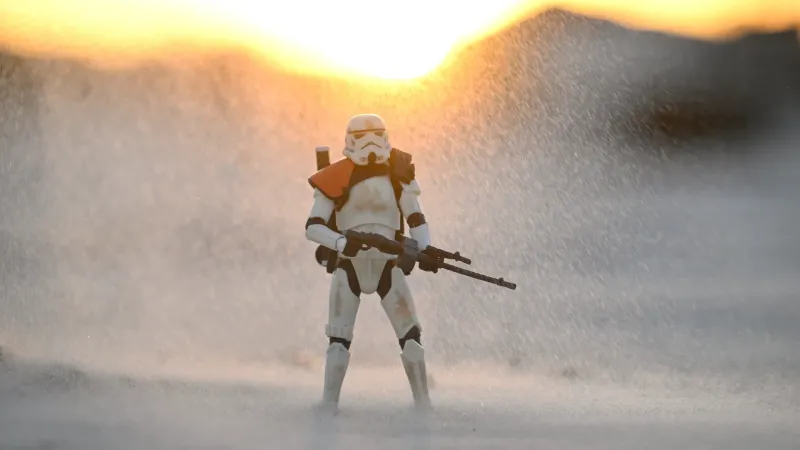
Beach toy photography: How to shoot action figures and LEGO in the sand
The beach is the ultimate outdoor studio for toy photography if you respect the elements. Low ground-level angles turn sand ripples into mountain ranges, golden hour softens harsh plastic reflections, and a helping hand creates breathtaking in-camera dust storms.