
Dune (2021) review: The sci-fi epic that got it right
Denis Villeneuve's Dune (2021) is the sci-fi adaptation fans waited 40 years for. A 5/5 spectacle and one half of an all-time great.
This post contains affiliate links. We may earn a commission if you make a purchase, at no extra cost to you. As an Amazon Associate, Dadnology earns from qualifying purchases.
Introduction: The unfilmable film
🏜️ This review is part of the Dune Saga Watch Order – watch Dune (2021) and Dune: Part Two back-to-back, in order, as one continuous epic.
When Dune (2021) finally arrived, it carried forty years of baggage. Frank Herbert’s 1965 novel had been labelled “unfilmable” by everyone from David Lynch to the studios that quietly buried their attempts. Denis Villeneuve did the one thing none of them managed: he stopped trying to cram the whole book onto the screen and instead built a world you could believe in. The result is the most confident, immersive, and intelligent blockbuster of its generation, a film that trusts its audience to sit in silence and watch a culture breathe.
This matters because “event cinema” had become shorthand for noise. Dune is the opposite. It is patient, enormous, and unafraid of stillness. For the Dadnology community, this is a 5/5 experience, the rare modern spectacle that respects your intelligence and your time in equal measure, the kind of film you finish and immediately want to talk about over a cold beer once the kids are down.
What Villeneuve understood is that Dune is not a plot you race through, it is a place you inhabit. And that single decision is why this version finally works where every other attempt failed.
Narrative architecture: A boy, a bloodline, and a trap
The emotional engine of Dune is deceptively simple under all the politics: it is a story about a father handing his son a future he is not ready for. Duke Leto Atreides knows the Emperor’s gift of Arrakis is a trap designed to destroy his house, and he walks into it anyway, because a leader without honour is just a tyrant in waiting.
The setup is dense but Villeneuve makes it legible. House Atreides is ordered to take control of Arrakis, the only source of “spice”, the substance that makes interstellar travel possible. Their rivals, the brutal House Harkonnen, are forced to leave, but they have no intention of giving up the most valuable planet in the universe. Caught in the middle is Paul, the Duke’s son, haunted by visions of a desert girl and a future he does not understand. It is a slow-burn betrayal you can see coming, and the dread is the point.
For a dad, the resonance is uncomfortable and real. This is a film about legacy, about preparing a child for a world that does not care about fairness, and about the impossible weight of wanting to protect someone from a destiny you suspect is already written. Leto’s quiet line to Paul, that a great man does not seek to lead but is called to it, lands harder when you have your own kids asleep down the hall.
| House | Atreides | Harkonnen |
|---|---|---|
| Home World | Caladan, ocean and rain | Giedi Prime, industrial blacksun hell |
| Leadership Style | Honour, loyalty, the long game | Fear, cruelty, brute extraction |
| Public Face | Beloved noble house on the rise | Feared resource barons in decline |
| Real Weakness | Walked knowingly into a trap | Underestimate the desert and the Fremen |
| What They Want | Survival and a foothold for the future | To keep the spice flowing, at any cost |
The genius of the writing is that the houses are not good versus evil so much as restraint versus appetite, and Villeneuve lets you feel which kind of power you would actually want raising your children.
Engineering a believable desert: The craft of Arrakis
What is technically remarkable about Dune is how little of it feels like a green screen. Villeneuve and cinematographer Greig Fraser built as much as they could for real, shooting in the deserts of Jordan and Abu Dhabi, and the difference is immediate. Sand gets everywhere. Light behaves like light. The sheer scale of the Atreides ships and the Harkonnen architecture reads as weight, not pixels.
Fraser’s contribution cannot be overstated. He developed a partly infrared-influenced look for the desert sequences and favoured huge, brutalist compositions that make the human characters look like ants against the machinery of empire. The ornithopters, with their dragonfly wings, are the rare piece of sci-fi design that feels genuinely new while looking like it could actually fly.
This obsessive practicality yielded three things you feel in your gut:
- Tangible scale: When a sandworm finally breaches the dunes, the size is communicated through real sand and real dust, so your brain accepts it as a thing that exists rather than an effect that was added.
- Architectural dread: The Harkonnen and Atreides interiors are vast, cold, and human-hostile, turning every conversation into a power play staged inside a cathedral of stone.
- Restrained spectacle: Villeneuve holds his biggest images back, so when the spice harvester or the gom jabbar test arrives, it carries weight instead of just volume.
The payoff is a film that feels lived-in rather than rendered. You are not watching a universe being explained to you, you are watching one that clearly existed long before the camera arrived.
The format benchmark: Watching Dune via Apple Vision Pro
Here is my honest, slightly evangelical take: Dune is the single best argument for the Apple Vision Pro that I own. This is a film engineered for total immersion, and a headset that fills your entire field of view with Arrakis is, frankly, what the thing was built for.
The immersion factors are unmatched at home:
- True scale: In a virtual cinema environment the ornithopters and sandworms occupy real visual space, the sense of vertigo when the camera looks down a cliff face is genuinely physical.
- The Zimmer envelope: Spatial audio wraps Hans Zimmer’s score and the throat-singing voices completely around your head, the silence between cues becomes its own pressure.
- Dad Alert: This is the rare film worth the full ritual. Wait until the house is quiet, put the headset on, and do not check your phone once. Two hours and thirty-five minutes will vanish.
If you have a Vision Pro and have not watched Dune on it, you are sitting on the best demo Apple never made. And yes, it was mandatory viewing in the cinema too, the problem now is simply that it left theatres years ago, so the headset has quietly become the next best thing.
The sonic signature: Hans Zimmer’s score as a character
A visual masterclass needs a sonic landscape to match, and Hans Zimmer reportedly turned down Christopher Nolan’s Tenet to score Dune, a film he had wanted to make since he was a teenager. It shows. This is not background music, it is the weather of the planet.
Zimmer threw out the orchestral rulebook. There is no comforting brass heroism here. Instead he built a palette of invented instruments, distorted bagpipes, female voices pushed to a primal wail, and percussion that feels geological rather than musical.
- An alien palette: Zimmer designed sounds that do not exist in our world, so Arrakis sounds like nowhere you have ever been.
- The voice of the Fremen: The wordless female vocals become the sound of the desert itself, beautiful and threatening at once.
- Physical low end: The score lives in frequencies you feel more than hear, which is exactly why a real subwoofer or a good headset transforms the experience.
Pros
- The most faithful and immersive Dune adaptation ever made, it finally cracks the unfilmable book
- Reference-grade craft, real deserts, practical scale, and Greig Fraser's career-best cinematography
- Hans Zimmer's score is a genuine character, not background, and stunning on a good audio setup
- Patient, intelligent storytelling that trusts the audience and rewards full attention
Cons
- It is deliberately only half a story, the abrupt ending frustrates anyone expecting a complete arc
- The slow, meditative pace will lose viewers who want a conventional action blockbuster
- The dense politics and large cast ask for your full focus, this is not a second-screen film
From the screen to the shelf: those dragonfly ornithopters are Villeneuve’s signature image — build one with the LEGO Icons Dune Atreides Royal Ornithopter (10327) review.
Conclusion: The first half of greatness
With six Academy Awards and a reputation that has only grown, Dune (2021) did something rare: it took a property everyone had given up on and made it feel inevitable. It is a triumph of patience, craft, and conviction, a blockbuster with the soul of an art film.
The only honest asterisk is structural. This is Part One, and it ends mid-breath as Paul steps into the desert. On its own it is a 4.5. As the opening movement of a two-film symphony that pays off completely in Part Two, it is a 5, and that is how I rate it, because these films were always meant to be watched as one.
The Final Word: A non-negotiable modern sci-fi milestone, watch it, then immediately press play on Part Two.
📺 Movie night sorted: thousands of films and shows are streaming on Prime Video — free for 30 days. Worth a look before you buy the disc.
Is Dune (2021) worth watching?
Can I watch Dune on Apple Vision Pro?
Do I need to read the book before watching Dune?
Is Dune (2021) suitable for kids?
Why does Dune (2021) end so abruptly?
Keep this in your inbox
One email a week: what we actually watched, built and reviewed — the stuff worth a dad's time. No hype, no daily spam.
Dadnology Weekly
One email a week: the LEGO, gaming and movie news worth a dad's time — plus what we actually reviewed. No hype, no daily spam.
Disclaimer: This review and its visuals were created with the help of AI. Some links may be affiliate links – we may earn a commission if you make a purchase, at no extra cost to you.
Current deals in Movies & TV
Verified live discounts tracked on Amazon
![The Legend of Korra — The Complete Series [Blu-ray]](https://m.media-amazon.com/images/I/51+1TXyb7aL._SL500_.jpg)
Movies & TV · Tested by Dadnology
The Legend of Korra — The Complete Series [Blu-ray]
4.5/5“A new Avatar, a modern city, a masked revolution”Read our review
Movies & TV · Tested by Dadnology
Zack Snyder's Justice League (4K Ultra HD)
4/5“Four hours. One vision. This is the film.”Read our review
Movies & TV · Tested by Dadnology
Space Jam (4K Ultra HD + Digital)
4/5“It's gonna be a whole new ball game”Read our reviewYou might also like
Dune: Part Two review: The sequel that perfects the epic
Dune: Part Two is the rarest thing in modern cinema, a sequel that surpasses a near-perfect original. The sandworm ride alone is worth the price of entry. A flawless 5/5.
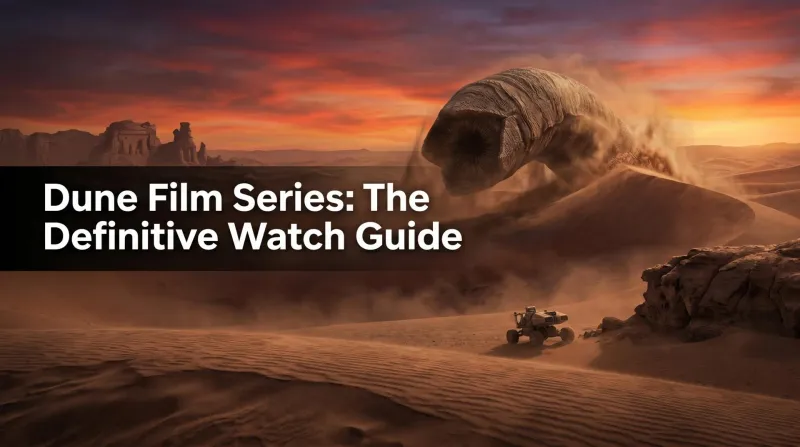
Dune movies in order - Villeneuve's saga watch guide
Two films, one of the greatest cinematic experiences of the decade. Watch them back-to-back, on the biggest screen you can find. A flawless 5/5 saga.
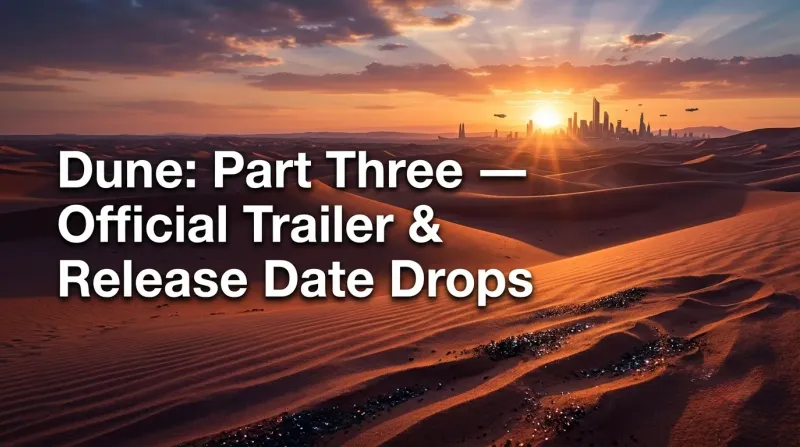
Dune: Part Three trailer drops, sets December date
The full Dune: Part Three trailer just dropped, and Villeneuve's finale to the trilogy is locked for a December 18, 2026 IMAX release.