
Dune: Part Two review: The sequel that perfects the epic
Dune: Part Two is the rarest thing in cinema, a sequel that surpasses the original. A 5/5 and one of the greatest theatrical experiences ever.
This post contains affiliate links. We may earn a commission if you make a purchase, at no extra cost to you. As an Amazon Associate, Dadnology earns from qualifying purchases.
Introduction: The sequel that should not be this good
🏜️ This review is part of the Dune Saga Watch Order – watch Dune (2021) and Dune: Part Two back-to-back, in order, as one continuous epic.
Sequels are supposed to disappoint. The math is brutal: a great first film raises expectations a follow-up almost never clears. And yet Dune: Part Two does the genuinely rare thing, it takes a near-perfect setup and pays it off with something even bigger, stranger, and more emotionally devastating. This is not the second half of one film bolted on as an afterthought. This is the back nine of the best round of blockbuster filmmaking I have seen this decade.
Where Part One was patient world-building, Part Two is the explosion. The pieces Villeneuve so carefully arranged finally collide: Paul’s rise among the Fremen, his romance with Chani, his terrifying slide toward becoming the messiah he never wanted to be. For the Dadnology community, this is a flat 5/5, the kind of film you will be quoting and re-watching for years, and the half of the story that turns “very good” into “all-time great”.
The first film asked you to trust it. The second film rewards that trust with interest, and then quietly breaks your heart.
Narrative architecture: The making of a messiah
The emotional engine of Part Two is darker and more daring than anything in the first film: this is the story of how a good young man becomes something the universe should fear. Frank Herbert wrote Dune partly as a warning about charismatic leaders, and Villeneuve leans all the way into it. Paul does not ascend in triumph, he is swallowed by a prophecy, pushed by his own mother, and corrupted by the very power that lets him win.
The plot accelerates hard. Paul and Lady Jessica are taken in by the Fremen, the desert people of Arrakis who have their own ancient prophecy about an off-world messiah. As Paul earns their loyalty and falls in love with the fiercely independent Chani, his mother schemes to weaponise the prophecy, while the Harkonnens, now led by the chillingly feral Feyd-Rautha, tighten their grip on the spice. The question stops being “will Paul win?” and becomes “what will winning cost him, and everyone who believes in him?”
For dads, the gut-punch is Chani. She loves Paul the man and watches, helpless, as he chooses to become Paul the symbol. It is a story about how ambition and destiny can quietly hollow out the person you fell in love with, and Zendaya’s final, devastated expression is the truest emotional beat in either film. This is blockbuster filmmaking with the courage to end on doubt instead of a cheer.
| Element | Dune (Part One) | Dune: Part Two |
|---|---|---|
| Core Mode | World-building and betrayal | War, prophecy, and consequence |
| Paul's Arc | A boy haunted by visions | A leader becoming a messiah he fears |
| Emotional Centre | Father and son, Leto and Paul | Lovers and faith, Chani and Paul |
| Signature Image | The first sandworm breach | Paul riding a sandworm into battle |
| Final Note | A door opening into the desert | A door closing on Paul's humanity |
What makes the two films a single masterpiece is exactly this handoff: setup and payoff, innocence and corruption, the desert as promise and the desert as price.
The greatest scene of the decade: Riding the maker
I want to single this out, because it is, for my money, one of the best scenes I have ever seen in a cinema, full stop.
When Paul finally summons and mounts a giant sandworm, the “Maker”, to prove himself to the Fremen, Villeneuve delivers a sequence of pure, overwhelming cinema. There is no irony, no wink, no comic deflation. It is sincere, enormous, and built entirely on craft: the rising drums of Hans Zimmer’s score, the impossible scale of the creature, the wind and sand, and Paul’s tiny figure planting his hooks and standing up to ride. The first time I saw it I forgot to breathe.
It works because the film earned it. Two movies of patient setup, of treating the sandworms as gods and the desert as sacred, all detonate in this single image of a man riding a god. It is the rare modern set piece that is genuinely awe-inspiring rather than just loud, and it is the moment that justifies every decision Villeneuve made about scale, patience, and immersion. If you ever wanted to show someone what cinema can still do that a phone screen cannot, this is the scene.
This is also why the format matters so much. A sequence built on scale and sound deserves the biggest, most enveloping presentation you can give it.
The format benchmark: Vision Pro, IMAX, and why size matters
Let me be blunt: Dune: Part Two demands the largest screen you can physically get to. In a perfect world that is IMAX, and it was a religious experience there. The problem, of course, is that the film has long since left cinemas, so the question for most of us is how to recreate that scale at home.
My answer, again, is the Apple Vision Pro. This film is what that headset was built for:
- The worm in your peripheral vision: In the virtual cinema environment the sandworm-riding sequence has a vertigo to it that a flat TV simply cannot reproduce, the dunes extend past the edges of your vision.
- A score you wear: Spatial audio puts Zimmer’s percussion all around your head, so the drums during the worm ride feel like they are coming from inside your own chest.
- Dad Alert: Treat it as an event. Kids down, lights off, headset on, phone in another room. This is two hours and forty-six minutes that genuinely deserve your full attention, and you will not get them back if you fragment them.
If you cannot do a headset, do the next best thing: the biggest OLED you own, a real subwoofer, the lights fully off, and the volume past the point of politeness. Part Two punishes a casual, half-watched viewing and rewards total commitment.
The sonic signature: Zimmer Unbound
If Part One’s score was alien, Part Two’s is apocalyptic. Hans Zimmer pushes his invented-instrument palette to its limit, and the result is some of the most physical music ever attached to a blockbuster.
- The Harkonnen black sun: The score for Giedi Prime’s monochrome arena is all dread and distortion, a perfect match for Austin Butler’s genuinely frightening Feyd-Rautha.
- The drums of the Maker: The worm-riding cue is built on relentless, building percussion that turns a visual spectacle into a full-body one.
- Chani’s quiet: Against all the bombast, the love theme is fragile and human, which is exactly why the ending lands so hard.
Pros
- The rarest thing in cinema, a sequel that genuinely surpasses a near-perfect original
- The sandworm-riding sequence is one of the greatest blockbuster set pieces ever filmed
- Emotionally daring, it ends on Paul's corruption and Chani's heartbreak, not a hollow cheer
- Reference-grade visuals and a career-peak Hans Zimmer score, a true home-theatre showcase
Cons
- Completely unviewable without Part One, this is the second half of one story, not a standalone
- The themes of holy war and manipulation are heavy and deliberately uncomfortable
- Like its predecessor it is long and demanding, it will not reward a distracted, second-screen watch
From the screen to the shelf: the ornithopter returns front and centre — own the LEGO Icons Dune Atreides Royal Ornithopter (10327) review for the shelf.
Conclusion: Two films, one masterpiece
Dune: Part Two is the payoff that Part One promised and then some, a sequel that improves on greatness and completes one of the finest cinematic experiences of the decade. It is spectacle with a brain and a broken heart, the kind of film that reminds you why the big screen still matters.
Watched as intended, immediately after the first film, the two movies form a single, towering epic. This is why I refuse to split the rating: these are not two good films, they are one perfect one, told in two sittings. Watch them as one, on the biggest screen you can find, and ideally on a Vision Pro.
The Final Word: An all-time great, the sandworm ride alone is worth the entry, and the whole thing is essential. A flawless 10.
📺 Movie night sorted: thousands of films and shows are streaming on Prime Video — free for 30 days. Worth a look before you buy the disc.
Is Dune: Part Two worth watching?
Do I need to watch Dune (2021) first?
Can I watch Dune: Part Two on Apple Vision Pro?
Is Dune: Part Two suitable for kids?
Is there a Dune: Part Three?
Keep this in your inbox
One email a week: what we actually watched, built and reviewed — the stuff worth a dad's time. No hype, no daily spam.
Dadnology Weekly
One email a week: the LEGO, gaming and movie news worth a dad's time — plus what we actually reviewed. No hype, no daily spam.
Disclaimer: This review and its visuals were created with the help of AI. Some links may be affiliate links – we may earn a commission if you make a purchase, at no extra cost to you.
Current deals in Movies & TV
Verified live discounts tracked on Amazon
![The Legend of Korra — The Complete Series [Blu-ray]](https://m.media-amazon.com/images/I/51+1TXyb7aL._SL500_.jpg)
Movies & TV · Tested by Dadnology
The Legend of Korra — The Complete Series [Blu-ray]
4.5/5“A new Avatar, a modern city, a masked revolution”Read our review
Movies & TV · Tested by Dadnology
Zack Snyder's Justice League (4K Ultra HD)
4/5“Four hours. One vision. This is the film.”Read our review
Movies & TV · Tested by Dadnology
Space Jam (4K Ultra HD + Digital)
4/5“It's gonna be a whole new ball game”Read our reviewYou might also like

Dune (2021) review: The sci-fi epic that got it right
Dune (2021) is the adaptation fans waited 40 years for: vast, patient, and overwhelmingly immersive. A 5/5, and only the first half of one of the best cinematic experiences of the decade.
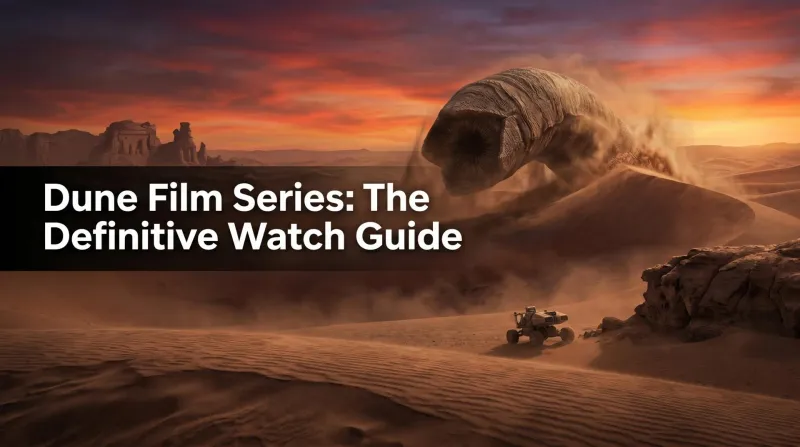
Dune movies in order - Villeneuve's saga watch guide
Two films, one of the greatest cinematic experiences of the decade. Watch them back-to-back, on the biggest screen you can find. A flawless 5/5 saga.
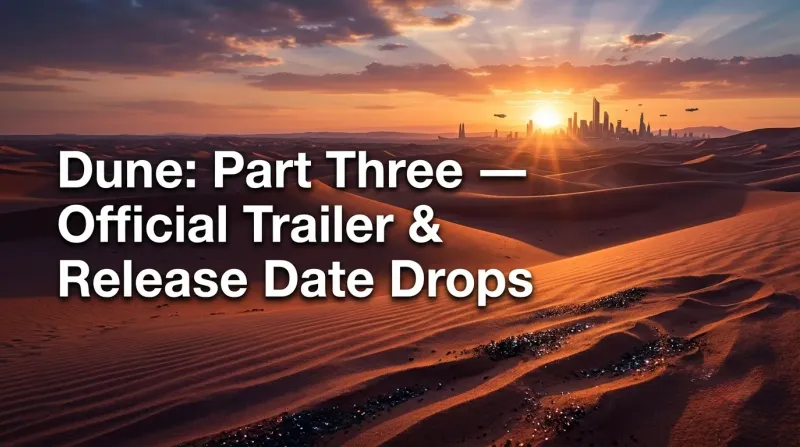
Dune: Part Three trailer drops, sets December date
The full Dune: Part Three trailer just dropped, and Villeneuve's finale to the trilogy is locked for a December 18, 2026 IMAX release.