MCU canon explained: What Netflix, X-Men & the multiverse actually mean
Are the Netflix Daredevil seasons canon? What about Tobey Maguire Spider-Man? We cut through the MCU canon confusion once and for all.
This post contains affiliate links. We may earn a commission if you make a purchase, at no extra cost to you. As an Amazon Associate, Dadnology earns from qualifying purchases.
TL;DR – The canon question answered
The canon question has plagued Marvel fan forums for the better part of a decade. Here is the complete breakdown.
The Netflix problem: Seven seasons of “almost canon”
When Marvel Television launched Daredevil on Netflix in April 2015, the plan was reasonably simple: a darker, street-level corner of the MCU that would complement the cinematic universe without directly crossing over into it. The first season was remarkable — gritty, violent, and bolstered by one of the best villain performances in any superhero production. Daredevil was followed by Jessica Jones, Luke Cage, Iron Fist, The Punisher, and The Defenders, adding up to roughly 100 episodes across seven shows.
The catch was that none of these shows ever fully integrated with the films. Characters occasionally mentioned the Chitauri invasion or “the big green guy,” but no film character appeared in the Netflix shows, and no Netflix character appeared in the films. Marvel Television and Marvel Studios operated under different leadership with different priorities, and the wall between them was real.
Then came the cancellations. Netflix ended all seven Marvel shows between 2018 and 2019. For a period, the official Marvel line was that the shows were “part of the MCU” without specifying how — a non-answer that satisfied nobody. The actual answer turned out to be: they were canon in the sense that nobody was explicitly contradicting them, but Marvel Studios had no active plans to continue or reference them.
Series content
Explore all articles, reviews, and guides in this series.
Daredevil: Born Again makes it official
The situation changed permanently with Daredevil: Born Again on Disney+. Charlie Cox’s Matt Murdock and Vincent D’Onofrio’s Wilson Fisk — the same actors who originated these roles on Netflix — returned as the explicitly same characters in the main MCU continuity. Born Again does not reboot or retcon the Netflix seasons. It continues from them.
This is significant because it retroactively confirms the Netflix era’s canonical status. The events of Daredevil Seasons 1-3, The Punisher, and Jessica Jones are, as far as the current MCU is concerned, real events that happened on the Sacred Timeline. Matt Murdock was a vigilante in Hell’s Kitchen during the Avengers era. Fisk was running New York’s criminal underworld. The Hand was real. The Defenders assembled and fought beneath Midland Circle.
The practical implication: if you want the full Born Again experience, watching the Netflix Daredevil seasons first adds enormous depth. If you just want to enjoy Born Again as an entry point, it works — but you will miss the weight of two full seasons of character development that informs every scene between Matt and Fisk.
Daredevil Season 1 on Blu-ray is where it starts. Three seasons of some of the best superhero television ever produced, now with confirmed canonical status.
The Sacred Timeline: What Loki built
To understand MCU canon properly, you need to understand the Sacred Timeline — and that means watching Loki Season 1.
Before Loki, the MCU multiverse was theoretical. Doctor Strange mentioned alternate realities. Endgame’s time travel created branching timelines. But the actual architecture of how Marvel’s multiverse works — who maintains it, how variants are created, what happens when timelines branch uncontrolled — was undefined.
Loki Season 1 introduced the Time Variance Authority, He Who Remains (a variant of Kang the Conqueror), and the concept of a “Sacred Timeline” that was being deliberately maintained to prevent multiversal war. The season ends with He Who Remains’ death, which releases the branches and begins the true multiverse era.
Loki Season 2 expands this further: Loki himself restructures the branches into a stable tree of timelines, explicitly enabling the multiverse to exist without collapsing. This is why Deadpool and Wolverine can visit the Void. Why alternate Spider-Men can cross into Peter Parker’s world. Why Wolverine from the Fox universe can become canonical enough to interact with the main MCU without permanently disrupting it.
The Sacred Timeline is not a single fixed thread anymore. It is the trunk of a branching tree — and that branching is now the intended state of the MCU rather than a narrative problem to solve.
The X-Men question: Canon, variant, or neither?
The X-Men situation is genuinely complicated, and anyone who tells you it has a clean answer is simplifying aggressively.
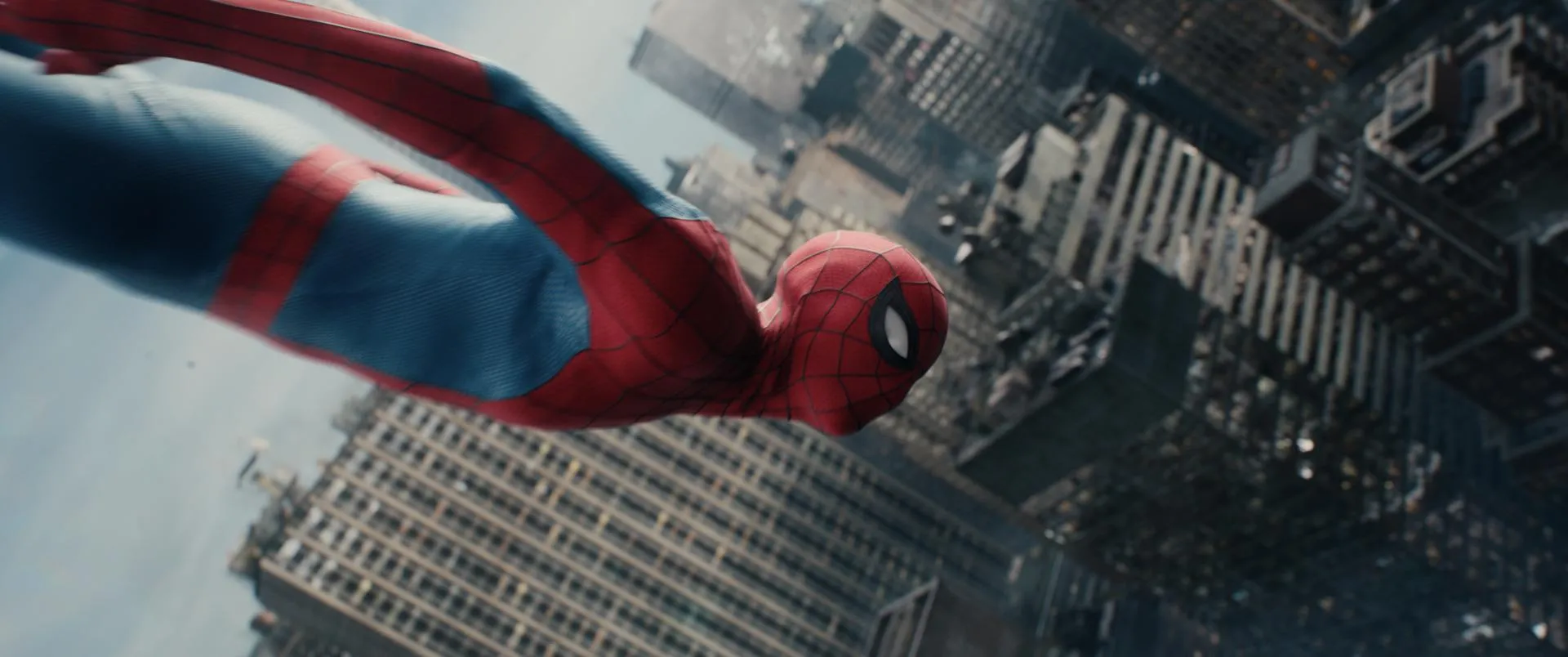
The Fox X-Men films (2000-2019) were never set in the MCU. They existed in a completely separate universe — what Marvel’s current framework would call a branching alternate timeline. When Spider-Man: No Way Home brought Tobey Maguire and Andrew Garfield’s Spider-Men into the Sacred Timeline, it established that alternate-universe characters can visit but then go back. Wolverine in Deadpool and Wolverine operates on the same principle: he is explicitly a Fox-universe Wolverine (a variant from a world where the X-Men all died) rather than a Sacred Timeline Wolverine who has always existed alongside the Avengers.
The Beast cameo in The Marvels further muddied the waters back in 2023 — Monica Rambeau found herself in a universe that has X-Men, implying the mutant universe existed as a distinct branch from the Sacred Timeline. For years, whether mutants would ever be introduced into the main timeline as genuinely new characters, rather than as Fox variants crossing over, was an open question.
That question is now answered. Spider-Man: Brand New Day (August 2026) introduces Sadie Sink’s Jean Grey — and she is not a Fox-universe variant visiting for one film. She’s a Sacred Timeline original, the first mutant formally built into the main live-action MCU continuity rather than imported from the 2000-2019 films. Her exit at the end of Brand New Day points directly at a wider X-Men presence arriving in the Sacred Timeline, which is exactly the thread Avengers: Doomsday picks up in December — though notably, Doomsday’s trailer brings back the original Fox cast (Patrick Stewart, Ian McKellen and company), which means the film is set to run both tracks — native Sacred Timeline mutants and Fox-variant legacy actors — in the same movie. How Marvel reconciles that on screen is the open question now, not whether mutants would ever go native.
X-Men ‘97, the animated continuation, is still explicitly set in an alternate Marvel animated universe — not the Sacred Timeline. It is a great show. It is not MCU canon, and that part hasn’t changed.
The practical verdict, updated: the 2000-2019 Fox X-Men films remain multiverse variants who can visit the Sacred Timeline as guests — that part of the canon question is settled and unchanged. What’s new is that the mutant question at the Sacred Timeline level has its own, separate answer now: yes, as of Jean Grey. For the full mutant-universe picture — Fox trilogy, X-Men ‘97, and where the native MCU thread is headed — see our X-Men hub.
Marvel spotlight: Standalone does not mean non-canon
A newer source of confusion is the Marvel Spotlight banner, which launched in 2024 as a way of marking certain Disney+ shows as accessible without prerequisite viewing. Echo was the first — a street-level Hawkeye spin-off that explicitly did not require familiarity with other MCU content.
Spotlight branding does not mean the show is set outside the MCU. Echo takes place in the same world as the Avengers and references Kingpin as a figure from that world. Agatha All Along is Spotlight-branded and directly continues WandaVision’s characters. Being a Spotlight show means the story is designed to be an entry point — not that the events are quarantined from the wider continuity.
Think of it like this: a standalone novel in a book series is still part of the series. You can read it first without context, but it is not a separate thing.
The practical verdict for dads who just want to know what to watch
Here is the answer that actually matters: watch what interests you, and stop worrying about whether it technically counts.
If you love the Netflix Daredevil seasons, watch them — they are excellent, and they are now canon. If you love the Fox X-Men films, watch them — they are set in a different universe, but Deadpool and Wolverine celebrates them rather than dismissing them. If you want the clean, official Sacred Timeline experience, start with Iron Man and follow our MCU Watch Order.
The multiverse, as of Loki Season 2, is not a loophole or a retcon. It is the intended architecture of Phase 5 and 6. Alternate universe characters can matter. Legacy performances can return. The question of canon has expanded from “did this happen in the Sacred Timeline?” to “does this enrich the larger Marvel story?” — and that is a much more generous and interesting framework.
Pros
- Netflix series are now officially canon — three seasons of Daredevil reward Born Again enormously
- The multiverse framework allows legacy performances to return without retconning existing stories
- Marvel Spotlight makes certain shows genuinely accessible as entry points without homework
- Loki Seasons 1 and 2 are essential viewing for understanding how all of Phase 4-6 fits together
Cons
- Marvel's canon communication has been inconsistent for years — the official position kept changing
- Doomsday is now running two mutant tracks at once (native Jean Grey, Fox-variant original cast) and how they reconcile is unclear
- The multiverse makes it harder to know which version of any character is the definitive MCU version
The bottom line
The Netflix Daredevil seasons are canon. Tobey and Andrew Spider-Men are multiverse visitors, not Sacred Timeline residents. The Fox X-Men films are still variants — but as of Spider-Man: Brand New Day, that’s no longer the whole mutant story: Jean Grey is a Sacred Timeline original. Loki Season 2 is the architectural key to understanding how all of this fits together, and Deadpool and Wolverine is the most honest statement Marvel has made about its relationship with its own legacy content.
If you want to read the full picture: Daredevil Season 1 for where the street-level MCU began, Loki Season 1 for how the multiverse works, and Spider-Man: No Way Home for the moment the door opened. If you would rather check one season than buy three, most of it rents individually on Prime Video.
All referenced MCU canon content is reviewed below — with ratings, streaming info, and notes on how each entry connects to the wider continuity.
More MCU guides on Dadnology: Marvel One-Shots Ranked · MCU Post-Credit Scenes Guide · The Infinity Saga Explained
Are the Netflix Marvel series canon to the MCU?
Are the X-Men canon in the MCU?
Is Tobey Maguire's Spider-Man part of the MCU?
What is the Sacred Timeline in the MCU?
What is Marvel Spotlight and does it affect canon?
Keep this in your inbox
One email a week: what we actually watched, built and reviewed — the stuff worth a dad's time. No hype, no daily spam.
Dadnology Weekly
One email a week: the LEGO, gaming and movie news worth a dad's time — plus what we actually reviewed. No hype, no daily spam.
Disclaimer: This review and its visuals were created with the help of AI. Some links may be affiliate links – we may earn a commission if you make a purchase, at no extra cost to you.
Current deals in Movies & TV
Verified live discounts tracked on Amazon
![The Legend of Korra — The Complete Series [Blu-ray]](https://m.media-amazon.com/images/I/51+1TXyb7aL._SL500_.jpg)
Movies & TV · Tested by Dadnology
The Legend of Korra — The Complete Series [Blu-ray]
4.5/5“A new Avatar, a modern city, a masked revolution”Read our review
Movies & TV · Tested by Dadnology
Zack Snyder's Justice League (4K Ultra HD)
4/5“Four hours. One vision. This is the film.”Read our review
Movies & TV · Tested by Dadnology