
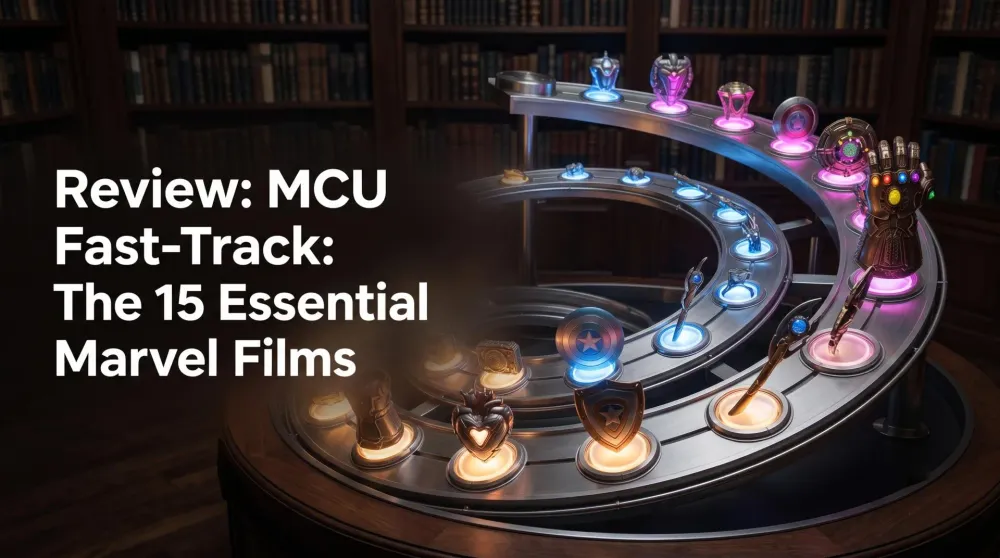
MCU Fast-Track: The 15 essential Marvel films for dads with no time
No time for 33+ Marvel films? These 15 are everything you need to understand the full Infinity Saga — from Iron Man to Endgame and beyond.
This post contains affiliate links. We may earn a commission if you make a purchase, at no extra cost to you. As an Amazon Associate, Dadnology earns from qualifying purchases.
TL;DR – The Fast-Track at a glance
🎬 This guide is part of our MCU Hub — the full timeline, the post-credit scene guide, and the Tony Stark and Thanos character arcs.
The full MCU is magnificent — but at 33-plus feature films plus a full slate of Disney+ series, it is not a casual weekend commitment. These 15 films are the ones that carry the actual story. Our full reviews are below.
Why 15 films? The logic behind the list
The Marvel Cinematic Universe is often described as intimidating, and the numbers justify that reputation. As of 2026, there are over 33 feature films, 13 Disney+ series, and a collection of short films and specials that add dozens more hours. A completionist run clocks in somewhere above 120 hours of content.
The reality is that a significant portion of that runtime is optional. Not bad — optional. Many Phase 4 entries are excellent standalone stories. Agent Carter is a genuinely great period drama. The Netflix Daredevil seasons are some of the best superhero television ever made. But none of them are strictly necessary to understand Avengers: Infinity War or Avengers: Endgame, which is where the main story reaches its emotional peak.
This list solves a specific problem: a dad with limited time, a family interested in Marvel, and a desire to actually understand what everyone is talking about when Thanos snaps his fingers. Fifteen films. Roughly 32 hours of runtime. The complete Infinity Saga story, told without gaps.
Series content
Explore all articles, reviews, and guides in this series.
Iron Man


Ant-Man



Phase 1: Build the team (2 films)
1. Iron Man is where it starts and where it must start. Tony Stark’s origin story does two things no other MCU film can replicate: it introduces the universe from scratch with no prior knowledge required, and it establishes the emotional anchor for everything that follows across twenty-three Infinity Saga films. Robert Downey Jr.’s performance is the personality of the MCU. Everything else builds on or reacts to it. You cannot skip this.
2. The Avengers is the payoff for Phase 1. By this point in the Fast-Track, you have met Tony Stark and nothing else — and that is fine. The film provides enough context for Thor, Captain America, and Bruce Banner to land without their individual solo films as prerequisites. The invasion of New York, Loki as the primary villain, and the first appearance of Thanos in the post-credit scene make this the essential Phase 1 conclusion. The shawarma scene is, canonically, the most important meal in cinematic history.
What you are skipping in Phase 1: The Incredible Hulk (Bruce Banner is recast for The Avengers anyway), Iron Man 2 (fun but inconsequential), Thor (enjoyable but not required — Ragnarok handles everything Thor-related you need to know), and Captain America: The First Avenger (important for character depth, but the Fast-Track works without it).
Phase 2: Complications and betrayals (3 films)
3. Captain America: The Winter Soldier is the best film in Phase 2 and one of the best in the entire MCU. Its plot — HYDRA has been operating inside S.H.I.E.L.D. since the beginning — fundamentally changes the political landscape of the universe. The introduction of Sam Wilson, the return of Bucky Barnes, and Nick Fury’s near-death are all load-bearing narrative events. It is also, critically, a proper thriller rather than a superhero film, which holds up brilliantly on any viewing.
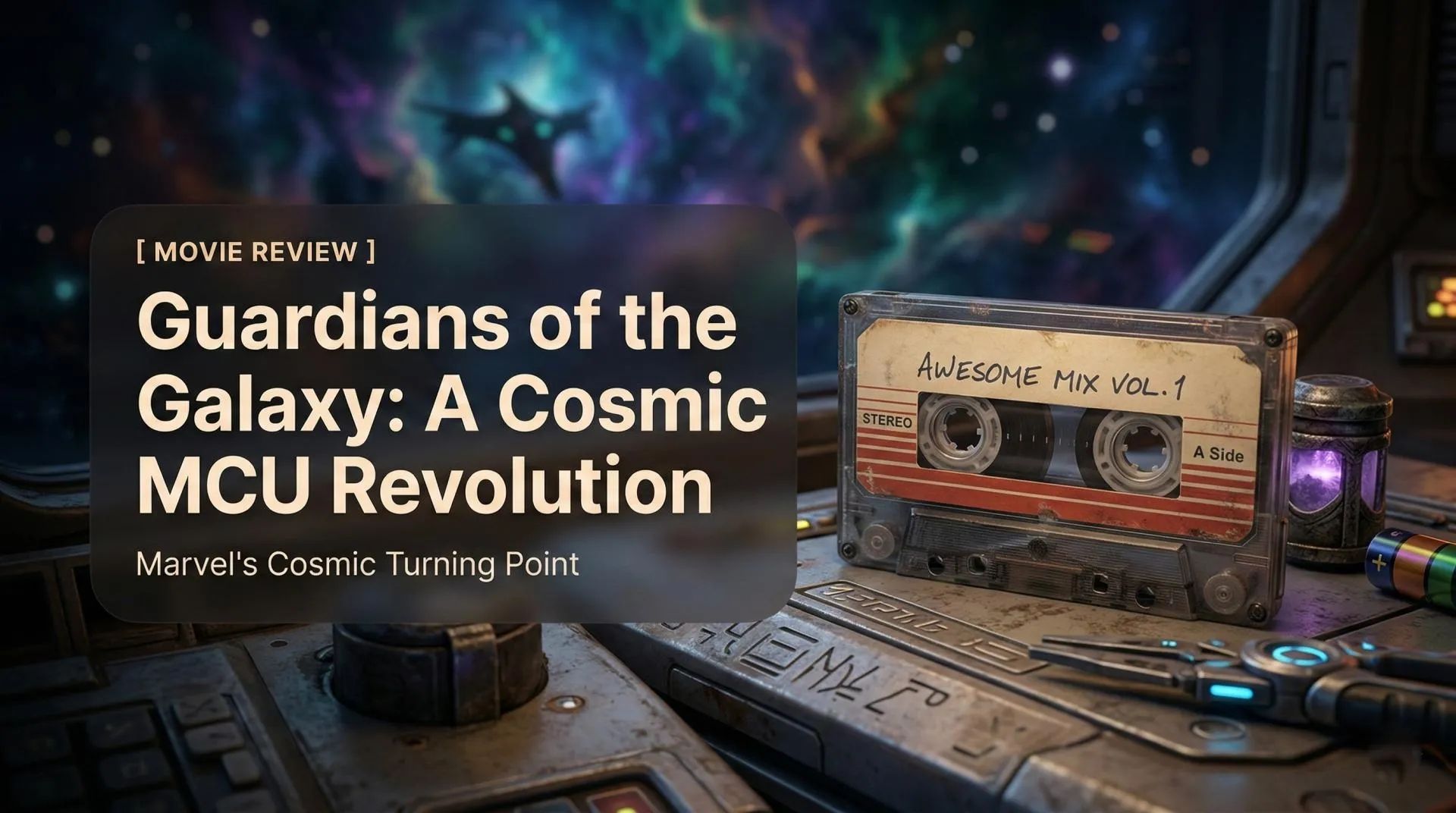
4. Guardians of the Galaxy introduces the cosmic MCU — the corner of the universe where the Infinity Stones actually live and where Thanos operates as a genuine power. More importantly, it does so with more humor and heart than almost any other entry in the franchise. The Fast-Track needs the Guardians before Avengers: Age of Ultron, and this is the best possible introduction to them.
5. Avengers: Age of Ultron is the weakest film on this list and the one you are most likely to enjoy least on first watch. It is here anyway because it introduces Vision (who carries an Infinity Stone), establishes Wanda Maximoff’s powers, and sets up the Sokovia Accords that drive Civil War. Brace yourself for an overcrowded narrative and some deeply questionable romance subplots. Watch it, take notes on the Stones, move on.
What you are skipping in Phase 2: Iron Man 3 (Tony’s PTSD arc is good but not essential for the main story), Thor: The Dark World (genuinely skippable — the Aether/Reality Stone it introduces is explained sufficiently in Infinity War), Ant-Man and Ant-Man and the Wasp (both are on the Fast-Track but further in Phase 3 where their story impact lands better).
Phase 3: The payoff — 10 films, no fat
Phase 3 is where the MCU earned its reputation. Ten films, almost no filler, and a conclusion — Avengers: Endgame — that pays off eleven years of narrative investment.
6. Ant-Man is here earlier than its release order position because it introduces Scott Lang before Civil War, where he appears. It is also the funniest film in Phase 2-3, a genuine heist comedy that justifies its runtime on entertainment value alone. The quantum realm introduced here matters increasingly from Phase 4 onward.
7. Captain America: Civil War divides the Avengers in a way that still has not been fully repaired going into Phase 5. The airport battle remains one of the best action sequences in superhero cinema. Spider-Man’s MCU debut, Black Panther’s introduction, and Tony Stark’s confrontation with Bucky Barnes over his parents’ murder are all essential story beats. This is where the team fractures.
8. Thor: Ragnarok is here for two reasons: it establishes that Asgard is destroyed and introduces Thanos’s army as an imminent threat in the post-credit scene, and it is one of the three funniest films in the MCU. Taika Waititi completely reinvented Thor as a character, and everything from the Hulk’s gladiatorial appearance to the Jeff Goldblum Grandmaster sequence rewards the runtime generously.
9. Black Panther earns its place not just as a cultural milestone but as a narrative necessity. Wakanda is the battleground for the climax of Infinity War. Understanding what Wakanda is — its technology, its politics, its people — makes that battle land with the weight it deserves. This is also simply an excellent film: confident, grounded, and beautifully designed in a way that most MCU entries are not.
10. Avengers: Infinity War is the beginning of the end. Thanos collects the Infinity Stones, the Avengers fail, and half of all life in the universe is erased in a way that Marvel had the genuine courage to leave as the ending rather than reversing it immediately. It is a remarkable achievement — 22 characters, one coherent villain arc, and an emotional sucker-punch of a finale that sent audiences home in stunned silence.
11. Ant-Man and the Wasp is here immediately after Infinity War because that is where it belongs in the story. The post-credit scene — Scott Lang trapped in the Quantum Realm as the snap takes out Hope, Hank, and Janet — directly sets up his role in Endgame. The film itself is a lightweight but highly enjoyable palette cleanser before the weight of what follows.
12. Captain Marvel is here in its pre-Endgame position because that is where it delivers maximum impact. Carol Danvers’s origin, her connection to Nick Fury, and the pager established at the end of Infinity War are all answered here. On first watch, this placement works perfectly.
13. Avengers: Endgame is where it all ends. Five years after the snap, the surviving Avengers execute a time heist to undo Thanos’s work. The three-hour runtime earns every minute. The emotional resolution for Tony Stark in particular is a payoff that rewards every previous film in the sequence. Nothing else on this list prepares you for it — and nothing else in the MCU has matched it since.
Extending the Fast-Track: Phases 4, 5, and 6
14. Spider-Man: No Way Home is the mandatory post-Endgame addition. The multiverse is introduced here in a way that every subsequent Phase 4 and 5 film builds upon, and the film itself delivers one of the most crowd-pleasing moments in recent cinema history. It is also the film that makes Doctor Strange in the Multiverse of Madness, Loki Season 2, and Deadpool and Wolverine coherent if you continue.
15. Deadpool and Wolverine is the Fast-Track’s Phase 5 entry: funny, emotionally effective, and surprisingly meaningful as a statement about what the MCU is willing to do with legacy characters. It also directly sets up where the multiversal storyline is heading, making it genuinely useful narrative context for Secret Wars.
Pros
- 15 films cover every critical plot point from Iron Man to the multiverse era
- Roughly 32 hours of total runtime — achievable over a few weekends
- The films on this list are, with one or two exceptions, the strongest the MCU has to offer
- Endgame lands with full emotional weight even without the skipped Phase 1-2 films
Cons
- Age of Ultron feels weaker without the preceding solo Thor and Iron Man films for context
- Missing Black Widow, Doctor Strange, and Shang-Chi means some Endgame cameos lose depth
- Phase 4 Disney+ series (especially Loki) become genuinely important later — plan to revisit
The bottom line
Thirty-two hours, fifteen films, the complete Infinity Saga story. This is the list for dads who want the full Marvel experience without the 120-hour commitment to every Phase 4 deep cut and Netflix spin-off.
If you finish the Fast-Track and want more, the next additions are obvious: Doctor Strange after Civil War, Spider-Man Homecoming around the same time, and the Loki Disney+ series after Endgame for the full multiverse setup. But the fifteen above stand on their own.
Start here: Iron Man (4K Ultra HD). End here: Avengers: Endgame (4K Ultra HD). Everything in between is listed above — in exactly the order you need it.
Our full reviews for all 15 Fast-Track films appear below — with ratings, streaming info, and notes on what each one contributes to the main story.
More MCU guides on Dadnology: MCU Canon: Netflix & Multiverse Explained · Marvel One-Shots Ranked · MCU Post-Credit Scenes Guide
What are the 15 essential MCU films for the Fast-Track?
Can I skip Thor 1 and Thor: The Dark World on the Fast-Track?
Do I need to watch Doctor Strange before Infinity War?
What can I add if I have time for more than 15 films?
Is the MCU Fast-Track good for watching with kids?
Keep this in your inbox
One email a week: what we actually watched, built and reviewed — the stuff worth a dad's time. No hype, no daily spam.
Dadnology Weekly
One email a week: the LEGO, gaming and movie news worth a dad's time — plus what we actually reviewed. No hype, no daily spam.
Disclaimer: This review and its visuals were created with the help of AI. Some links may be affiliate links – we may earn a commission if you make a purchase, at no extra cost to you.
Current deals in Movies & TV
Verified live discounts tracked on Amazon
![The Legend of Korra — The Complete Series [Blu-ray]](https://m.media-amazon.com/images/I/51+1TXyb7aL._SL500_.jpg)
Movies & TV · Tested by Dadnology
The Legend of Korra — The Complete Series [Blu-ray]
4.5/5“A new Avatar, a modern city, a masked revolution”Read our review
Movies & TV · Tested by Dadnology
Zack Snyder's Justice League (4K Ultra HD)
4/5“Four hours. One vision. This is the film.”Read our review
Movies & TV · Tested by Dadnology