Movies & TV

The Old DCEU – Every Film Reviewed (2013–2023)

Patrick W.

The complete guide to all 16 films of the old DCEU — from Man of Steel (2013) to Aquaman and the Lost Kingdom (2023). Every review, every rating, and the definitive watch order in one place.
The heroes of the old DCEU: Superman, Batman, Wonder Woman, Aquaman, The Flash, Shazam and more

This post contains affiliate links. We may earn a commission if you make a purchase, at no extra cost to you.

Ten Years of DC Cinema: What the DCEU Was

The DC Extended Universe launched on June 14, 2013, with a promise. Zack Snyder and Christopher Nolan brought Superman to a cinema that felt like real cinema — serious, grounded, emotionally honest. Henry Cavill’s Clark Kent wasn’t the Silver Age sunboy. He was lonely, wandering, hiding — and the weight of his extraordinary capability dragged on him like armour. Man of Steel was a superhero film brave enough to ask: what would this actually mean?

Ten years and fifteen more films later, the universe ended with Aquaman and the Lost Kingdom — not with a bang, but with the orderly retreat of a franchise that knew it was being replaced by James Gunn’s new DC Studios vision. In between lay highlights of genuine greatness, disappointments of genuine frustration, and the most visible case study in studio interference that modern superhero cinema has produced.

For the Dadnology audience, the DCEU is more than a franchise. It’s a decade of cultural moments running parallel to our own fatherhood. Man of Steel came in 2013 — for many of us the year our families were just taking shape. Wonder Woman came in 2017 and played in cinemas next to young kids seeing a hero on screen who didn’t have to be decorative to be powerful. The Flash came in 2023 and dealt with loss and the inability to undo it — a theme that hits harder with every year.

Ad

Man of Steel (4K Ultra HD) (opens in a new tab)

The best DCEU entry point. Henry Cavill's Superman origin is the most emotionally grounded foundation any superhero universe has had.

Man of Steel (4K Ultra HD)

The Snyderverse: Foundation and Vision

The first phase of the DCEU is permanently bound to Zack Snyder. His approach was clear: DC heroes as mythological figures, not costumed entertainers. Superman as an alien deity who has to earn his own humanity. Batman as a broken man that twenty years of fighting have turned into something more dangerous than his enemies. The Justice League as a delayed meeting of beings who would redefine the world.

That vision was ambitious — too ambitious for a studio that panicked after Batman v Superman’s mixed reception. What followed is what we now know as the DCEU: a franchise permanently swinging between Snyder’s mythological seriousness and an MCU-inspired lighter tone, never fully committing to either.

The Snyder Trilogy

Man of Steel (2013, 9/10) is the most emotionally grounded foundation any superhero universe has had. Batman v Superman (2016, 7/10) — in the Ultimate Edition — is a genuine attempt to put two of fiction’s most iconic characters in the same film, with Ben Affleck as the best live-action Batman the character has ever had. Zack Snyder’s Justice League (2021, 8/10) is, across four hours, the vision in full: epic, occasionally indulgent, but real.

The Compromise

The theatrical Justice League (2017, 7/10) is the document that shows what studio interference costs. It is not a bad film — it is a compromised film. Joss Whedon brought competence. Zack Snyder brought vision. What hit cinemas was neither, fully.


The Outliers: The DCEU at Its Best (Outside the Snyderverse)

What makes the DCEU ultimately worth defending is that its best non-Snyder films rank among the best superhero films ever made.

Wonder Woman (2017) — 9/10

Patty Jenkins’ Wonder Woman is the best film the DCEU produced, without debate. Setting Diana Prince in the First World War — industrial slaughter as context for a character who brings genuine faith in humanity — is one of the smartest setting decisions in superhero cinema. The No Man’s Land sequence is a moment cinema history will keep writing about. Gal Gadot is perfect.

The Suicide Squad (2021) — 8/10

James Gunn — fired by Disney, immediately hired by WB — made with unconstrained creative control and an R rating what the DCEU had been attempting and failing for years: a fully realized ensemble action film with genuine personality. Starro the Conqueror is a giant alien starfish. The film knows this. It uses it with complete conviction. It is brilliant.

Birds of Prey (2020) — 8/10

Cathy Yan understood Harley Quinn better than any other DCEU project, and Margot Robbie finally had the space to fully inhabit her. The evidence lockup action sequence is filmcraft at the highest genre level. The egg sandwich subplot is peak cinema.

Ad

Zack Snyder's Justice League (4K Ultra HD) (opens in a new tab)

Four hours of the Snyderverse vision as it was meant to be. Essential for any DCEU fan.

Zack Snyder's Justice League (4K Ultra HD)

The Middle Tier: Solid, Underrated, or Occasionally Disappointing

The DCEU reliably produced a tier of films that delivered on their specific promise without reaching the top shelf.

Aquaman (2018, 7/10): James Wan built an underwater world of genuine visual originality, and Jason Momoa is so naturally charismatic that the film around him feels effortless. The Trench sequence proves Wan’s horror instincts never fully sleep. Maximalist, occasionally dumb, enormous fun.

Shazam! (2019, 7/10): The DCEU understood itself best when it knew exactly what it was making. Shazam! knew: a found-family wish-fulfillment film with Zachary Levi as a 14-year-old in an adult body. One of the best family entry points in the franchise.

Blue Beetle (2023, 8/10): A joyful, bilingual superhero film that proves fresh energy was possible even in the franchise’s final chapter. Xolo Maridueña is a genuine discovery, and the Reyes family ensemble steals every scene.

Justice League (2017, 7/10): For what it is — a compromised, half-finished team-up film — it’s watchable and has real moments. For what it should have been: watch the Snyder version.

The Flash (2023, 8/10): Better than it had any right to be. Michael Keaton’s Batman return is as good as thirty years of anticipation warranted, Ezra Miller’s dual performance is genuinely compelling, and the emotional architecture — multiverse mechanics in service of grief — is smart genre filmmaking.

Shazam! Fury of the Gods (2023, 8/10): Commercially underperformed; the film doesn’t deserve that fate. A good sequel that gives the Shazam family a real emotional sendoff and features Helen Mirren and Lucy Liu as unexpected highlights.

Aquaman and the Lost Kingdom (2023, 7/10): A worthy closer. The Arthur-Orm buddy dynamic carries the film, and James Wan says goodbye to the universe with dignity rather than desperation.


The Weaker Entries

Suicide Squad (2016, 7/10): Margot Robbie invents Harley Quinn as a cinematic icon. The film around her is studio-compromised and tonally incoherent. Watch it for the performances; expect nothing coherent from the whole.

Black Adam (2022, 6/10): Worth watching for Pierce Brosnan’s Doctor Fate and for the post-credits scene with Henry Cavill, which now functions as an elegy for the Snyderverse Superman. Not essential, but not without value.

Wonder Woman 1984 (2020, 5/10): The only genuine misfire in the DCEU. Gal Gadot is still brilliant. The script is not. A significant disappointment from a director and lead who proved they could do much better.


Watch Guide: Who Needs What

For newcomers — the 5 essential films:

  1. Man of Steel (2013) — the foundation
  2. Wonder Woman (2017) — the masterwork
  3. The Suicide Squad (2021) — the argument that this franchise could work
  4. Zack Snyder’s Justice League (2021) — the Snyderverse as complete vision
  5. Birds of Prey (2020) — the outlier in top form

For the full chronology: all 16 films in release order. Watch Batman v Superman in the Ultimate Edition. Watch The Suicide Squad instead of Suicide Squad, unless you want the contrast.

For families with kids: Shazam! (2019), Blue Beetle (2023), Aquaman (2018). All PG-13 accessible, all built around genuine family-first themes.


The Dadnology Verdict: Was It Worth It?

Yes. The old DCEU was a franchise with real problems — studio interference, tonal inconsistency, an inability to decide which universe it wanted to be. But it produced Wonder Woman. It produced Man of Steel. It produced The Suicide Squad and Birds of Prey and Zack Snyder’s Justice League. It gave us Ben Affleck as the definitive live-action Batman, Pierce Brosnan’s Doctor Fate, and Michael Keaton’s return as Bruce Wayne.

No franchise with that list of achievements was a waste of time.

All 16 films of the old DCEU are below, in release order.

Series Content

Explore all articles, reviews, and guides in this series.
Henry Cavill as Superman hovering above Metropolis in Man of Steel (2013)

#1Man of Steel Review: Snyder's Superman Finally Gets It Right

Released:

Man of Steel isn't the Superman film you expected — it's better. Zack Snyder strips away decades of campy legacy and rebuilds the mythology from the ground up, grounding Kal-El's story in questions of identity, belonging, and the weight of extraordinary responsibility. Henry Cavill's Clark Kent is lonely, conflicted, and genuinely heroic in a way that earns every punch. Hans Zimmer's score doesn't try to be John Williams and is more powerful for it. The destruction of Smalltown and the final Zod confrontation remain two of the most kinetically overwhelming sequences in superhero cinema.

Ben Affleck's armored Batman facing Henry Cavill's Superman in Batman v Superman: Dawn of Justice

#2Batman v Superman Review: The Ideas Are There. So Is the Mess.

Released:

Batman v Superman is a film at war with itself. It contains genuinely brilliant ideas — a weary, brutal Bruce Wayne, a Superman perceived as a god rather than a hero, a Lex Luthor who is terrifying in his instability — and then buries them under studio pressure, franchise setup, and a third act that collapses under its own ambitions. Watch the Ultimate Edition. It is a noticeably better film. Even so, the theatrical cut's sins are too obvious to pretend away. But when it works, it really works.

The Suicide Squad team lineup with Margot Robbie as Harley Quinn in Suicide Squad (2016)

#3Suicide Squad (2016) Review: Great Characters, Ruined Film

Released:

Suicide Squad is fascinating as a case study in what studio anxiety can do to a promising project. Director David Ayer had a vision — darker, grittier, leaning into the moral complexity of government-weaponized supervillains. Warner Bros., panicked by the mixed reception to Batman v Superman and aggressively chasing Marvel's lighter tone, intervened with reshoots, recuts, and a trailer-house editorial pass that turned the film into something no one intended. What survived is a film of extraordinary individual performances trapped in an incoherent container.

Gal Gadot as Wonder Woman charging across No Man's Land in Wonder Woman (2017)

#4Wonder Woman (2017) Review: The DCEU's Absolute Finest Hour

Released:

In a universe struggling with its own identity — too dark, too grim, too self-serious — Wonder Woman arrived in 2017 as proof that the DCEU's foundation was sound when a film committed to earnestness over irony. Gal Gadot's Diana Prince is a revelation: genuinely optimistic, genuinely powerful, genuinely moved by human suffering in a way that makes her eventual disillusionment in the third act genuinely tragic. The No Man's Land sequence is one of the great superhero cinema moments of the past twenty years. The WWI setting is perfect. Patty Jenkins understood exactly what this character needed.

The Justice League assembled — Batman, Wonder Woman, Aquaman, Flash, and Cyborg in Justice League (2017)

#5Justice League (2017) Review: A Compromised Team-Up

Released:

Justice League (2017) is a film made in the wreckage of tragedy and studio panic. After Zack Snyder departed production following a family tragedy, Joss Whedon was brought in to complete the film with a specific brief: lighten it. The result is a film of perpetual tonal conflict — Snyder's larger-than-life mythological architecture fighting against Whedon's quippy Marvel-adjacent comedy, neither winning. Individual moments work. The team assembled on screen for the first time is genuinely fun. But the whole is less than its parts, and the Steppenwolf problem — possibly the genre's least interesting villain — makes it hard to care about the stakes.

The Justice League assembled in Zack Snyder's four-hour director's cut (2021)

#6Zack Snyder's Justice League Review: The Real Cut Delivers

Released:

When Zack Snyder's Justice League arrived on HBO Max in March 2021 — after years of fan campaigning, a pandemic-fuelled streaming pivot, and $70 million in additional production costs — the question was whether it could possibly live up to the mythology that had built around it. The answer is largely yes. This is not a perfect film. It is long, deliberate, occasionally indulgent, and leaves several threads unresolved by design. But it is a real film, made with genuine artistic conviction, and it tells the story of the DC Trinity and their allies with the grandeur and emotional depth the characters deserved.

Jason Momoa as Aquaman riding a giant sea creature in the underwater kingdom of Atlantis

#7Aquaman (2018) Review: A Dazzling, Dumb Undersea Blockbuster

Released:

Aquaman doesn't pretend to be anything other than what it is: a big, colorful, maximalist superhero spectacle built around one of the most naturally charismatic actors in Hollywood. James Wan, coming off the creative highs of The Conjuring universe, applies his visual confidence and world-building instincts to an underwater mythology and delivers something that feels genuinely alien and visually extraordinary. The script is basic. The villain is serviceable. The film doesn't care — it's too busy showing you seahorse cavalry charges and bioluminescent kingdoms and an Aquaman riding a giant kraken into battle.

Zachary Levi as Shazam grinning and testing his powers in Shazam! (2019)

#8Shazam! (2019) Review: DC's Most Wholesome Origin Story

Released:

Shazam! is the DCEU film that most unambiguously understands its own assignment. Director David F. Sandberg — better known for horror films like Annabelle: Creation and Lights Out — applies his understanding of atmosphere and character to a very different premise: a 14-year-old foster kid who can transform into an adult superhero by saying a magic word. The result is warm, funny, emotionally genuine, and perfectly suited for family viewing. Zachary Levi commits entirely to playing a teenager in a superhero's body, and the result is the most purely enjoyable DCEU origin film.

Margot Robbie as Harley Quinn with confetti cannon in Birds of Prey (2020)

#9Birds of Prey (2020) Review: Harley Quinn Finally Gets Her Film

Released:

Birds of Prey works because it was made by people who understood exactly what they wanted to make and refused to compromise it. Director Cathy Yan brings a bold visual style and sharp comedic sensibility to Harley Quinn's emancipation narrative. Margot Robbie, given proper space for the first time, delivers a performance of kinetic brilliance — funny, dangerous, and oddly vulnerable in the film's quieter moments. The action sequences, choreographed with an inventive brutality that recalls early John Wick, are genuinely extraordinary. The egg sandwich subplot is peak cinema.

Gal Gadot as Wonder Woman in her golden armor in Wonder Woman 1984

#10Wonder Woman 1984 Review: The DCEU's Biggest Disappointment

Released:

Wonder Woman 1984 is the rare sequel that makes you re-evaluate whether the original's success was as secure as you thought. Patty Jenkins returns with a larger budget, an 80s setting full of promise, and Gal Gadot at the peak of her charisma — and produces something that is both tonally confused and structurally flawed in ways the original never was. The Dream Stone's wish mechanics contradict themselves repeatedly. The villains, while individually interesting, are deployed in ways that undermine both their characters and the plot. Steve Trevor's return strains credibility. It's a film that needed another draft.

Idris Elba as Bloodsport leading the Suicide Squad team in The Suicide Squad (2021)

#11The Suicide Squad (2021) Review: James Gunn Fixes Everything

Released:

When James Gunn was temporarily fired by Disney from Guardians of the Galaxy Vol. 3 in 2018, Warner Bros. immediately hired him for The Suicide Squad. The result is one of the most purely enjoyable superhero films of the past decade: R-rated, maximally violent, consistently hilarious, and structured with the confidence of a filmmaker who knows exactly what he's making and why. The casting is impeccable. The Starro the Conqueror third act is completely insane in the best possible way. John Cena's Peacemaker is such a specific, funny, unsettling creation that Gunn gave him his own HBO series.

Dwayne Johnson as Black Adam floating with lightning in Black Adam (2022)

#12Black Adam (2022) Review: The Rock Delivers, the Film Doesn't

Released:

Black Adam took fifteen years to reach cinemas and arrived bearing the weight of Dwayne Johnson's personal passion for the project. The result is a film that demonstrates the central tension of the late-phase DCEU: a committed lead performance, some genuinely inventive character work in the supporting cast, and a narrative chassis that prioritizes franchise setup over the story it's supposed to be telling. Pierce Brosnan's Doctor Fate is the film's best element and best argument for what a better-developed DCEU could have sustained. The film's most famous post-credits scene — Superman's return — became a casualty of the franchise's reset.

Zachary Levi as Shazam with the Shazam family in Shazam! Fury of the Gods (2023)

#13Shazam! Fury of the Gods Review: A Warm, Worthy Farewell

Released:

Shazam! Fury of the Gods arrived in the worst possible commercial circumstances — the DCEU was visibly in transition, the franchise reset had been announced, and a Valentine's Day release meant it was competing for audience attention that had largely moved on. The film that arrived is considerably better than its box office suggested. Director David F. Sandberg returns with the same warmth and comedic intelligence that made the original work, adds two exceptional villain performances from Helen Mirren and Lucy Liu, and delivers a finale that provides the Shazam family with genuine emotional closure. It's not the original's equal, but it's a worthy successor.

Ezra Miller as The Flash running through the Speed Force in The Flash (2023)

#14The Flash (2023) Review: Michael Keaton Saves the Multiverse

Released:

The Flash arrived carrying a freight of controversy around its lead actor and the context of a franchise in visible transition. The film it turned out to be is considerably better than expectations. Director Andy Muschietti builds a multiverse story grounded in maternal grief and the specific self-destructiveness of trying to undo loss — and Michael Keaton's return as the 1989 Batman is every bit as wonderful as fans had hoped for thirty years. It is not a perfect film. The CGI in specific sequences is genuinely poor. But the emotional core works, and the farewell to the DCEU that the ending provides is unexpectedly moving.

Jason Momoa as Aquaman in the underwater kingdom in Aquaman and the Lost Kingdom (2023)

#15Aquaman and the Lost Kingdom Review: DCEU's Fond Farewell

Released:

Aquaman and the Lost Kingdom was always going to be the DCEU's final film — a position that either liberates or suffocates depending on whether the filmmakers can resist the pressure. James Wan resists it, mostly. The film he made is a buddy-adventure between Arthur and his incarcerated half-brother Orm that mines the fraternal relationship for genuine comedy and occasional warmth, advances the environmental themes of the first film into its central plot, and gives Jason Momoa one more chance to be exactly as charismatic as he's always been. It doesn't reach the heights of the original Aquaman, but it doesn't embarrass the universe it's closing.

Blue Beetle in his biotechnological suit, neon lights reflecting off the armor

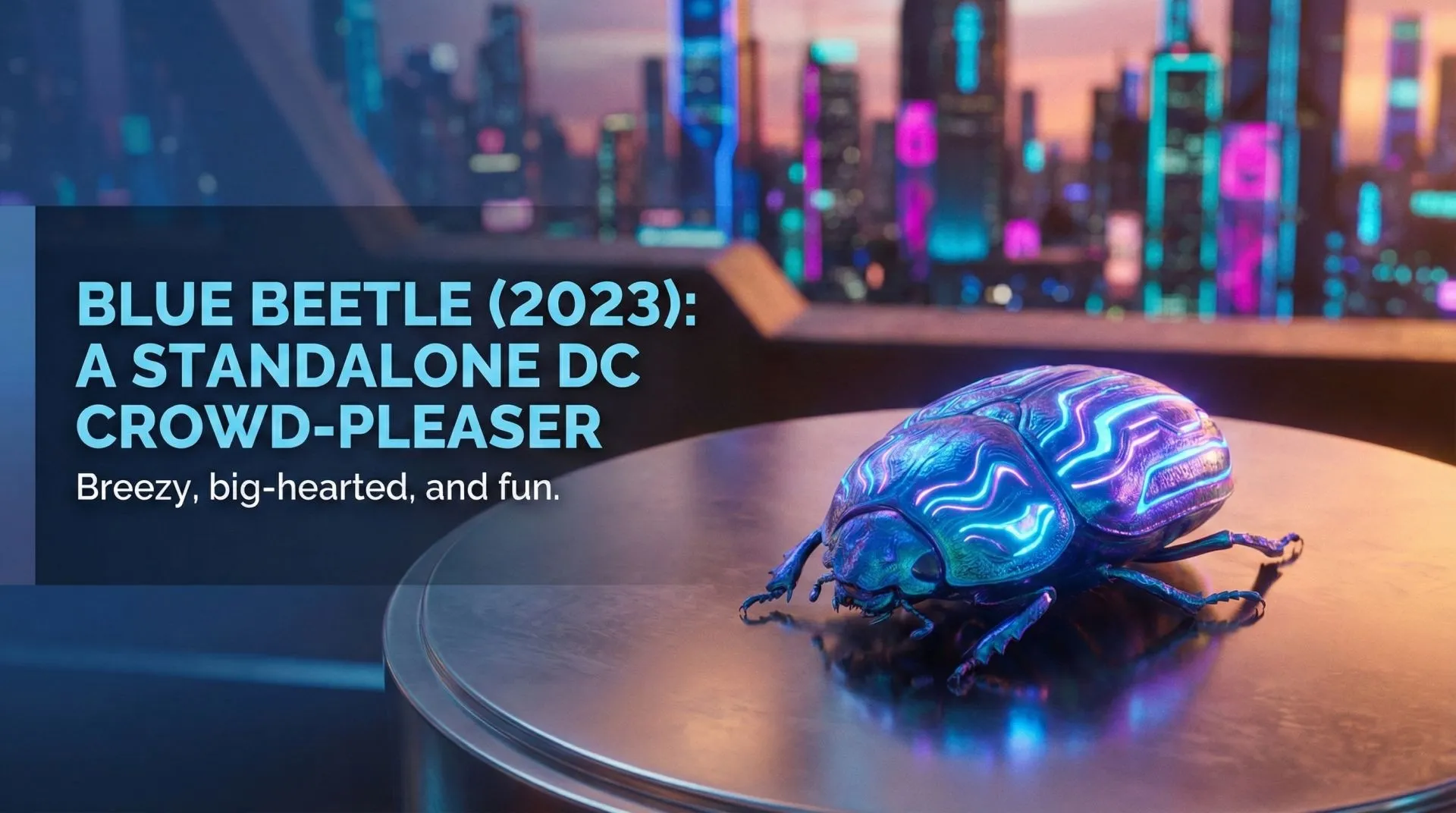
#16Blue Beetle: A Breezy, Big-Hearted DC Adventure That Deserves More Love

8 / 10
Released:

We went in expecting a mid-tier DC diversion and came out grinning. *Blue Beetle* keeps its universe connections minimal and focuses on what actually sells a superhero origin: a hero you want to spend time with, a family you’d invite to dinner, and a power set that’s fun to watch. Xolo Maridueña—already excellent in *Cobra Kai*—anchors the film with sweetness, timing, and just enough swagger. The suit’s living, reactive design makes every action beat feel playful and a little weird—in a good way. It’s brisk, colorful, and easy to recommend.

Disclaimer: This review and its visuals were created with the help of AI. Some links may be affiliate links – we may earn a commission if you make a purchase, at no extra cost to you.

What order should I watch the old DCEU?

Release order is the cleanest entry — start with Man of Steel (2013). Watch Batman v Superman in the Ultimate Edition. For the Snyderverse as a compact trilogy: Man of Steel, BvS Ultimate Edition, and Zack Snyder’s Justice League. Wonder Woman and The Suicide Squad (2021) work as standalone entry points too.

What is the best film in the old DCEU?

Wonder Woman (2017), followed closely by Man of Steel (2013). Both have emotional depth, directorial craft, and a clear identity. The Suicide Squad (2021) and Birds of Prey (2020) are the strongest genre achievements outside the Snyderverse.

What is the Snyderverse?

Zack Snyder’s original vision for the DCEU — Man of Steel, Batman v Superman (Ultimate Edition), and his Justice League, released in 2021. A darker, more mythological DC universe than the studio-compromised theatrical cuts allowed.

How many films are in the old DCEU?

16 films, from Man of Steel (2013) to Aquaman and the Lost Kingdom (2023). James Gunn’s new DC Universe launched in 2025 with Superman as a separate, rebooted franchise.

Which DCEU films can I skip?

Wonder Woman 1984 (5/10) is the only genuine skip. Black Adam (6/10) is optional. If you are being selective: Wonder Woman, Man of Steel, The Suicide Squad (2021), Zack Snyder’s Justice League, and Birds of Prey are the five essential films.

Patrick W. Founder & Editor

Father of two, keen nature & landscape photographer, and smart-home tinkerer based in rural Germany. Camera gear gets tested outdoors in real conditions — not on a studio bench — and the house runs on a home network more elaborate than it strictly needs to be. Everything reviewed here has to survive real family life: school runs, sticky fingers, and the odd toddler stress-test. Reviews are based on hands-on use, not press samples or sponsored placements. How we test →

More about Dadnology