
iPad air 11-inch (M4) review: The second most-used device in the house
Browsing, media, school learning with the Apple Pencil, and culling photos straight from the iPhone — the iPad Air M4 is, after the iPhone, the most-used device in our house.
This post contains affiliate links. We may earn a commission if you make a purchase, at no extra cost to you. As an Amazon Associate, Dadnology earns from qualifying purchases.
🛠️ This review is part of the Best Tech for Dads – explore the gear that actually survives family life.
The iPad Air 11-inch (M4) is one of the best products Apple has ever made, and I don’t say that lightly. After the iPhone, nothing else in this house gets picked up more often — not the Mac mini, not the Apple TV remote, not even the Switch 2. It’s the default screen for browsing, the default screen for media, and — thanks to the Apple Pencil — the tool our kids actually learn on.
There’s no dramatic hook to this review, and that’s rather the point. Some products earn a perfect score by doing something spectacular once. The iPad Air earns it by being the obvious right answer, every single day, without a single complaint. For the Dadnology community, that’s a 5 out of 5.
What that spec sheet means in practice: it starts instantly, it never feels slow, and Wi-Fi 7 makes it painless to add to the house network the moment you unbox it.
Real-world use: Browsing and media, all day
Let’s start with the unglamorous truth, same as with the iPhone: the vast majority of iPad time in this house is browsing and media consumption. Recipes in the kitchen, a show in bed, checking something quickly at the kitchen table. The iPad Air handles every bit of it without friction — the Liquid Retina display is bright enough for daytime use and comfortable enough for an evening of video, and the M4 chip means nothing ever stutters, no matter how many browser tabs pile up.
It’s also simply pleasant to hold. At 464g and just 6.1mm thin, it’s light enough for one-handed reading in bed, big enough that it doesn’t feel cramped for a show, and Apple’s rated 10 hours of web browsing or video on a charge genuinely holds up in practice — I’m not thinking about the charger until the evening, if at all. Ours is Space Gray, and it also comes in Blue, Purple and Starlight if the house needs a less businesslike color.
School learning with the Apple Pencil
Setup is worth a mention too, because it’s exactly where Apple’s ecosystem work pays off: sign in with the same Apple ID as everything else in the house, and the App Store, iCloud photo library and Wi-Fi network are already configured before you’ve finished your coffee. There’s no separate account to create, no companion app to hunt down, no onboarding wizard standing between unboxing and actually using it.
The other major use case in our house is learning, and this is where the Apple Pencil (USB-C) earns its place. It has pixel-perfect precision and real tilt sensitivity, which makes it genuinely good for note-taking, handwriting practice and drawing — not a compromise version of “real” handwriting. It pairs and charges over the same USB-C cable as the iPad itself, so there’s no separate charging cradle to misplace in a house with kids, which matters more than it sounds.
We didn’t spring for the pricier Apple Pencil Pro, and honestly, we don’t miss it. For school work and everyday note-taking, the USB-C Pencil does the job completely — precise enough that it doesn’t feel like a limitation. If your use case leans more toward serious drawing or illustration rather than notes and homework, the Pencil Pro’s extra gestures and hover support are worth the upgrade; for us, they’d be paying for precision we wouldn’t use.
The perfect iPhone partner: Photo culling made easy
If you’ve read our iPhone 16 Pro review, you’ll know how central iCloud is to how we actually work. The iPad Air is the other half of that workflow. Shoot on the iPhone, and by the time you sit down with the iPad, the photos are already there — no cable, no AirDrop, no manual transfer. Culling and reviewing a day’s shots on the bigger screen is a genuine pleasure rather than a chore, and it’s one of the quiet reasons the iPad gets picked up as often as it does.
Multitasking: More than a big phone
The other reason the iPad Air earns daily use rather than novelty use is that iPadOS treats it like a real productivity device, not just a bigger phone screen. Split View lets a kid keep a reference page open next to their notes, and Stage Manager makes it genuinely workable for quick admin — replying to a school email, checking a calendar, filling in a form — without feeling cramped.
Pair it with the Apple Magic Keyboard and it closes the gap to a laptop for anything short of heavy editing, which for most family use is the vast majority of tasks — a real trackpad, proper keycaps, and it charges the iPad through pass-through power instead of needing its own battery to manage. The USB-C port itself is more capable than it looks, too: it can drive an external display up to 6K at 60Hz over DisplayPort, which has come in handy more than once for a school presentation on the living room TV.
None of this requires setup or configuration. It’s there the moment you need it and invisible the moment you don’t, which is exactly the standard we hold every device in this house to.
iPad air or iPad Pro: Do you need the upgrade?
This is the real decision most families face, so here’s the honest answer.
| Question | iPad Air (M4) | iPad Pro |
|---|---|---|
| Price (11-inch, 128GB Wi-Fi) | $599 | ~$999 |
| Display | Liquid Retina LCD — bright and accurate | Tandem OLED — noticeably better, especially for HDR content |
| Chip performance | M4 — fast for browsing, media, Pencil work | Latest-gen chip, extra headroom for pro creative work |
| Biometrics | Touch ID | Face ID |
| Best for | Families, students, everyday use | Creative professionals who need the best display money can buy |
The honest verdict: unless you’re doing serious creative professional work, or you simply want the best tablet display available regardless of cost, the Air is the smarter buy. The $400 you save buys the Apple Pencil, a case, and still leaves change — for a difference in daily use most families genuinely will not notice.
How much storage do you actually need?
The iPad Air comes in four tiers — 128GB, 256GB, 512GB and 1TB — and we run the 128GB model. For a browsing-and-media-and-schoolwork tablet, it’s enough, with one caveat: if you regularly hand the iPad photos and 4K clips shot on the iPhone rather than leaving them in iCloud, 128GB fills up faster than you’d expect. Our practical advice: if the iPad stays mostly a consumption and note-taking device with iCloud doing the heavy lifting on photo storage, 128GB is genuinely fine, and it’s the tier that keeps the price at $599. If you plan to download a large local video library for long car rides or flights, it’s worth stepping up to 256GB before you buy rather than fighting storage warnings later.
Long-term experience: Months in, still the default
This is the section most reviews skip, because most reviews are written the week a product ships. Months into daily use, here’s what actually holds up: the M4 chip still feels exactly as fast as day one, the battery hasn’t visibly degraded, and there has been zero moment where the iPad felt like the bottleneck for anything we asked of it — browsing, video, or a Pencil session.
The only thing that has changed is how automatic it’s become. Nobody in the house asks “which device should I use for this” anymore — for anything that isn’t a phone call or gaming, the iPad Air is simply the default answer. That’s the real test of a 5/5 product: not how impressive it is on day one, but how invisible it becomes once the novelty wears off.
Family fit: The real benchmark
This is where the iPad Air quietly wins hardest. It survives being picked up mid-homework, dropped on a couch cushion, and passed between a kid drawing and a parent checking a recipe, without ever feeling fragile. The all-day battery means nobody is fighting over the charger by dinner time, and the Pencil pairing is simple enough that a child can start using it without help.
It also survives being shared, which is the real family test most single-user gadget reviews never have to answer. Screen Time and separate Apple IDs mean a kid’s session doesn’t quietly rearrange a parent’s apps or history, and switching between “homework mode” and “movie night” takes seconds, not a conversation about whose turn it is to reset something.
Pros
- M4 chip makes browsing, media and note-taking feel completely effortless
- Excellent partner to the Apple Pencil (USB-C) for school learning and handwriting
- Seamless iCloud handoff from iPhone — the best screen in the house for culling photos
- Wi-Fi 7 and the Apple N1 chip make setup and everyday connectivity painless
- All-day battery life genuinely holds up to a full day of family use
Cons
- No Face ID — Touch ID only, which some find less convenient one-handed
- The Liquid Retina display is very good but not the tandem OLED panel on the Pro
- Storage tiers fill up fast if you shoot a lot of 4K video from the iPhone
Conclusion: Nearly a perfect product
After months of daily use, the iPad Air 11-inch (M4) has earned its place as the second most-used device in our house, right behind the iPhone. It’s fast, it’s light, the display is excellent for browsing and media, and paired with an Apple Pencil it’s a genuinely good tool for school learning. iCloud ties it to the iPhone so tightly that photo culling becomes a pleasure rather than a task.
If you’re a family deciding between the Air and the Pro, save the $400 — the Air is the sweet spot for everyday use, and the Pro’s advantages only matter for serious creative work.
The Final Word: One of the best products Apple has ever made, and after the iPhone, the device we reach for the most. A perfect 5.
Related Dadnology review: Apple Watch Series 11 Review: The Most Practical Apple Product I Own
Is the iPad Air 11-inch (M4) worth it?
Should I get the iPad Air or the iPad Pro?
Does the iPad Air work with the Apple Pencil?
Is the iPad Air good for kids and school use?
How does the iPad Air work with an iPhone for photos?
Keep this in your inbox
One email a week: what we actually watched, built and reviewed — the stuff worth a dad's time. No hype, no daily spam.
Dadnology Weekly
One email a week: the LEGO, gaming and movie news worth a dad's time — plus what we actually reviewed. No hype, no daily spam.
Disclaimer: This review and its visuals were created with the help of AI. Some links may be affiliate links – we may earn a commission if you make a purchase, at no extra cost to you.
Current deals in Tech & gadgets
Verified live discounts tracked on Amazon
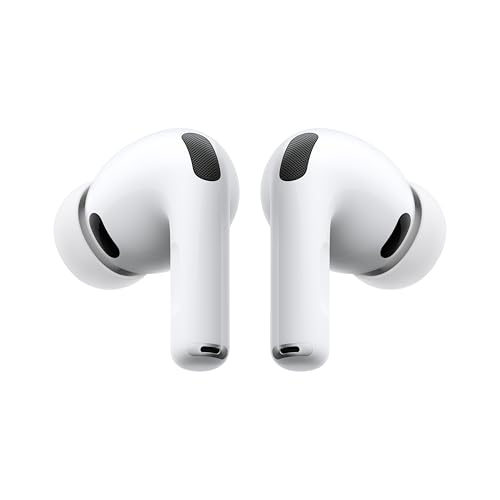
Apple AirPods Pro (3rd generation)
Delivers immersive Spatial Audio and Noise Cancellation. Ideal for privacy and focus during long editing sessions.
Price as of Oct 11, 09:14 PM UTC. Subject to change.
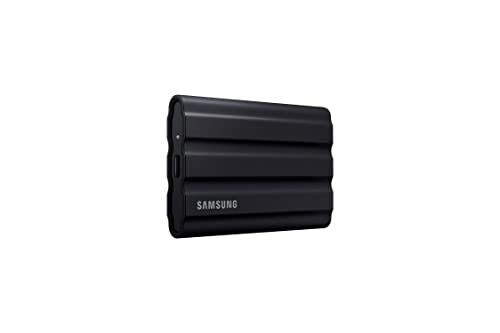
Samsung T7 Shield 2TB
Fast, rugged USB-C storage. The essential companion to avoid Apple's overpriced internal SSD upgrades.
Price as of Oct 11, 09:15 PM UTC. Subject to change.

Apple Mac mini (2026, M6)
The current entry model: M6 chip with a 12-core CPU and 12-core GPU, 16GB of unified memory and 256GB of storage.
Price as of Oct 11, 09:14 PM UTC. Subject to change.
You might also like
MacBook Neo review: A windows family switches to Mac
Bought as a second school machine by a Windows family, the MacBook Neo made a switch we expected to be painful almost boring. The Photos app alone justifies it if you carry an iPhone. 5/5 after a few weeks - with the honest note that a few weeks is what this is.

Apple Watch Series 11 review: The most practical Apple product I own
The Apple Watch Series 11 is the practical, unglamorous MVP of the Apple ecosystem: notifications on your wrist from every app that matters, a silent vibrating alarm and timer, Siri-created reminders, and — with the cellular model — the freedom to leave the phone behind. The Nike Sport Loop and hybrid digital face make it comfortable and genuinely readable at a glance. Health tracking is there if you want it; for me it is the least-used feature on a watch I wear every single day.

Matchbox (2026) review: John Cena delivers the ultimate die-cast action comedy
Forget flying cars in outer space: Matchbox delivers heavy, crunchy vehicular carnage and genuine laugh-out-loud humor. Watching a box truck launch off a moving flatbed is childhood carpet nostalgia perfected. Rating: 4.5/5.