
Dune Messiah by Frank Herbert - The dark sequel
Frank Herbert's short, dark sequel deconstructs the messiah of book one. Essential context for Dune: Part Three and a sharp tragedy in its own right.
This post contains affiliate links. We may earn a commission if you make a purchase, at no extra cost to you. As an Amazon Associate, Dadnology earns from qualifying purchases.
Introduction
Most sequels try to give you more of what you loved. Dune Messiah does something far braver and far stranger: it takes the triumphant ending of Dune and shows you the horror hiding inside it. Frank Herbert was reportedly alarmed that readers had treated Paul Atreides as a straightforward hero, and so he wrote a second book whose entire purpose is to dismantle that reading. This is the novel where the messiah pays his bill.
Set twelve years after the events of the first book, Dune Messiah opens on an empire built on Paul’s name and drenched in blood. His holy war, the jihad that the original novel only foreshadowed, has killed billions across the galaxy. Paul sits at the centre of a religion he never wanted, trapped by his own prophetic visions, hunted by a conspiracy of those who would tear his godhood down. This is not a story of rising. It is a story of a man caught in a machine he set in motion and can no longer stop.
It is a deliberately uncomfortable book, and it will not give you the desert-spanning spectacle of the first. But as a piece of thematic follow-through, it is remarkable, and it makes the whole saga richer.
Plot & characters
The plot is a slow-tightening political and personal trap. A cabal, the scheming Bene Gesserit, the calculating Spacing Guild, the shape-shifting Tleilaxu, and Paul’s own former allies, moves against him. At the heart of their plot is a resurrected figure from the first book, returned in a form that weaponises Paul’s grief and love against him. To say more would spoil the novel’s most devastating turns, but know that Herbert builds the tragedy with surgical patience.
Where the first book had a sprawling cast, Messiah narrows its focus inward. This is Paul’s book, and Chani’s, and his sister Alia’s. The emotional core is Paul’s impossible position: he can see the futures laid out before him with perfect clarity, and he is trapped by that very foresight, unable to step off a path he knows leads to grief. Herbert turns prescience, the hero’s great gift in book one, into the cruellest of curses.
The antagonists here are subtler than the cartoonish Baron of the first novel. They are ideas as much as people: the inevitability of institutions, the way a movement devours its founder, the gap between a man and the myth built around him. It is a more intellectually demanding kind of conflict, and a more adult one.
Style, tone & atmosphere
If Dune was a slow burn that exploded, Dune Messiah is a held breath that never fully releases. The tone is elegiac and claustrophobic. The vast deserts recede; much of the book takes place in the corridors of power on Arrakis, in conversations heavy with double meaning and dread. Herbert leans harder into philosophy and interiority, and the prose is denser, more allusive, more poetic.
This is the source of the book’s divisiveness. Readers who came for sandworms and battles can find it talky and bleak. But if you meet it on its own terms, as a tragedy about the cost of power and belief, the atmosphere is hypnotic. There is a mournful weight to it that lingers.
Because it is short, the pacing feels tighter and more focused than the first book, even as the events are quieter. There is no slow on-ramp here. You are dropped straight into the poisoned empire and the trap begins closing immediately.
The dad perspective: Reading experience & recommendation
This is a book I would steer a dad toward specifically after the films, because it answers the exact question Villeneuve’s Part Two leaves you with: what happens to a good man who becomes a messiah? The second film already plants the seeds of Paul’s darkness; Dune Messiah is the harvest.
Its brevity is a gift for a busy reader. After the six-week commitment of Dune, this is a sharp, focused fortnight, and its smaller scale means you can pick it up and put it down without losing the thread. It is a more melancholy read, though, so save it for an evening where you are up for something thoughtful rather than escapist.
The fatherhood resonance here is darker but real. This is a book about a man who can see the future and still cannot protect the people he loves from it, about the helplessness underneath even the greatest power. It is not a comfortable mirror, but it is an honest one.
Who is this for? The reader who finished Dune wanting to understand what it all meant, and who is open to a sequel that deliberately subverts rather than repeats. It is not for the reader who simply wanted Dune again, only bigger.
Pros
- A brave, thematically essential deconstruction of the hero's journey from book one
- Short and focused, a tight tragedy you can read in a week or two
- Turns prescience into a curse, one of the genre's great ideas
- Essential context for Villeneuve's upcoming Dune: Part Three
Cons
- Deliberately bleak and talky, with little of the first book's spectacle
- The dense, philosophical style will frustrate readers wanting more action
- Works far better as the second half of a story than as a standalone
Conclusion
Dune Messiah is not trying to be Dune, and judging it by that standard misses the point. It is a deliberate, bracing tragedy about the price of myth and power, and it elevates the entire saga by refusing to let Paul off the hook. Less thrilling, but arguably more meaningful.
Recommendation: Essential reading after the first book or the films, especially with Dune: Part Three on the way. Go in expecting a tragedy, not an adventure, and it will floor you.
🎧 Rather listen than read? Audiobooks are how busy dads actually finish books — start a free 30-day Audible trial and turn your commute into reading time.
Next in the series: Children of Dune.
FAQ
Should I read Dune Messiah after Dune?
Is Dune Messiah a good book?
Does Dune: Part Three adapt Dune Messiah?
How long is Dune Messiah?
Keep this in your inbox
One email a week: what we actually watched, built and reviewed — the stuff worth a dad's time. No hype, no daily spam.
Dadnology Weekly
One email a week: the LEGO, gaming and movie news worth a dad's time — plus what we actually reviewed. No hype, no daily spam.
Disclaimer: This review and its visuals were created with the help of AI. Some links may be affiliate links – we may earn a commission if you make a purchase, at no extra cost to you.
Current deals in Books & media
Verified live discounts tracked on Amazon
Books & media · Tested by Dadnology
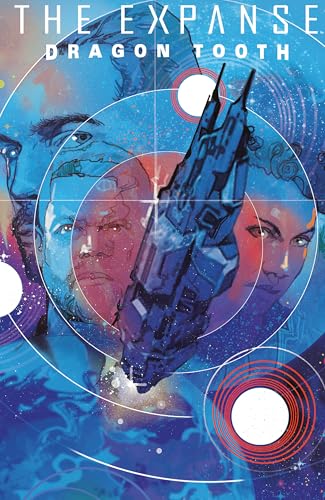
The Expanse: Dragon Tooth (Graphic Novel)
4.5/5“Bridging the void”Read our review
Books & media · Tested by Dadnology
The Art of The Legend of Vox Machina (Hardcover)
5/5“D&D-virginity meets fantasy chaos — and it's perfect.”Read our review
Books & media · Tested by Dadnology
The Hobbit Illustrated by the Author (Special Edition, Sprayed Edges)
5/5“A perfect page-Turner you'll want to read aloud”Read our reviewYou might also like

Chapterhouse: Dune - Frank Herbert's final novel
Chapterhouse: Dune is a tense, intimate finale that Herbert never got to finish, ending on a cliffhanger left forever open by his death. Strong, but bittersweet and incomplete. A 7.
Children of Dune by Frank Herbert - The twins inherit
Children of Dune closes the original trilogy with ambition and weirdness to spare, as Paul's twins inherit a changing Arrakis. Denser than book one, but a strong and rewarding read. An 8.
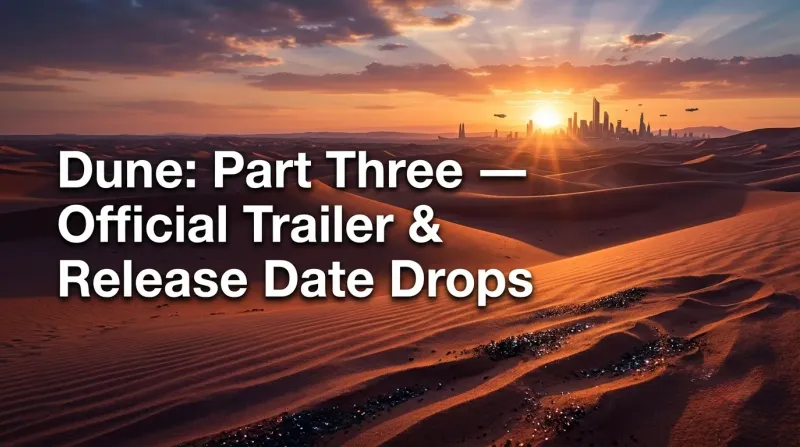
Dune: Part Three trailer drops, sets December date
The full Dune: Part Three trailer just dropped, and Villeneuve's finale to the trilogy is locked for a December 18, 2026 IMAX release.