
The Dune book series - Frank Herbert's complete saga
The complete guide to Frank Herbert's six Dune novels. Reading order, honest ratings, and how the books connect to Villeneuve's films.
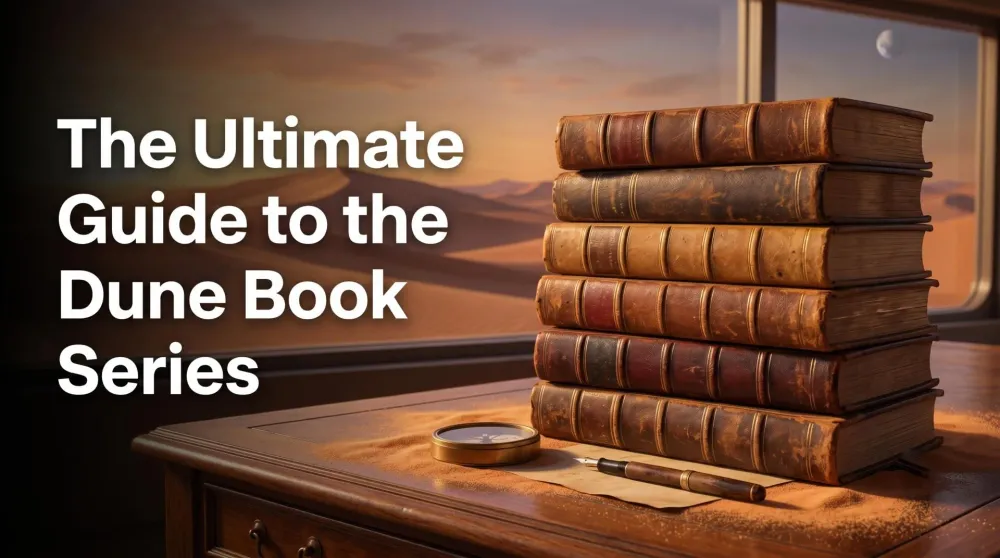
This post contains affiliate links. We may earn a commission if you make a purchase, at no extra cost to you. As an Amazon Associate, Dadnology earns from qualifying purchases.
The greatest saga in science fiction
Most great science fiction gives you one brilliant idea and rides it. Frank Herbert gave us a whole ecosystem of them, and then spent six novels and three and a half thousand fictional years tearing them apart and rebuilding them. The Dune saga is, simply, the most ambitious thing the genre has produced: a story about ecology, religion, power, prescience, and the long, terrible arc of human history, told across a span of time that makes most epics look like a long weekend.
At Dadnology we have a soft spot for the books that respect a reader’s intelligence, and few respect it as fiercely as Dune. Herbert does not hold your hand. He drops you into a fully realised universe of warring houses, secret sisterhoods, and a desert planet whose entire economy depends on a drug that lets you fold space, and he trusts you to keep up. For a dad reading on a commute or stealing an hour after bedtime, that demand is part of the pleasure, this is a saga that makes you feel sharper for having read it.
Here is the honest framing, though, and it is the most useful thing in this hub: the Dune saga is not a flat line of equal books. It opens with a perfect 5, stays strong through a brilliant middle, and then gets genuinely, fascinatingly strange. Knowing that going in is the difference between loving the whole journey and bouncing off it at book four.
Series content
Explore all articles, reviews, and guides in this series.
Dune
“Frank Herbert's Dune is the novel every later science fiction epic is measured against: a story of empire, ecology, prophecy, and a boy who becomes a messiah on a desert planet. Our spoiler-free review explains why the 1965 original is a perfect 5, how it reads for a busy dad, and why it is the only place to start the saga.”
“Dune Messiah is the deliberately darker, smaller second novel in Frank Herbert's saga, a tragedy about the cost of the holy war Paul Atreides unleashed. Our review explains why this divisive sequel is essential reading, how it recontextualises the films, and what to expect from the upcoming Dune: Part Three adaptation.”
“Children of Dune is the third novel in Frank Herbert's saga, completing the original trilogy as Paul's twin children inherit the empire, the prophecy, and a planet beginning to transform. Our review covers how this denser, stranger book reads, where it soars, and whether it is worth a busy dad's evenings.”
“God Emperor of Dune is the fourth and most divisive novel in Frank Herbert's saga, jumping 3,500 years into the future to follow Leto II, who has transformed into a human-sandworm hybrid ruling as a tyrant-god. Our review explains why this strange, philosophical book is either the high point or the breaking point of the saga, and who should read it.”
“Heretics of Dune is the fifth novel in Frank Herbert's saga, a deliberate reset set 1,500 years after God Emperor that introduces new factions, a returning desert, and a faster, more conventional pace. Our review covers what works, what feels like setup, and whether the late saga is worth a busy dad's time.”
“Chapterhouse: Dune is Frank Herbert's sixth and final novel, a tense, intimate story of the Bene Gesserit making their last stand against the Honored Matres. Our review covers what makes this late-saga book compelling, why its unresolved ending frustrates, and whether it is a fitting end to one of science fiction's great sagas.”
Outside of the Main Timeline — Multiverse & Specials (0)
No entries found
Try adjusting your filters or search terms.
The reading order: Keep it in publication order
There is no clever trick here. Read the six novels in the order Frank Herbert wrote them, because each is a direct sequel to the last:
- Dune (1965) - the perfect opening. Paul Atreides on Arrakis.
- Dune Messiah (1969) - the short, sharp deconstruction of everything book one set up.
- Children of Dune (1976) - Paul’s twins inherit the empire and the prophecy.
- God Emperor of Dune (1981) - a 3,500-year jump to Leto II’s strange tyranny.
- Heretics of Dune (1984) - a new era, 1,500 years later, on a changed Arrakis.
- Chapterhouse: Dune (1985) - Herbert’s final novel and the last word on his saga.
The large time jumps, especially the enormous leap before God Emperor, are intentional. Herbert was never interested in just continuing Paul’s story, he was interested in the deep history of an entire species. Treat each jump as a feature, not a gap.
From page to screen: What the films actually adapt
This is the question every fan of Villeneuve’s films asks, so let me be precise about it.
Denis Villeneuve’s Dune (2021) and Dune: Part Two (2024) together adapt only the first novel, Dune. That is it. Two epic films, five and a half hours of screen time, and they cover a single book, which tells you something about how dense Herbert’s writing is.
Dune: Part Three, due in theaters 18 December 2026, adapts the second novel, Dune Messiah — Villeneuve has called it his favourite book of the series. It is a deliberately darker, smaller, more tragic story than the first. If you have only seen the films and want to know where Paul’s journey goes next, Dune Messiah is the book to read, it is short, sharp, and it recontextualises everything the films have shown you about the messiah Paul becomes.
The remaining four novels, from Children of Dune onward, have never been adapted to film. They are the deep cuts, the territory only readers get to explore, and they go places no blockbuster would dare.
| Novel | Adapted On Screen? | Dadnology Verdict |
|---|---|---|
| Dune | Yes - Villeneuve's two films | A perfect 5, start here |
| Dune Messiah | Dune: Part Three, 18 Dec 2026 | Short, dark, essential |
| Children of Dune | No (a 2003 miniseries aside) | A strong, strange continuation |
| God Emperor of Dune | No | The boldest, most divisive book |
| Heretics of Dune | No | A solid late-saga reset |
| Chapterhouse: Dune | No | An unfinished-feeling farewell |
A note for the dad reader: Where it gets weird
I want to set expectations honestly, because it will make you enjoy the saga more. The first three books are relatively accessible, character-driven epics. Then, with God Emperor of Dune, Herbert jumps three and a half thousand years into the future to follow a man who has slowly turned himself into a giant sandworm and ruled as a tyrant-god ever since. It is, by some distance, the strangest mainstream sci-fi novel you will ever read, and it is half philosophy lecture, half character study.
Some readers consider God Emperor the high point of the entire saga. Others find it where they finally got off the ride. Both reactions are valid. The point is this: the Dune novels reward a reader who is willing to follow Herbert somewhere genuinely uncomfortable and abstract. If you go in expecting six more books exactly like the first, the later volumes will frustrate you. If you go in expecting an author who keeps reinventing his own universe, you will find one of the most rewarding reading projects in the genre.
How to use this hub
Below you will find our individual reviews of all six novels, in reading order, each with an honest rating and a spoiler-aware take. Click through for the deep dives, including which books are essential, which are optional, and how to pace yourself through the saga. Committing to the whole saga up front? The complete 6-book collection is the more efficient way in than buying each volume as you go.
If you are completely new to Dune and not sure whether to start with the books or the films at all, our How to Get Into Dune guide answers exactly that question.
The Dune saga: The Dadnology verdict
Frank Herbert’s six Dune novels are a monumental achievement, a saga with more genuine ideas in any single chapter than most series manage across their whole run. It is not flawlessly consistent, the later books are demanding and strange, but it is consistently ambitious in a way almost nothing else in the genre matches. For a dad who wants science fiction that treats him like an adult, this is the deep end worth diving into.
Scroll down to find your starting point. Begin with Dune. Everything flows from there.
All six novels in the Dune saga appear below, in reading order. Click through for the full reviews and buying links.
📚 Reading the whole series? Kindle Unlimited gives you a rotating million-title library for one flat monthly fee — worth checking if this series is in the catalog before you buy every volume.
What is the correct reading order for the Dune books?
How many Dune books did Frank Herbert write?
Which Dune book should I start with?
Do the Dune films cover all the books?
Are the Dune books suitable for kids?
Keep this in your inbox
One email a week: what we actually watched, built and reviewed — the stuff worth a dad's time. No hype, no daily spam.
Dadnology Weekly
One email a week: the LEGO, gaming and movie news worth a dad's time — plus what we actually reviewed. No hype, no daily spam.
Disclaimer: This review and its visuals were created with the help of AI. Some links may be affiliate links – we may earn a commission if you make a purchase, at no extra cost to you.
Current deals in Books & media
Verified live discounts tracked on Amazon
Books & media · Tested by Dadnology
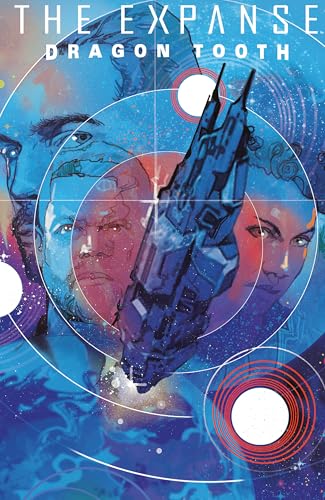
The Expanse: Dragon Tooth (Graphic Novel)
4.5/5“Bridging the void”Read our review
Books & media · Tested by Dadnology
The Art of The Legend of Vox Machina (Hardcover)
5/5“D&D-virginity meets fantasy chaos — and it's perfect.”Read our review
Books & media · Tested by Dadnology