
Children of Dune by Frank Herbert - The twins inherit
Frank Herbert's third Dune novel hands the saga to Paul's twins. A strong, strange continuation that closes out the original trilogy in style.
This post contains affiliate links. We may earn a commission if you make a purchase, at no extra cost to you. As an Amazon Associate, Dadnology earns from qualifying purchases.
Introduction
By the third book, Frank Herbert had stopped writing about a hero and started writing about history. Children of Dune completes the original trilogy, and it is the hinge on which the entire saga turns, the last book that still feels recognisably connected to Paul Atreides and the desert we fell in love with, before Herbert hurls the series millennia into the future.
The setup picks up nine years after Dune Messiah. Paul’s twin children, Leto II and Ghanima, are nine years old and already burdened with the pre-born awareness of countless ancestral memories. They are children in body only, ancient and dangerous in mind. The empire is ruled in their name by their aunt Alia, who is losing a private war against the ancestral voices in her own head. And Arrakis, the eternal desert, is beginning to bloom, the ecological transformation set in motion long ago is starting to kill the very conditions that made the spice, and the worms, possible.
It is a dense, ambitious, frequently strange book, and it brings the family saga of the Atreides to a genuinely satisfying and unsettling close.
Plot & characters
The plot threads are numerous and tightly woven. Leto and Ghanima must navigate a court that wants them dead, a grandmother returning from exile with her own agenda, a mysterious blind preacher wandering the desert whose identity haunts the entire narrative, and above all the temptation of the terrible bargain that will define Leto’s future. Herbert is playing a long game here, and many of the choices made in this book pay off thousands of years later in God Emperor.
The twins are fascinating protagonists precisely because they unsettle. Herbert resists making them cute or precocious in the usual way; they are genuinely alien, wise beyond any human scale, and the central tension of the book is whether they can stay human at all under the weight of all those inherited lives. Alia’s tragic unravelling is the emotional gut-punch of the novel, a cautionary mirror to the twins’ own danger.
The blind preacher subplot is some of the most haunting writing in the saga, and it gives the book a melancholy, prophetic atmosphere. The antagonists, scheming nobles and the manipulating Lady Jessica, are less memorable than the central question the book keeps circling: what does a human being have to sacrifice to save the species, and is the price ever worth paying?
Style, tone & atmosphere
Children of Dune is denser and more internal than the first novel, leaning further into the philosophical mode that Messiah introduced. Herbert spends a great deal of time inside his characters’ heads, wrestling with prescience, memory, and identity. The plot is there, and it moves, but it shares the page with long passages of genuinely heady rumination.
The atmosphere, though, is wonderful. There is a doom-laden, mythic quality to this book, a sense of vast forces grinding toward an inevitable conclusion. The desert is still here, but it is a desert under threat, which gives the whole novel an autumnal sadness. The image of a green Arrakis is somehow more disturbing than any monster.
This is the point in the saga where you should calibrate your expectations. Children of Dune is more demanding than the first book and rewards careful reading. If you race through it on a distracted commute, you will lose threads. It wants a little quiet.
The dad perspective: Reading experience & recommendation
This is a book about inheritance in the most literal sense, children carrying the memories and burdens of every ancestor who came before them. For a dad, that metaphor lands hard. We do pass things to our children, our fears, our patterns, our unfinished business, and Children of Dune dramatises that idea on a cosmic scale. Watching the twins fight to remain themselves under the weight of all that inheritance is genuinely moving.
In practical terms, this is a more demanding evening read than the first two. The philosophical density means it is better suited to nights when you have a clear half-hour than to a stolen five minutes. The audiobook helps carry you through the denser passages and is a fine choice for a commute, though you will want to be paying attention.
For many readers, this is also a perfectly satisfying place to stop the saga. It closes the Atreides family story with real weight. Whether you continue into the strange territory beyond depends on your appetite for Herbert at his most experimental, which is exactly what the next book delivers.
Pros
- A satisfying, ambitious close to the original Paul Atreides trilogy
- The pre-born twins are genuinely unsettling, original protagonists
- The green-Arrakis ecological theme gives the book a haunting melancholy
- Plants seeds that pay off spectacularly in God Emperor of Dune
Cons
- Denser and more internal than the first book, with heavy philosophical passages
- Requires having read the first two novels, with no concessions to newcomers
- Some plot threads feel like setup for later books rather than payoff here
Conclusion
Children of Dune is the saga at its most transitional, half a satisfying conclusion to the Atreides story, half a launchpad for the wilder books to come. It is denser and stranger than the original, but it is also rich, haunting, and ambitious in a way few series ever attempt.
Recommendation: Essential if you want to complete the original trilogy, and a natural stopping point if the later, far-future books do not appeal. A strong, rewarding read for the patient.
🎧 Rather listen than read? Audiobooks are how busy dads actually finish books — start a free 30-day Audible trial and turn your commute into reading time.
Next in the series: God Emperor of Dune.
Related Dadnology reviews: Dune: Awakening Hits Consoles - Arrakis for PS5 & Xbox · Dune: Part Three Trailer Drops, Sets December Date
FAQ
Do I need to read Dune and Dune Messiah first?
Is Children of Dune a good stopping point?
How long is Children of Dune?
What is Children of Dune about?
Keep this in your inbox
One email a week: what we actually watched, built and reviewed — the stuff worth a dad's time. No hype, no daily spam.
Dadnology Weekly
One email a week: the LEGO, gaming and movie news worth a dad's time — plus what we actually reviewed. No hype, no daily spam.
Disclaimer: This review and its visuals were created with the help of AI. Some links may be affiliate links – we may earn a commission if you make a purchase, at no extra cost to you.
Current deals in Books & media
Verified live discounts tracked on Amazon
Books & media · Tested by Dadnology
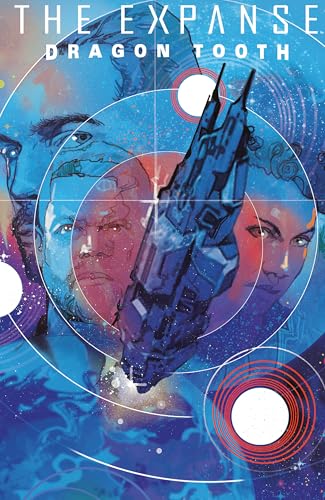
The Expanse: Dragon Tooth (Graphic Novel)
4.5/5“Bridging the void”Read our review
Books & media · Tested by Dadnology
The Art of The Legend of Vox Machina (Hardcover)
5/5“D&D-virginity meets fantasy chaos — and it's perfect.”Read our review
Books & media · Tested by Dadnology
The Hobbit Illustrated by the Author (Special Edition, Sprayed Edges)
5/5“A perfect page-Turner you'll want to read aloud”Read our reviewYou might also like

Chapterhouse: Dune - Frank Herbert's final novel
Chapterhouse: Dune is a tense, intimate finale that Herbert never got to finish, ending on a cliffhanger left forever open by his death. Strong, but bittersweet and incomplete. A 7.
Dune Messiah by Frank Herbert - The dark sequel
Dune Messiah is a deliberate, bracing deconstruction of everything the first book built, a short tragedy about the cost of being a messiah. Less thrilling than Dune, but vital. A strong 4.
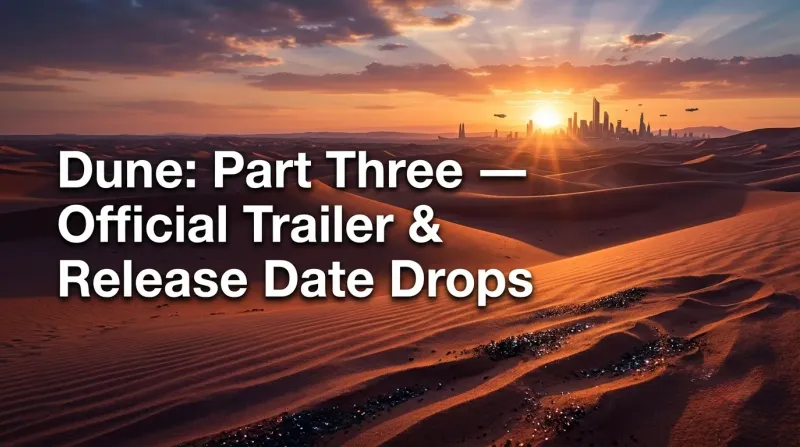
Dune: Part Three trailer drops, sets December date
The full Dune: Part Three trailer just dropped, and Villeneuve's finale to the trilogy is locked for a December 18, 2026 IMAX release.