
Heretics of Dune by Frank Herbert - The saga resets
Frank Herbert's fifth Dune novel jumps 1,500 years for a fresh, faster-paced reset. A solid late-saga return with new powers and a re-wilded Arrakis.
This post contains affiliate links. We may earn a commission if you make a purchase, at no extra cost to you. As an Amazon Associate, Dadnology earns from qualifying purchases.
Introduction
After the glacial, philosophical intensity of God Emperor of Dune, Frank Herbert clearly knew he had taken his readers as far into the abstract as they could go. Heretics of Dune is his course correction, a deliberate reset that jumps fifteen hundred years past the death of the Tyrant and hands us a faster, more conventional, more plot-driven novel. If God Emperor was the saga holding its breath, Heretics is it exhaling and starting to move again.
The universe Leto II engineered has changed beyond recognition. His millennia of oppression triggered the Scattering, a vast human diaspora across the stars, and now those scattered billions are returning to the old empire, bringing new powers and new threats with them. The Bene Gesserit sisterhood, always lurking at the edges of the saga, finally take centre stage. And on a re-wilded Arrakis, the desert and the worms are returning, closing a loop the whole saga has been circling.
It is a solid, engaging book. Not essential in the way the first three are, but a genuinely enjoyable return to a universe you have come to love, and the most accessible of the later novels.
Plot & characters
The plot is, refreshingly, a plot. The Bene Gesserit are cultivating a remarkable young girl, Sheeana, who can command the returned sandworms, while protecting yet another Duncan Idaho ghola who may hold the key to the order’s survival. Against them stand the Honored Matres, a violent, sexually dominating sisterhood returned from the Scattering, who threaten to overwhelm the old empire entirely. There is espionage, seduction, training, and the constant maneuvering of factions that the saga does so well.
The new cast is a mixed bag. Sheeana and the latest Duncan are engaging, and the Bene Gesserit Reverend Mother Taraza and the security officer Miles Teg, an old man with a surprising secret, are strong additions. Teg in particular is one of Herbert’s best late-saga creations. The Honored Matres, though, are a blunter antagonist than the saga’s best villains, more force of nature than fully realised threat.
What works best is the sense of a universe in motion again. After the static millennia of the Tyrant, Heretics feels alive with competing agendas and genuine uncertainty about who will come out on top. It also brings real emotional weight to the Bene Gesserit, finally giving the sisterhood that has manipulated events for four books a story of their own.
Style, tone & atmosphere
Herbert’s prose here is more propulsive than in God Emperor, though he never fully abandons his love of philosophical digression. There are still plenty of meditations on power, religion, and human nature, but they are folded into a story that keeps moving. The result is the most readable of the later books, and a welcome return to something closer to the rhythm of the original.
The atmosphere benefits enormously from the return of the desert. The image of a re-wilding Arrakis, with new worms rising from the sand, taps directly into the iconography that made the saga great. There is a satisfying sense of full circle here, of the desert reclaiming what was always its own.
That said, this is the start of a new arc rather than a self-contained story, and it shows. Heretics spends a good deal of energy setting up pieces that were meant to pay off in later books. As a reading experience, it is satisfying but slightly incomplete, a strong first act to a story Herbert would not live to finish.
The dad perspective: Reading experience & recommendation
After the demanding climb of God Emperor, Heretics of Dune is a relief and a reward, a book you can actually relax into. For a busy dad, the faster pace and clearer plot make it far easier to read in fragmented sessions than the previous novel. You can pick it up for fifteen minutes after bedtime and actually make progress, which is not something I could say about book four.
The emotional resonance is more diffuse than in the earlier books, there is no single father-son spine here, but the themes of legacy and survival across deep time remain, and Miles Teg’s arc carries a real, late-career poignancy. It is less personal than the original trilogy, more about institutions and history, which makes it intellectually engaging if less emotionally direct.
Who is this for? The reader who has come this far and wants to keep going, who enjoys Herbert’s universe enough to follow it into a new era. It is not the place to start, and it is not as essential as the books before it, but it is a genuinely enjoyable late-saga return that rewards your investment.
Pros
- A faster, more accessible reset after the density of God Emperor
- The return of the desert and the worms to a re-wilded Arrakis is deeply satisfying
- Finally puts the fascinating Bene Gesserit at the centre of the story
- Miles Teg is one of Herbert's best late-saga characters
Cons
- Less essential and less emotionally direct than the original trilogy
- The Honored Matres are a blunter antagonist than the saga's best villains
- Functions as the first act of an arc Herbert never lived to complete
Conclusion
Heretics of Dune is a solid, enjoyable return to form after the saga’s strangest detour. It will not displace the original trilogy in anyone’s affections, but it breathes real life back into the universe and reminds you why you fell for Arrakis in the first place.
Recommendation: Worth reading if you loved the first four books and want more. The most accessible of the later novels, and a satisfying, if slightly incomplete, new beginning.
🎧 Rather listen than read? Audiobooks are how busy dads actually finish books — start a free 30-day Audible trial and turn your commute into reading time.
Next in the series: Chapterhouse: Dune.
FAQ
Can I read Heretics of Dune without the earlier books?
Is Heretics of Dune more action-focused than God Emperor?
How long is Heretics of Dune?
Is it worth reading the later Dune books?
Keep this in your inbox
One email a week: what we actually watched, built and reviewed — the stuff worth a dad's time. No hype, no daily spam.
Dadnology Weekly
One email a week: the LEGO, gaming and movie news worth a dad's time — plus what we actually reviewed. No hype, no daily spam.
Disclaimer: This review and its visuals were created with the help of AI. Some links may be affiliate links – we may earn a commission if you make a purchase, at no extra cost to you.
Current deals in Books & media
Verified live discounts tracked on Amazon
Books & media · Tested by Dadnology
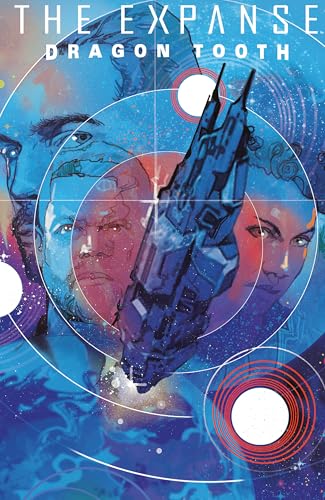
The Expanse: Dragon Tooth (Graphic Novel)
4.5/5“Bridging the void”Read our review
Books & media · Tested by Dadnology
The Art of The Legend of Vox Machina (Hardcover)
5/5“D&D-virginity meets fantasy chaos — and it's perfect.”Read our review
Books & media · Tested by Dadnology
The Hobbit Illustrated by the Author (Special Edition, Sprayed Edges)
5/5“A perfect page-Turner you'll want to read aloud”Read our reviewYou might also like
Chapterhouse: Dune - Frank Herbert's final novel
Chapterhouse: Dune is a tense, intimate finale that Herbert never got to finish, ending on a cliffhanger left forever open by his death. Strong, but bittersweet and incomplete. A 7.
Children of Dune by Frank Herbert - The twins inherit
Children of Dune closes the original trilogy with ambition and weirdness to spare, as Paul's twins inherit a changing Arrakis. Denser than book one, but a strong and rewarding read. An 8.

Dune: Part Three trailer drops, sets December date
The full Dune: Part Three trailer just dropped, and Villeneuve's finale to the trilogy is locked for a December 18, 2026 IMAX release.