
Transfer of Power review – Mitch Rapp walks in
Terrorists seize the White House, the President is sealed in a bunker, and the CIA sends one man in through the tunnels. The book that created Mitch Rapp. 5/5.
This post contains affiliate links. We may earn a commission if you make a purchase, at no extra cost to you. As an Amazon Associate, Dadnology earns from qualifying purchases.
📖 Introduction
🎯 This review is part of our guide to Mitch Rapp books in order — every Vince Flynn novel in sequence, with the honest answer to where to start.
Mitch Rapp did not exist until this book. Vince Flynn had written Term Limits without him, sold it, and then sat down to write a second novel and invented one of the most durable characters in modern thriller fiction.
Transfer of Power gives him an entrance worth having.
The setup is one of those premises that sounds too big until you see it executed. A terrorist cell under Rafique Aziz takes the White House — not a wing, not a perimeter, the building — during a public event. Dozens of hostages are held on the upper floors. The President is alive and sealed in a hardened bunker beneath the structure, which is both the good news and the problem, because everyone now knows exactly where he is and has all the time in the world to get to him.
A conventional assault kills the hostages. Negotiation gives Aziz what he wants. So somebody makes the decision to send one man in through the underground approaches, alone, ahead of everybody.
🧠 The story
The reason this works and a hundred similar premises do not is geography.
Flynn treats the White House as a real building with real floors, stairwells, service corridors and sightlines, and once you accept that, the tension writes itself. Rapp moving through it is not an action sequence; it is a slow, methodical problem — where can he be seen from, which route has no cover, what happens to the hostages upstairs if a body is found on the ground floor before he is ready.
Above him, the siege is a political event. The Vice President, Sherman Baxter, is running the response in public, and the novel’s sharpest move is to make him not a coward but an opportunist. He genuinely believes a negotiated outcome is best, and he also cannot help noticing that a President in a bunker is a President not currently governing. Flynn never has him say the second part out loud, which is what makes him effective.
That is the book’s real structure: a man doing extremely careful work in the dark, and a man above him doing extremely careful positioning in the light, and the two of them working towards incompatible outcomes.
🎭 Characters and craft
Rapp as introduced here is more interesting than the character he later becomes. He is young, he is very good, and he is not yet the institution he turns into over the next fifteen books. The novel establishes his defining quality immediately: he does not hesitate. Not because he is brave but because he has already thought it through and hesitation is what gets people killed.
Flynn is careful to make him unsettling. Several characters who are nominally on his side find him difficult to be in a room with, and the book agrees with them. There is a version of Rapp — the one the later novels sometimes drift into — who is simply the most competent man available. This one is a specialist in a category of work most people would rather not think about, and the novel keeps that discomfort alive.
Irene Kennedy arrives here too, and their relationship is the spine of the whole series: she is the one person who can direct him, and she does it by being straight with him rather than by having authority over him.
Anna Rielly, a journalist caught in the building, is the weakest element — a hostage-and-love-interest role that the novel does not give enough to do, though she matters more in the books that follow.
The prose is plain, fast and entirely unshowy. Flynn is not a stylist and does not try to be. What he has is pace and clarity, and in a siege novel those are the right tools.
👨👧 The dad perspective
This is the most purely enjoyable book on either of these shelves, and it is worth being honest about what that means.
It is a competence fantasy of the cleanest kind — one person who is very good at a specific thing, dropped into a situation nobody else can solve, working the problem methodically until it is solved. There is no ambiguity of the sort Clear and Present Danger trades in and none of the institutional despair of Slough House. The system here is imperfect but it is not the enemy, and Rapp’s competence is not shown to have cost him anything yet.
That makes it the ideal book for a particular kind of evening: the one where you have had a week of ambiguity and would like to watch somebody just handle it.
The political subplot is what stops it being empty calories. Baxter’s manoeuvring gives the book something to be about, and Flynn is genuinely good on how a crisis becomes an opportunity for the person one rung below the top.
Reading commitment: moderate and it moves. The siege structure means natural stopping points, so it works in short sessions better than most.
Audiobook: excellent — the geography is clear enough to follow by ear and the pace suits it. Audible’s 30-day trial covers it; check what is actually in the catalogue before planning around it.
Age guidance: 16 and up. Hostages die, the violence is unsentimental, and Rapp’s methods are not softened. Nothing here is gratuitous.
✅ Pros & cons
Pros
- One of the great character introductions in modern thriller fiction
- The White House is treated as a real building, and the geography does the tension
- Baxter is an opportunist rather than a coward, which makes him genuinely effective
- Rapp is written as unsettling rather than admirable, and the book keeps that alive
- Completely standalone — the best entry point to the series
Cons
- Anna Rielly is underwritten in a role that needed more
- The terrorists are competent but never become people
- Plain prose that will not satisfy anyone reading for the sentences
- Morally the least complicated book in the series, which cuts both ways
Conclusion: The best way in
Transfer of Power is the book that made Vince Flynn’s career, and it is easy to see why. It takes a premise that should collapse under its own size, grounds it in a building the reader can picture, and then puts a genuinely new character through it.
Five out of five, and if you are starting the series this is where to do it. It asks nothing of you, it resolves completely, and by the end you will know whether you want the next fifteen.
The Final Word: the best siege thriller on either shelf, and the entrance that built a franchise. Five out of five.
Is Transfer of Power worth reading?
Is this the first Mitch Rapp book?
Do I need to read Term Limits first?
What is Transfer of Power about?
How violent is Transfer of Power?
Keep this in your inbox
One email a week: what we actually watched, built and reviewed — the stuff worth a dad's time. No hype, no daily spam.
Dadnology Weekly
One email a week: the LEGO, gaming and movie news worth a dad's time — plus what we actually reviewed. No hype, no daily spam.
Disclaimer: This review and its visuals were created with the help of AI. Some links may be affiliate links – we may earn a commission if you make a purchase, at no extra cost to you.
Current deals in Books & media
Verified live discounts tracked on Amazon
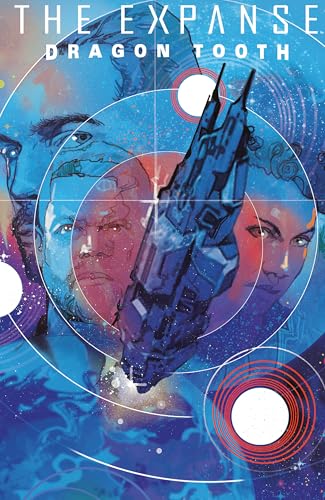
The Expanse: Dragon Tooth (Graphic Novel)
The official bridge between the show and Book 7. Fill the 30-year gap with this canonical comic series.
Price as of Oct 9, 09:11 PM UTC. Subject to change.

Jurassic Park - 4K Ultra HD
Experience the movie that defined a generation in stunning 4K resolution. A visual masterpiece.
Price as of Oct 9, 09:11 PM UTC. Subject to change.

The Art of The Legend of Vox Machina (Hardcover)
The official art book — stunning behind-the-scenes visuals from the making of the series.
Price as of Oct 9, 09:11 PM UTC. Subject to change.
You might also like
Memorial Day review – The one with the second bomb
The best premise in the series: the bomb you find is the one they wanted you to find. Tense, tightly built and genuinely unsettling about how relief makes people stop looking. Also the book where Rapp's methods get hardest to watch. Rating: 5/5.
Executive Power review – Rapp behind a desk, briefly
The most globe-trotting book in the run, and the one that finally asks what Rapp is for once everybody knows his name. Intricate, fast, and unusually good on how an atrocity can be a negotiating position. Rating: 5/5.
Mitch Rapp books in order – Vince Flynn's series explained
Start with Transfer of Power, not with the chronologically first book. Read in publication order. And know that only the first fourteen novels are Vince Flynn's own — everything after The Last Man was written by somebody else.