
Nikon Z 24-70mm f/2.8 S review – The lens that does 80% of life
Wide enough for the room, long enough for a portrait, fast enough for a dim living room at bath time. The lens that basically lives on my Z8. A 5/5.

This post contains affiliate links. We may earn a commission if you make a purchase, at no extra cost to you. As an Amazon Associate, Dadnology earns from qualifying purchases.
📷 This review is part of our Nikon Brand Hub — every Nikon Z body and lens we’ve tested, from wildlife glass to landscape and family photography kits.
I went fully mirrorless in December 2020. After a long run of Nikon DSLRs — a D90 that taught me photography, a D750 that gave me full-frame — I sold most of the F-mount kit and committed to Z (keeping the D750 as a backup and picking up a D500 for birding the same month). The very first lens I bought to carry the everyday load was the Nikon NIKKOR Z 24-70mm f/2.8 S. Five years and one Nikon Z8 later, it has barely come off the camera. It is, without exaggeration, the lens that handles 80% of my actual life.
Here’s the verdict up front, no burying the lede: for a dad who wants one lens that does almost everything, the 24-70mm f/2.8 S is a 5/5. Wide enough for the room, long enough for a portrait, fast enough for a dim living room at bath time. It is the workhorse — the lens you reach for first and put down last — and it earns that status every single day.
This isn’t a spec dump — Nikon’s site does that better than I can. This is what it’s actually like to live with the 24-70mm as the lens that’s permanently mounted on a family camera. The thread running through all of it is simple: whatever the situation throws at you, this lens is already on the camera and already up to it.
What “the one lens” actually means
Every photographer eventually has the same realisation: the lens you use most is the one that’s on the camera when the moment happens. You can own the sharpest 85mm portrait prime in the world, but if it’s in the bag while your kid does something hilarious in the kitchen, it photographs nothing. The 24-70mm f/2.8 is the answer to that problem. It’s broad enough to never need swapping for the ordinary moments of a day, and good enough that you rarely wish you had.
Twenty-four millimetres at the wide end is genuinely wide — enough to fit a cluttered living room, a group around a birthday cake, or a sweeping holiday vista into the frame. Seventy at the long end isn’t telephoto, but it’s a perfectly flattering portrait length: tight enough to isolate a face, with enough working distance that you’re not crowding a shy four-year-old. In between sits 35mm and 50mm, the two focal lengths most people would happily live on for street, documentary, and everyday shooting. One lens, and you’ve covered the focal lengths that account for the overwhelming majority of pictures anyone actually takes.
That’s the whole pitch. It isn’t the most exciting lens in the bag — the 70-200mm f/2.8 is more dramatic, the 14-30mm f/4 is more specialised — but it’s the one that does the most work for the least fuss.
Family life: The bath-time test
This is where the 24-70mm quietly justifies its price for a dad. Kids don’t pose, don’t hold still, and don’t give you a second take — and they’re frequently indoors, in light that ranges from “mediocre” to “frankly terrible.”
The constant f/2.8 is the hero here. A living room at dusk, a single lamp on, a toddler in the bath under one weak ceiling light — these are the exact scenes where a slower kit zoom forces you to crank ISO into noisy, mushy territory. f/2.8 lets in twice the light of an f/4 lens, which means a stop lower ISO, which means cleaner files and faster shutter speeds to freeze a moving child. Paired with the Z8’s eye-detection autofocus, the keeper rate at indoor family moments is in a different league to anything I shot on DSLRs.
And because it’s permanently mounted, it’s always ready. I don’t miss the shot fumbling for a lens cap or deciding which glass to grab. I lift the camera, the green box snaps to my daughter’s eye, and the frame is taken before she’s done whatever she was doing. For family photography, “always on the camera and always fast enough” beats “technically superior but in the bag” every single time.
Travel & events: Pack one, cover everything
When we travel, bag space and back strain are real constraints, and the temptation to over-pack lenses is strong. The 24-70mm is the lens that lets me resist it. For a city break, a day trip, or a family holiday, it genuinely can be the only lens I carry — wide for the architecture and the landscapes, normal for the street scenes and the meals, short-telephoto for the candid portraits. I’ll sometimes add the 14-30mm f/4 for big interiors and the 70-200mm for reach, but if I could take exactly one, this is it.
Events are the same story. A christening, a school play, a wedding I’m attending rather than shooting — situations where you get one chance at the moment and often poor light to do it in. The 24-70mm handles the room shots, the table portraits, and the candid in-between moments without a lens change, and the f/2.8 keeps the shutter fast enough that a dim church or a darkened school hall doesn’t ruin the frame. The OLED info panel on top is a genuinely useful touch here — a glance tells me exactly where I am in the range and what aperture I’m at, without taking the camera from my eye.

It isn’t just an indoor lens, either. On a Black Forest morning, the 24-70mm handled dense, moody forest just as comfortably as a christening — close enough at 24mm to fill the frame with trunks and moss, sharp enough to hold the texture. That’s the whole case for a do-everything zoom: you don’t pack a second lens for the moment you didn’t plan for.
Sharpness: It out-resolves nothing on the Z8
The Z8’s 45.7MP sensor is merciless on glass — it shows up optical weaknesses that lower-resolution bodies politely hide. The 24-70mm f/2.8 S holds up. It’s sharp wide open at f/2.8 across most of the frame, gets clinically sharp by f/4, and stays excellent through to the diffraction-limited end of the range. Corners are strong, distortion is well controlled, and the bokeh from f/2.8 at 70mm gives portraits genuine subject separation — not 85mm-prime levels, but more than enough to lift a face off a busy background.
This matters because the alternative — a kit zoom that the sensor out-resolves — means you’ve effectively paid for megapixels you can’t use. With the 24-70mm S, the lens is never the limiting factor in the file. On a body this demanding, that’s exactly what you want from your everyday glass: you stop blaming the lens, the same way the Z8 made me stop blaming the body.
Z 24-70mm f/2.8 vs 24-120mm f/4 vs the f/4 kit
You don’t choose the 24-70mm f/2.8 in a vacuum. The realistic alternatives are Nikon’s own 24-120mm f/4 S and the cheaper 24-70mm f/4 kit zoom — three takes on the same do-everything idea, at very different prices and weights.
| Feature | Z 24-70mm f/2.8 S | Z 24-120mm f/4 S | Z 24-70mm f/4 (kit) |
|---|---|---|---|
| Aperture | Constant f/2.8 | Constant f/4 | Constant f/4 |
| Focal range | 24-70mm | 24-120mm | 24-70mm |
| Low-light edge | Best (1 stop faster) | Good | Good |
| Reach | Standard | Longest | Standard |
| Weight | ~805g | ~630g | ~500g |
| Filter thread | 82mm | 77mm | 72mm |
| Build | S-line, OLED panel | S-line | Solid, no panel |
| Price tier | Premium | Mid | Budget / kit |
| Best for | Low-light, image quality | Travel, range | Lightest do-everything |
The honest breakdown: the 24-120mm f/4 is, for a lot of dads, the more sensible lens. It’s a stop slower, but it’s a kilo lighter feeling in the bag, costs meaningfully less, and the extra reach to 120mm covers ground the 24-70mm can’t. If you shoot mostly in decent light and value range and portability, buy the 24-120mm and don’t look back. The kit 24-70mm f/4 is the budget on-ramp — genuinely good, lighter still, and the smart pick if money’s tight.
The f/2.8 earns its premium in two specific situations: low light and background separation. If you regularly shoot dim interiors — bath time, evening events, restaurants — that extra stop is the difference between a clean shot and a noisy one. And if you want creamier portrait bokeh, f/2.8 at 70mm delivers it. I bought the f/2.8 because family life happens indoors and after dark, and I’ve never regretted it. But I won’t pretend it’s the obvious choice for everyone — the 24-120mm is the lens I’d recommend more often than not.
Long-term reality: What the workhorse costs
After five years, the limitations are real but few — and none are about image quality. The honest one is weight and size. At ~805g, paired with a Z8 you’re well over 1.7kg around your neck. For a deliberate shoot or an event it’s nothing; for a spontaneous family outing where you just want a camera, it’s a real presence. On those days I sometimes reach for a compact prime instead — the same trade-off the Z8 itself forces, just one tier down.
The second is price. This is a premium S-line lens, and it’s priced like one. The 24-120mm f/4 does most of the job for less, and the kit f/4 does a lot of it for far less. I’d never tell someone to stretch beyond sensible to own the f/2.8 — if the budget’s tight, the cheaper zooms are genuinely excellent.
The third is no in-lens stabilisation. The 24-70mm relies entirely on the camera body’s IBIS. On a Z8, Z6, Z7, or Z5 that’s a non-issue — the body does the work. But pair it with an unstabilised body and you get no stabilisation at all. And while f/2.8 is fast for a zoom, it isn’t a fast prime — for extreme low light, an f/1.4 or f/1.8 prime still pulls ahead.
What hasn’t been a problem in five years: reliability, the weather sealing (it’s shrugged off drizzle and dust without complaint), the autofocus speed, or the build quality. The customisable control ring and OLED panel still feel like premium touches I use daily rather than gimmicks. This is a lens built to be used hard for a decade, and mine is well on its way.
Pros
- The true do-everything range — wide for the room, long for a portrait, normal for everything in between
- Constant f/2.8 makes dim indoor family and event light genuinely workable
- Sharp wide open and holds up against the unforgiving 45.7MP Z8 sensor
- Properly weather-sealed S-line build with a useful OLED info panel and customisable control ring
- Always on the camera and always ready — the keeper rate at family moments is in a different league
Cons
- Heavy at ~805g — over 1.7kg with a Z8, a real presence for a casual family outing
- Premium price; the 24-120mm f/4 does most of the job for less, and the kit f/4 for far less
- No in-lens stabilisation — relies entirely on body IBIS, and useless on an unstabilised body
- f/2.8 is fast for a zoom but not a fast prime — an f/1.4 still wins for extreme low light
Conclusion: The lens that never comes off
When I went fully mirrorless in December 2020, the Nikon Z 24-70mm f/2.8 S was one of the first lenses I bought, and five years later it’s still the one that lives on my Z8. It handles roughly 80% of my actual life — family chaos, travel, events, the ordinary moments that make up a day — and it handles them without a single lens change.
It’s heavy and it’s expensive, and there’s no stabilisation in the barrel. Those are not small caveats, and the 24-120mm f/4 is the lens I’d point more dads toward more often. But if you want the brightest, sharpest, most always-ready do-everything zoom in the Z range — the one lens you reach for first and put down last — this is it. The workhorse doesn’t get the glory, but it does the work.
The Final Word: The Nikon Z 24-70mm f/2.8 S is the endgame standard zoom for the do-everything dad. Wide enough for the room, long enough for a portrait, fast enough for bath time — and it never comes off the camera.
Related Dadnology reviews: Nikon Z 40mm f/2 Review – The Best Value in the Z System · Nikon Z DX 16-50mm Review: The Kit Lens That Punches Up · Nikon Z5 Review – The Full-Frame Entry That Got Me In
Nikon has since released the Z 24-70mm f/2.8 S II, a second-generation version with an internal zoom design. If you are buying today, look at that one first; the original stays a proven choice while stock lasts.
Is the Nikon Z 24-70mm f/2.8 S worth it?
Should I get the Nikon 24-70mm f/2.8 or the 24-120mm f/4?
Does the Nikon Z 24-70mm f/2.8 S have image stabilisation?
Is the Nikon Z 24-70mm f/2.8 S good for family and indoor photography?
How heavy is the Nikon Z 24-70mm f/2.8 S for everyday carry?
Keep this in your inbox
One email a week: what we actually watched, built and reviewed — the stuff worth a dad's time. No hype, no daily spam.
Dadnology Weekly
One email a week: the LEGO, gaming and movie news worth a dad's time — plus what we actually reviewed. No hype, no daily spam.
Disclaimer: This review and its visuals were created with the help of AI. Some links may be affiliate links – we may earn a commission if you make a purchase, at no extra cost to you.
Current deals in Cameras
Verified live discounts tracked on Amazon

Cameras · Tested by Dadnology
Nikon Z50 Body
5/5“An honest look back at the DX body that started my Z journey.”Read our reviewPrice as of Oct 21, 09:11 PM UTC

Cameras · Tested by Dadnology
Nikon NIKKOR Z 40mm f/2
5/5“Tiny, cheap, brilliant. The grab-and-go prime.”Read our review
Cameras · Tested by Dadnology
Nikon Z5 Body
5/5“The unbeatable on-ramp to full-frame mirrorless.”Read our reviewPrice as of Oct 21, 09:11 PM UTC
You might also like
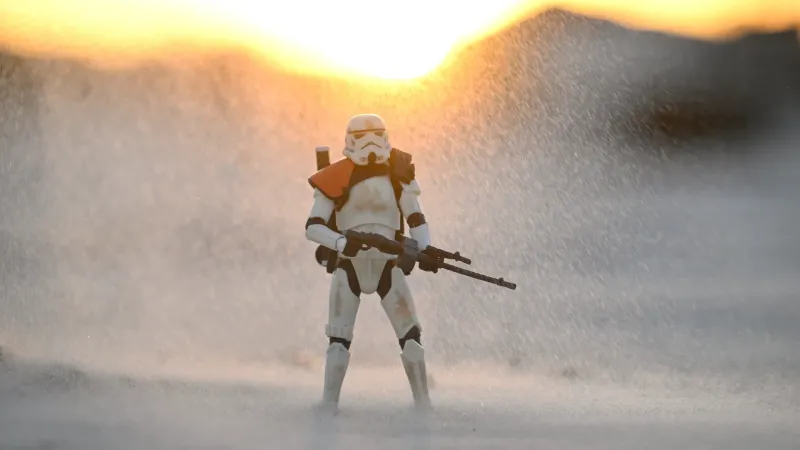
Beach toy photography: How to shoot action figures and LEGO in the sand
The beach is the ultimate outdoor studio for toy photography if you respect the elements. Low ground-level angles turn sand ripples into mountain ranges, golden hour softens harsh plastic reflections, and a helping hand creates breathtaking in-camera dust storms.

Filter holder system vs screw-in filters: Why I carry both
Why a landscape photographer carries a 100mm holder kit AND a screw-in polarizer — what each is actually for, and when each one wins.

Nikon on sale: Buy the Z8, think twice about the Z6 II
The Z8, Z6II and Z5 all drop in price on sale days. Which one is worth it, from someone who owns a Z8 and shot a Z5 for years, plus the storage to go with it.