
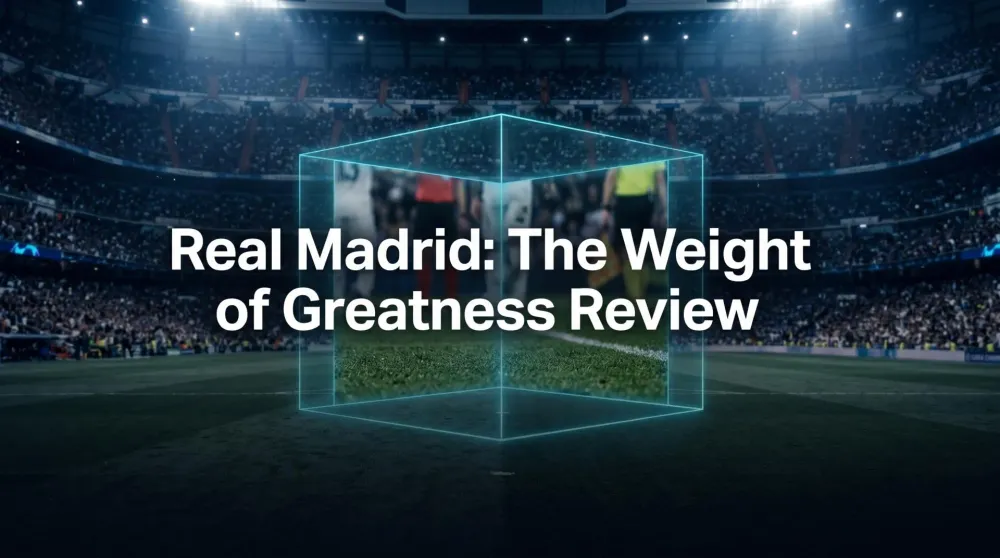
Real Madrid: The Weight of Greatness Review – Sports as You Have Never Experienced It
Apple Immersive Video puts you pitch-side at the Bernabeu with 80,000 fans. Goosebumps guaranteed. The finest spatial sports experience ever made. 5/5.
This post contains affiliate links. We may earn a commission if you make a purchase, at no extra cost to you. As an Amazon Associate, Dadnology earns from qualifying purchases.
🥽 This review is part of our Apple Vision Pro Hub — Mac Virtual Display workflows and the accessories that actually help at work and home.
There is a moment, about eight minutes into Real Madrid: The Weight of Greatness, when the camera is positioned at pitch level as the Bernabeu erupts after a goal. The roar comes from everywhere — above you, to your left, from somewhere behind your right shoulder. Eighty thousand people. And you realise, with a kind of shock, that you are not watching this. You are inside it.
I got goosebumps. Multiple times. I have been watching football for thirty years on increasingly large screens with increasingly expensive audio systems. I have attended live matches. Nothing — nothing — has produced what Apple’s Immersive Video format does when it is aimed at something like Real Madrid at the Bernabeu.
This is a 5 out of 5, and it is genuinely difficult to explain in words on a flat screen.
AdApple AirPods Pro (3rd generation) (opens in a new tab)
The spatial audio pairing for Vision Pro. Delivers the stadium roar in every direction — and the lossless low-latency connection means the crowd lands exactly when it should.
Real Madrid: The Weight of Greatness is not a documentary in the traditional sense. There is no narrator walking you through trophy histories or boardroom politics. It is an experience: a curated series of spatial moments — training sessions, tunnel walks, stadium arrivals, match footage, and the particular electricity that surrounds one of football’s most storied clubs. Apple produced it with their custom spatial camera rigs, filmed at the Bernabeu and Real Madrid’s training facilities, and delivered it as an Apple Immersive Video accessible only on the Vision Pro.
It lasts approximately 30 minutes. The runtime is exactly right.
What Is Apple Immersive Video?
If you have not experienced it, the term means less than it should. Most “immersive” video on YouTube or older VR platforms was 360-degree video: you could look in any direction, but the image quality was poor, the stitching visible, and the experience more novelty than presence.
Apple Immersive Video is categorically different. It is shot on custom-built spatial camera systems that capture a 180-degree field in stereoscopic 8K — so the left eye sees slightly different footage than the right eye, the same way your two real eyes process the real world. The Vision Pro displays this at a resolution fine enough that the image has no visible pixels at normal viewing distance. And it plays through a lens system calibrated to your specific eyes.
The result is that when you put the headset on and press play, the image does not look like a video. It looks like a window.
AdAnker 737 Power Bank (24,000mAh) (opens in a new tab)
Once you have experienced immersive sports on Vision Pro, 30 minutes will never be enough. The Anker 737 extends your runtime significantly for a full afternoon of spatial content.
For sports content — where scale, crowd, and atmosphere are the entire point — this distinction is everything. A flat-screen broadcast compresses the Bernabeu into a 65-inch rectangle. The Vision Pro’s Immersive Video format places the Bernabeu around you. The difference is not quantitative. It is the difference between a postcard and being there.
The Production: How Apple Filmed Real Madrid
The spatial camera rigs required to shoot Apple Immersive Video are not consumer products. Apple developed proprietary camera systems that must be physically present at the event — which means negotiating access with Real Madrid, La Liga, UEFA, and the Bernabeu stadium authority. That Apple got that access, and that the footage is this good, reflects both the scale of Apple’s push into spatial entertainment and Real Madrid’s understanding that this format makes their brand look extraordinary.
What impresses most is the shot selection. The production team understood that Immersive Video’s power comes from placement, not from action. A 180-degree camera positioned three metres from the pitch, at player height, during warm-up — with Bellingham and Vinicius Jr. moving past at arm’s reach — is more arresting than any goal-celebration drone shot. The sense of scale — how large these players are, how fast they move at close range, how much ground the stadium covers above you — is something broadcast simply cannot convey.
Particularly effective: the tunnel sequence. Walking out behind the team as the tunnel opens into the stadium, the crowd noise building from a murmur to an avalanche as the light hits you. That moment, in full spatial audio on AirPods Pro, is the closest thing to actually making a Real Madrid squad entrance that most of us will ever experience. My heart rate went up.
The Emotional Core: Why Atmosphere Is the Sport
The popular argument for live sports over broadcast is “the atmosphere.” Broadcast critics have spent decades trying to explain why a 4K screen with Dolby Atmos surround sound still does not deliver what you feel when you are actually in a stadium. The answer is presence: the directionality of crowd noise, the physical sensation of being surrounded by people who collectively care about the same outcome, the scale of the architecture towering above you.
Apple Immersive Video, aimed at a football ground, is the first time technology has meaningfully closed that gap. Not completely — you cannot smell the grass, feel the cold air, or have the person in the next seat spill their beer on you. But the directionality of the audio in Vision Pro’s spatial system, combined with the 180-degree visual field, produces something very close to genuine presence. Your body responds as if you are there. I did not expect that.
The production knows this and uses it carefully. There are no gimmicks here — no balls flying at the camera for cheap effect, no footage engineered to trigger vertigo. Instead, the film trusts the atmosphere to do the work. And the atmosphere does the work.
By the second time I felt goosebumps, I had stopped thinking about the technology entirely. I was just watching Real Madrid.
As a dad who watches most big matches well after kick-off, having already seen the scoreline on the phone: this is what sport should feel like. This is the premium experience I had been told was coming for years. It is here. It is called Apple Immersive Video, and it is unbuyable by any other means.
The Sound Design: The Invisible Masterclass
A word about the audio, because it deserves more credit than it typically gets in immersive video discussions.
The spatial audio production on The Weight of Greatness is extraordinary. The AirPods Pro (3rd generation) deliver the experience as designed — in lossless, low-latency spatial audio that positions every element of the stadium soundscape with pinpoint accuracy. The chant that starts in the north stand and sweeps around to the south. The thud of a clearance that lands slightly to your left because the camera is slightly left of centre. The PA announcer whose voice drops from directly above you.
None of this would work without Apple’s custom microphone arrays capturing sound spatially from the same position as the cameras. The result is audio that feels recorded from inside the scene rather than mixed in post. That is not a small technical achievement, and it is what elevates the experience from impressive video to genuine presence.
AdAMAZEAR 10-in-1 Carrying Case Set for Apple Vision Pro (opens in a new tab)
If Real Madrid: The Weight of Greatness convinces you to take your Vision Pro to a hotel for the Champions League final, you will want this case to protect the investment.
Pros
- Goosebump-inducing spatial presence — the Bernabeu wraps around you in a way no flat screen can replicate
- Production quality is exceptional — shot selection, camera placement, and pacing are all expert-level
- Spatial audio is as impressive as the visuals — directional crowd noise makes the experience
- Closes the gap between broadcast and live sports in a meaningful way for the first time
- 30-minute runtime is exactly right — focused, intense, and does not overstay its welcome
Cons
- Requires Apple Vision Pro — a significant hardware investment to access
- 30 minutes is both the format's strength and its only limitation — you will want significantly more
- No flat-screen version exists, so you cannot share the experience with someone not wearing the headset
Conclusion: This Is Why Vision Pro Exists
Real Madrid: The Weight of Greatness is the most powerful sports experience I have ever had outside an actual stadium. That sentence would have read as marketing copy eighteen months ago. It does not anymore.
Apple has produced something that genuinely changes what we mean when we say “watching sport.” Not for everyone — the hardware costs what it costs, and 30 minutes of immersive content will not justify a Vision Pro purchase on its own. But as the answer to “what is the Vision Pro actually for?” — this is the clearest argument yet. You are there. The crowd roars around you. Your body responds.
Please, Apple. More of this. Football, Formula 1, basketball, tennis at Roland Garros. Whatever you can film with these cameras — film it. The format is ready. So are we.
The Final Word: If you own a Vision Pro, this is non-negotiable. If you do not, it is the most persuasive argument for one that currently exists.
📺 Movie night sorted: thousands of films and shows are streaming on Prime Video — free for 30 days. Worth a look before you buy the disc.
Frequently Asked Questions
What is Real Madrid: The Weight of Greatness?
Can you watch Real Madrid: The Weight of Greatness without Apple Vision Pro?
Is Apple Immersive Video worth it for sports?
How long is Real Madrid: The Weight of Greatness?
What accessories do you need for Apple Immersive Video?
Keep this in your inbox
One email a week: what we actually watched, built and reviewed — the stuff worth a dad's time. No hype, no daily spam.
Dadnology Weekly
One email a week: the LEGO, gaming and movie news worth a dad's time — plus what we actually reviewed. No hype, no daily spam.
Disclaimer: This review and its visuals were created with the help of AI. Some links may be affiliate links – we may earn a commission if you make a purchase, at no extra cost to you.
You might also like
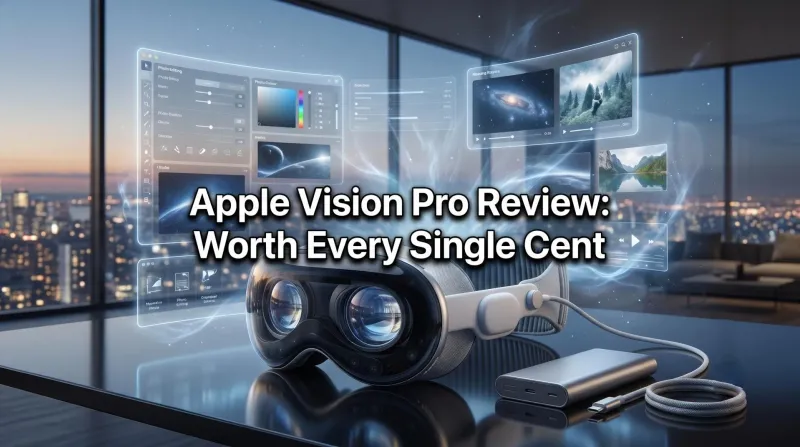
Apple Vision Pro Review: The Future, Worth Every Cent
The Vision Pro is the most fascinating product I've ever bought. Its core use case — watching films — is unmatched: 2D movies on a cinema-sized screen, the best 3D viewing of my life, and Apple Immersive Video that gives genuine goosebumps. It's also a vast spatial Mac workspace and an incredible gaming display via a capture card. The one real downside is that it's a solo experience. Everything else is perfect. Worth every cent — a 5/5.
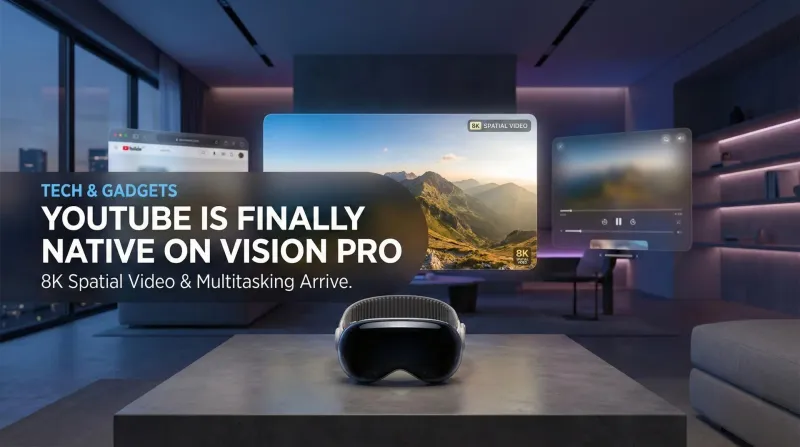
YouTube is Finally Native on Apple Vision Pro: Here is Why It Changes Everything
No more Safari workarounds. Google has finally released the native YouTube app for visionOS. Here is a breakdown of the 8K, 360°, and multitasking features.
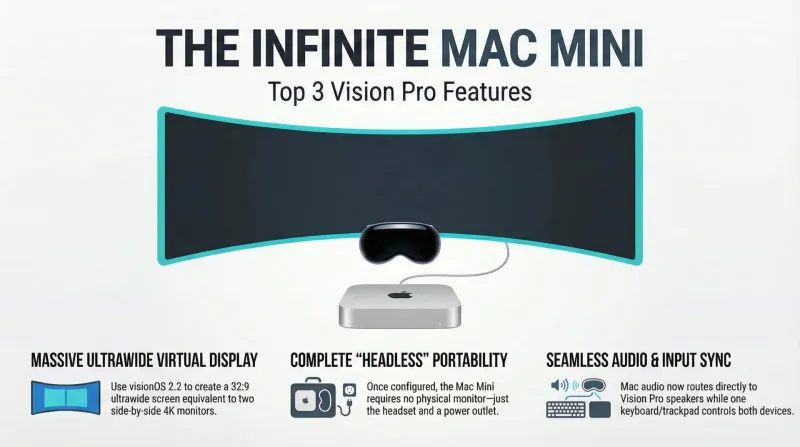
Spatial Computing at Home: The Dadnology Guide to Mac Virtual Display
Ditch the triple-monitor clutter. Learn how to turn your Mac Mini into a 100-inch virtual workstation using the Apple Vision Pro.