
The Mandalorian Season 1 review: A perfect opening
The show that reminded the galaxy why it loves Star Wars. Din Djarin, Grogu, and eight episodes that changed everything. 4.5/5.
This post contains affiliate links. We may earn a commission if you make a purchase, at no extra cost to you. As an Amazon Associate, Dadnology earns from qualifying purchases.
⭐ This review is part of the The Mandalorian Series – watch every season of the perfect dad story in space.
The first twenty minutes of The Mandalorian Season 1 contain no exposition, no title crawl guidance, and almost no dialogue. A man in a helmet walks into a cantina, takes a bounty, escapes through ice and chaos, and says perhaps thirty words total. By the time Chapter 1 ends, you already trust him completely — and you have not seen his face. That is not a trick of editing or music. That is Pedro Pascal, communicating an entire character through posture, hesitation, and the precise angle of a tilted helmet. It is one of the finest opening episodes Star Wars has ever produced, and it sets the tone for everything that follows.
Season 1 arrived in November 2019 into a franchise that was genuinely struggling. The Sequel Trilogy had divided the fanbase in ways that felt irreparable. Disney’s broader Star Wars roadmap looked uncertain. The Mandalorian was, at launch, an unknown quantity — a TV show on a streaming platform that had just launched, built around a character with no face and a premise that sounded, on paper, like a side quest. Within a week of its first episode, it was the most talked-about television on the internet. Within a month, “Baby Yoda” was a cultural phenomenon that nobody at Lucasfilm had anticipated. The reason it worked is almost offensively simple: it told a focused, human story, and it trusted its audience to feel the things it refused to say out loud.
Chapter by chapter: The Western arc
The structure of Season 1 is deliberate and unusual for modern prestige television. Most episodes function as self-contained western-in-space installments — a job taken, a problem solved, a world glimpsed — before converging on a seasonal arc in the final two chapters. It is the structure of a Clint Eastwood film series adapted for the Disney+ era, and it works precisely because Jon Favreau and the writers’ room understood something many showrunners forget: you need to earn the emotional payoff before you can deliver it.
The early episodes establish Din Djarin through action rather than backstory. We learn his creed — “This Is the Way” — through repetition and consequence, not through a scene where someone explains it to him. We see his code before we understand its origins. By the time Chapter 3 reveals the flashback that explains how a Mandalorian foundling becomes a warrior who would rather die than remove his helmet, we already know it matters. The show did its work in advance.
The mid-season episodes — Chapters 4 through 6 — use the episodic structure to deepen the world while putting pressure on Din’s central choice. Each stop on his route reminds him that he cannot keep this child safe by moving forever. The settlement on Sorgan. The prison break. The speeder bike village that turns into a siege. Each one is a small, excellent western episode. Each one tightens the question the season is quietly asking: what are you actually protecting this creature from, and can you outrun it indefinitely?
The answer arrives in Chapters 7 and 8, when Moff Gideon — played with magnificent stillness by Giancarlo Esposito — deploys an Imperial remnant force against Nevarro. The finale is everything the episodic buildup was pointing toward: an ensemble last stand, a fight that requires Din to accept help from people he does not fully trust, and a confrontation that ends not with victory but with consequence. Gideon survives. And he has the Darksaber.
Din Djarin: The warrior who became a dad
Let us be precise about what Pedro Pascal accomplishes in this season, because it is easy to understate it. Din Djarin does not remove his helmet for eight episodes. Pascal performs an entire character arc — from mercenary pragmatism to genuine, terrified love — wearing a piece of metal that covers his entire face. The characterization lives in the hands, the shoulders, the precise angle of a paused stride before he turns back for the creature he was supposed to deliver. Watch Chapter 3’s walk across Nevarro. Watch the way he stops. That is the dad moment. Not a speech, not a revelation scene. A pause before a step he has already decided to take.
The foundling backstory is deployed sparingly but perfectly. Din was saved by Mandalorians during the Clone Wars — a child pulled from fire by warriors who lived by a code. He became one of them. The code became identity. “This Is the Way” is not a slogan for him; it is the entire structure of a life that would otherwise have no floor. When he breaks it — when he chooses to protect Grogu over completing the bounty — he does not give a speech about it. He just does it, and then lives with the consequences.
That, for dads, is the entire review. Nobody tells you that you will rearrange your entire understanding of yourself around a small creature who cannot yet walk. You do not have a philosophical moment about it. You just find yourself standing between something small and everything that might hurt it, holding a weapon you did not plan to need.
| Din Djarin | Imperial Officer | |
|---|---|---|
| Loyalty | To the Mandalorian creed — and increasingly to Grogu | To the Empire, to rank, to order above ethics |
| Motivation | Protecting the foundling; honoring what he was given | Recovering the asset; executing the mission |
| Moral code | Rigid and self-imposed — removes the helmet for no one | Institutional — follows orders until orders conflict with survival |
| Defining moment | Turns back to rescue Grogu from the Client | Abandons the mission to save himself in the finale |
| Relationship to Grogu | Protector who did not choose this and chose it anyway | Target to recover, neutralize, or exploit |
The table above is not particularly fair to the Imperial officers, but that is the point. Season 1 is not interested in moral equivalence. Din is not a complicated anti-hero wrestling with competing loyalties. He is a man with a code, a child he is responsible for, and an increasingly clear understanding that the two things — the code and the child — are on a collision course. His arc is not complexity. It is clarity, arriving slowly, costing him everything he built around himself.
Grogu: Why this character works
The internet named him Baby Yoda. The show, wisely, gave him no name at all in Season 1 — he would not be named Grogu until Ahsoka’s live-action debut in Season 2. This restraint matters. A named character is a character with a backstory to explain. An unnamed creature is a mystery, and mysteries are powerful. What we know in Season 1: he is fifty years old. He is an infant of Yoda’s species. He is Force-sensitive. He was in someone’s care before this, and whoever that was either could not protect him or chose not to.
The genius of Grogu as a character is not his appearance, though the design work is extraordinary — the ears, the enormous eyes, the way he reaches. The genius is the specific narrative choice the writers made about him. They gave a battle-hardened warrior something to protect that he did not ask for and could not refuse. They made the protection unconditional before Din even understood what unconditional meant. Grogu did not earn Din’s devotion through impressive Force feats or a touching speech. He existed, he was in danger, and that was enough.
This is, if you think about it, a fairly accurate description of parenthood.
The Moff Gideon reveal
Giancarlo Esposito as Moff Gideon deserves more discussion than the season gives him screen time for, because the show makes a very smart choice: it holds him back. We hear about him. We understand he is the threat. We see the consequences of his reach before we see his face. When he finally appears — stepping from a downed TIE fighter, impeccably composed, carrying a weapon of Mandalorian significance — the scene works because the season built the space for it methodically.
The Darksaber reveal is one of the finest closing beats of any Star Wars season finale. Not because of action choreography, but because of implication. Anyone who watched Star Wars Rebels knows exactly what that weapon means — who held it, what it represents, what its presence in Gideon’s hands suggests about Mandalorian history and about the seasons to come. For newcomers, it is a striking, mysterious image. For the animated faithful, it is a gut punch.
The show earns that moment by treating knowledge as a gift to viewers who did the homework, not a requirement for everyone else. Season 1 is full of these gracious choices.
The format experience
Season 1 was shot to look cinematic, and it does. The wide-angle compositions of barren planets, the tight practical-set interiors of the Razor Crest, the cold color palette of Nevarro — this is television that earned its reputation for looking like a feature film because the directors involved (Dave Filoni directed the pilot, Deborah Chow directed Chapters 3 and 7, Bryce Dallas Howard directed Chapter 4) treated it like one.
On Vision Pro, the early episodes are among the best Star Wars content you can watch in spatial display. The silence matters here. The Razor Crest cockpit in full spatial resolution — Grogu clutching the stick shift, Din staring at the hyperspace — is a remarkably still, patient image that earns the stillness entirely.
For family viewing on a standard screen, the 30-40 minute episode runtime is excellent. Every episode fits between bedtime and midnight. Nobody has to make a commitment they cannot keep.
Pros
- Pedro Pascal performs an entire arc behind a helmet — one of the most impressive character performances in recent Star Wars
- Episodic western structure rewards patience and pays off with a genuinely satisfying finale
- Grogu works because the writers understood exactly why he works — restraint, not spectacle
- Giancarlo Esposito's Moff Gideon is a villain worth following into future seasons
- Reminds you, episode by episode, why Star Wars matters without a single moment of nostalgia-baiting
Cons
- Some mid-season episodes feel like pleasant detours rather than essential story — Chapter 6 especially
- The episodic format means the seasonal arc does not build continuous tension until Chapter 7
- Viewers who want deep lore explanations may find the show frustratingly restrained with backstory
More bricks: the helmet is the show’s defining image — see our LEGO Mandalorian Helmet (75328) review, plus the LEGO Razor Crest (75447) review for Mando’s gunship.
Conclusion: This is the way
The Mandalorian Season 1 does something that should have been impossible in 2019: it made Star Wars feel new again without inventing new mythology, without a nostalgia cameo, and without explaining anything it did not need to explain. It told a small story about a man who did not ask for responsibility and took it anyway — in eight focused episodes, with minimum dialogue and maximum consequence.
For fathers, this is the most honest piece of Star Wars ever made. Not because it is about fatherhood in an obvious way, but because it captures the specific texture of the thing: the moment you stop doing what you planned and start doing what is required, with no speech, no ceremony, and no particular certainty that it will go well. Din Djarin did not choose this child. He just turned around.
That is the whole show. That is the whole point.
📺 Movie night sorted: thousands of films and shows are streaming on Prime Video — free for 30 days. Worth a look before you buy the disc.
Related Dadnology review: The Mandalorian Season 2 Review – The Goodbye
Is Mandalorian Season 1 worth watching?
Do I need to know Star Wars to watch The Mandalorian?
How does Season 1 end?
Is Mandalorian Season 1 suitable for kids?
How many episodes is Mandalorian Season 1?
Keep this in your inbox
One email a week: what we actually watched, built and reviewed — the stuff worth a dad's time. No hype, no daily spam.
Dadnology Weekly
One email a week: the LEGO, gaming and movie news worth a dad's time — plus what we actually reviewed. No hype, no daily spam.
Disclaimer: This review and its visuals were created with the help of AI. Some links may be affiliate links – we may earn a commission if you make a purchase, at no extra cost to you.
Current deals in Movies & TV
Verified live discounts tracked on Amazon
![The Legend of Korra — The Complete Series [Blu-ray]](https://m.media-amazon.com/images/I/51+1TXyb7aL._SL500_.jpg)
Movies & TV · Tested by Dadnology
The Legend of Korra — The Complete Series [Blu-ray]
4.5/5“A new Avatar, a modern city, a masked revolution”Read our review
Movies & TV · Tested by Dadnology
Zack Snyder's Justice League (4K Ultra HD)
4/5“Four hours. One vision. This is the film.”Read our review
Movies & TV · Tested by Dadnology
Space Jam (4K Ultra HD + Digital)
4/5“It's gonna be a whole new ball game”Read our reviewYou might also like
The Mandalorian Season 2 review – The goodbye
Season 2 matches Season 1 beat for beat and then raises the stakes with characters who carry decades of animated history into live-action. The mission gives the season direction. The goodbye gives it soul. And Pedro Pascal, still in the helmet, still saying almost nothing, manages to break your heart completely. Rating: 4.5/5.
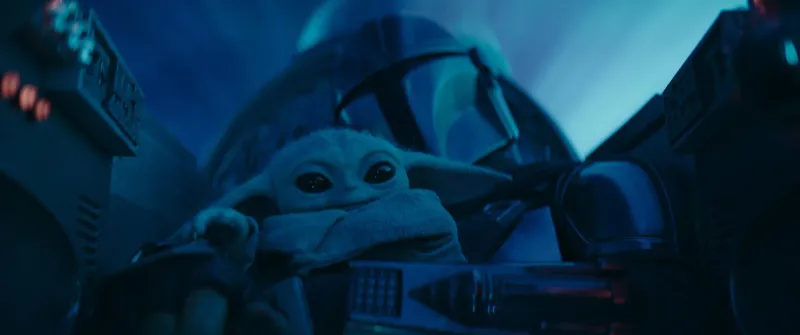
The Mandalorian Season 3 review – Beautiful, but diffuse
Good television, weaker Mandalorian. Season 3 has the most beautiful world-building the show has produced and a satisfying enough conclusion to the Gideon arc. But it misplaces its protagonists. 3.5/5.
The Mandalorian – A perfect dad story in space
The Mandalorian is Star Wars at its most honest about what it is really about. Not chosen ones or epic destinies. A man and a small creature who chose each other and refused to stop. Season 1 and 2 are exceptional. Season 3 is good. The whole is irreplaceable. 4/5.