
The Mandalorian – A perfect dad story in space
The show that brought Star Wars back and made the whole internet collective care about a small green creature. A season-by-season review of the show that is, fundamentally, about being a dad.
This post contains affiliate links. We may earn a commission if you make a purchase, at no extra cost to you. As an Amazon Associate, Dadnology earns from qualifying purchases.
🎬 This hub is part of our Star Wars Live-Action Hub — the Skywalker Saga film by film, Episodes I through IX, in the recommended watch order.
There is a theory about why The Mandalorian worked when most people expected it to be a medium-quality streaming placeholder. The theory is that Jon Favreau understood something about the audience that Lucasfilm had been forgetting: we did not need more mythology. We did not need another chosen one, another Sith versus Jedi cosmological conflict, another galactic destiny unfolding on a canvas too large to emotionally process.
We needed a dad and a kid.
That is all The Mandalorian is, at its core. A man who is told not to get attached, who gets attached, and who spends three seasons doing increasingly extraordinary things because a small creature looked up at him and decided he was worth trusting. Strip the beskar armor and the starships and the franchise callbacks, and what remains is the oldest story in human storytelling: a parent who will burn the world down before they let anything happen to their child.
It hits differently when you are a dad. That is not a cliche. It is simply true.
Series content
Explore all articles, reviews, and guides in this series.
The Mandalorian premise: Simple idea, enormous heart
Jon Favreau’s premise is almost aggressively minimal. Din Djarin is a Mandalorian bounty hunter operating in the outer rim after the fall of the Empire. He does not remove his helmet. He speaks rarely. He communicates in terse sentences and body language. He has a code, and he lives by it, and beyond the code there is not much externally visible.
Then a client sends him to collect a target. The target turns out to be an infant. The infant looks at him with enormous eyes. Din makes the most consequential mistake of his professional life.
The show never oversells this moment. It does not need to. The writing trusts that the audience will do the emotional work, and in that trust lies the whole secret of the series. The Mandalorian is consistently reluctant to explain what its characters are feeling, because it has enough confidence in the performances and the situation to let us feel it ourselves. Pedro Pascal — face hidden for most of the run — communicates the entire emotional arc of a man discovering he has a child through shoulders, hands, the angle of a head. It is one of the most technically demanding acting performances in recent television and one of the least discussed.
Season-by-season breakdown
Season 1 (2019) — The cultural phenomenon
Rating: 4.5/5
Season 1 is eight episodes of near-perfect television. The episodic structure — closer to a western anthology than prestige serial drama — was initially seen as a weakness, but it turned out to be exactly right for this story. Each episode is a contained adventure that gradually accumulates context: the guild, the code, the Child, the remnant of the Empire hunting them both.
The central tension of Season 1 is minimalist and enormously effective: can Din deliver this target, or can he not? The answer arrives in Episode 3 and sets the direction for everything that follows. The internet responded in the way the internet responds to something genuine — with the kind of collective affection that cannot be manufactured, only earned.
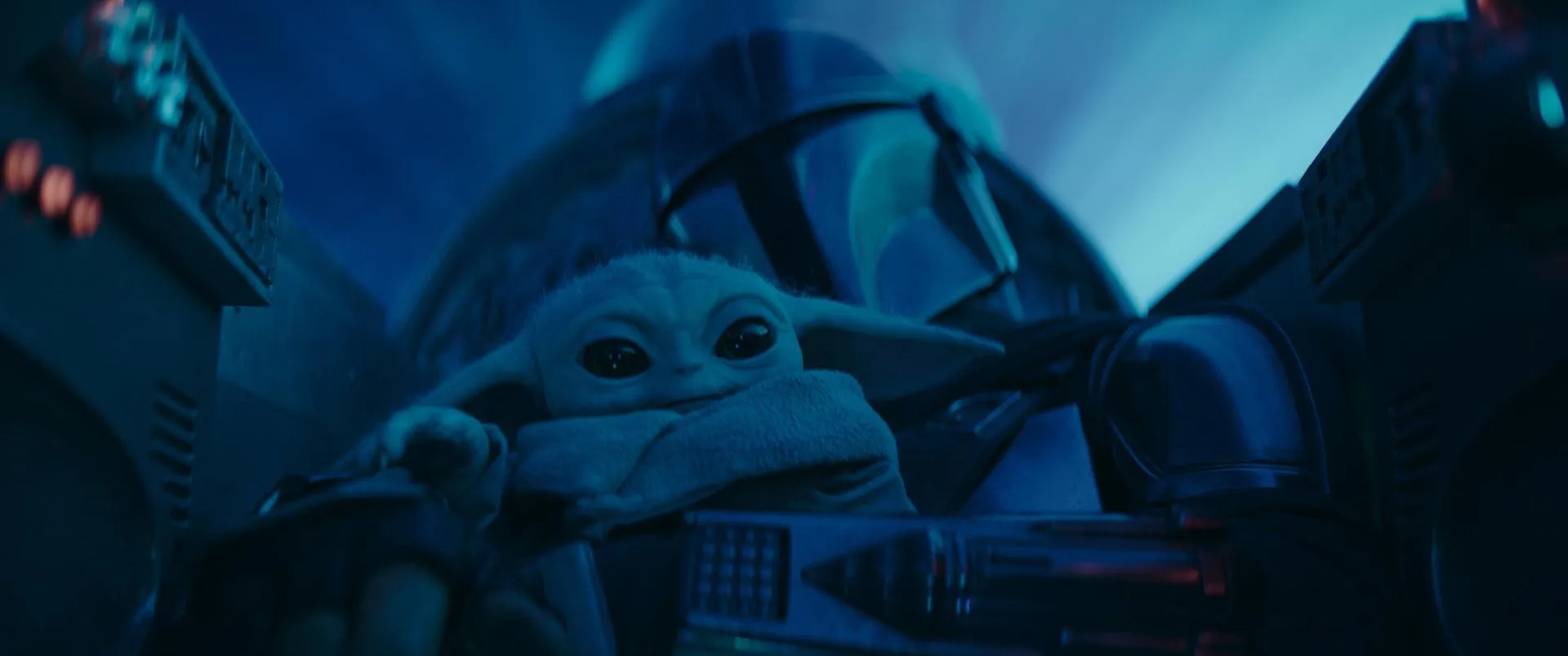
“Baby Yoda” became a cultural shorthand for something pure. The character worked because the design was right, the performance (entirely puppetry and subtle CGI) was exceptional, and the relationship between the creature and Din was written with care. Grogu does not talk. He reacts, reaches, sleeps, occasionally uses the Force in small and unreliable ways, and looks at Din like Din is the most important thing in the galaxy. That is enough. It is more than enough.
Season 2 (2020) — The peak
Rating: 4.5/5
Season 2 is the show at maximum. Favreau understood that the premise needed to expand — Din cannot just be running forever — and the expansion he chose was to connect the show to the wider Star Wars universe in a way that felt earned rather than contractually obligated.
Ahsoka Tano’s live-action debut. Bo-Katan Kryze and the Night Owls. Boba Fett returned from the dead. And then, at the end of Episode 8, the cameo that made grown men cry in living rooms across the internet.
The Luke Skywalker appearance is the most carefully engineered emotional moment in Disney-era Star Wars. De-aged, authoritative, exactly how you imagined him at his peak — Luke arriving in the Moff Gideon’s cruiser is essentially Favreau cashing in two years of built goodwill in a single sequence. It works because we earned it by caring about Din and Grogu. The mythology is in service of the relationship, not the other way around.
The moment Din removes his helmet — for the first time, for Grogu to see his face, on the chance that they will not see each other again — is the emotional peak of the entire series. Pedro Pascal, finally allowed to act with his face, delivers a performance so concentrated in its restraint that it was the most discussed television scene of that year. “I’ll see you again — I promise” is five words that destroyed composures globally.
Season 3 (2023) — The good dip
Rating: 3.5/5
Season 3 is the controversial one. Not because it is bad — it is good Star Wars — but because it made choices that divided the audience, and the seams show more than they did in Seasons 1 and 2.
The structural issue is that the Grogu-returns development that should have been the beginning of a proper Season 3 arc happened in The Book of Boba Fett Episodes 5 and 6. Viewers who skipped Boba Fett arrived at Mandalorian Season 3 confused about how Din and Grogu are together again; viewers who did watch it had already experienced what should have been the Season 3 premiere as part of a different show. The story logic is fine; the scheduling decision was messy.
Beyond that, Season 3 shifts focus to the political situation of Mandalore and the question of whether the scattered Mandalorian clans can reunite. It is a legitimately interesting Star Wars story about a culture trying to reclaim itself. It is less emotionally intimate than the first two seasons — the scope is larger, the focus on Din and Grogu is sometimes crowded out by faction politics, and the final episodes reach for an epic scale that the franchise has already delivered better elsewhere.
What Season 3 does exceptionally well is Bo-Katan. Katee Sackhoff, who voiced the character in the animated series and now inhabits her in live-action, is doing some of the best work of her career. The arc of Bo-Katan confronting the gap between the Mandalore of her ambitions and the Mandalore she actually finds is quietly excellent.
| Feature | Season 1 | Season 2 | Season 3 |
|---|---|---|---|
| Tone | Lone wolf Western | Expanding universe, building to a mythological peak | Political epic, faction focus |
| Grogu role | Central threat and emotional engine | The reason for everything Din does | Present but somewhat backgrounded |
| Best episode | Ep 3: the crib scene, the pivot | Ep 8: the finale and the cameo | Ep 6: the Mines of Mandalore arc |
| Main threat | The Client and the Imperial remnant | Moff Gideon and the Dark Saber | The last Imperial cell on Mandalore |
| Emotional peak | Din choosing Grogu over the guild | The helmet removal and the goodbye | Bo-Katan finding belief in the Armorer |
| Fan consensus | Near-universal — defining television | The peak | Appreciated more on rewatch |
Pedro Pascal: The silent performance
The conversation about Pedro Pascal’s work in The Mandalorian usually starts with: “And he is barely even on screen.” This is partially true — a body double and voice actor covered significant portions of the physical performance, with Pascal providing voice throughout — but the credit belongs to Pascal in a more fundamental sense.
The character is defined by restraint. Din Djarin has opinions and feelings and a full interior life that he does not share, because the code does not require sharing and the habit of his life is silence. Pascal built that character from the helmet down — the way a Mandalorian warrior holds his shoulders when he is uncertain but cannot show it, the pace he walks when he knows he is being watched and is refusing to perform anything, the way his hands move around Grogu versus around everything else.
There are moments — particularly in the finale of Season 2 — where Pascal acts with his full face, and what he delivers is worth the two seasons of helmet-work it was built on. The emotional information he conveys in those five minutes is not possible without the discipline of everything that preceded it.
Grogu: Why it works
It would be easy — lazy, even — to write Grogu off as a cuteness delivery mechanism. The internet obsession, the merchandise saturation, the memes — all of that noise can make it hard to see the character clearly.
Grogu works narratively because the show is disciplined about what he is allowed to do. He is not a clever child. He does not solve problems. He does not have dialogue. He is an infant with an enormous and imperfectly controlled Force sensitivity, a fifty-year lifespan of memories he cannot access fully, and a complete inability to hide what he is feeling.
That last element is the key. In a show built around a character who hides everything, Grogu hides nothing. He is afraid, and shows it. He is delighted, and shows it. He trusts Din, and shows it in every scene they share. The relationship works because Din is the fortress and Grogu is the thing inside the fortress that reminds the fortress why it was built.
The music: Ludwig Goransson’s extraordinary score
There is an argument that Ludwig Goransson’s score for The Mandalorian is the best new music Star Wars has generated since John Williams’ original trilogy work. It is not a traditional orchestral score — it is built around unusual instruments, processed voices, textures that evoke the vast emptiness of the outer rim without quoting established themes.
The main Mandalorian theme is a piece of music that accomplishes something very specific: it makes a bounty hunter with no face feel like the hero of a Western. The melancholy in it is deliberate — this is the music of a man who has been alone too long, played every time he walks away from something or toward it, always slightly at odds with the context because Din Djarin is always slightly at odds with his context.
The score around Grogu is different — smaller instruments, higher registers, something almost childlike that never tips into sentiment. The music for the two of them together has a quiet warmth that operates below the level of explicit emotional instruction. It tells you how to feel without commanding you to feel it.
Family watch notes
The Mandalorian is, at its DNA level, a show about what it means to be responsible for someone who depends on you. The parenting metaphor is not subtle and the show does not try to make it subtle. Din Djarin is a father who did not plan to be a father and is making every decision — including the most dangerous ones — from the position of a parent trying to protect a child.
For dads watching this: prepare accordingly. The Season 2 finale contains a moment of voluntary separation in service of a child’s best interests that will hit in ways you did not expect a Star Wars show to hit. Some viewers described it as unexpectedly wrecking. They were right.
Age-wise, the show is appropriate for children from about 8 upward. The violence is present but not graphic, and the emotional content — found family, loyalty, chosen love — is exactly the kind of storytelling you want children engaging with. Younger children who watch Star Wars with their parents will be fine with supervision.
Pros
- Seasons 1 and 2 are exceptional television that stand alongside the best content in the franchise
- Pedro Pascal's performance under a helmet for two seasons is a masterclass in physical acting restraint
- Ludwig Goransson's score is the best new Star Wars music since the original Williams work
- Grogu works narratively as well as he works emotionally — the character has a function, not just a cuteness
- The found-family premise is the most honest thing Star Wars has done about what its stories are actually about
Cons
- Season 3 loses some of the intimacy of the first two seasons as the scope expands
- The Grogu reunion arc that should have opened Season 3 happened in Book of Boba Fett — messy scheduling
- Some Season 3 supporting cast members feel underdeveloped relative to the time invested in them
- The de-aged Luke Skywalker cameo, while emotionally devastating, exposed the limits of the de-aging technology
Build the saga: Mando’s ride evolves from the Razor Crest to the N-1 — see our LEGO Razor Crest (75447) review and the LEGO UCS Mandalorian N-1 (75442) review.
Conclusion: The show that proved what Star Wars is about
The Mandalorian is the answer to the question the sequel trilogy forgot to ask: what does the audience actually want from Star Wars? Not another chosen-one saga. Not another galaxy-ending threat. A man and a small creature choosing each other, in a galaxy that keeps trying to separate them.
Seasons 1 and 2 are as close to perfect as streaming television gets. Season 3 is very good Star Wars that suffers only by comparison with what preceded it. The complete series is essential viewing — not just for Star Wars fans, but for anyone who wants to understand what the franchise is capable of when it trusts its emotional instincts over its mythological ones.
Watch it with your kids. Tell them the helmet is a whole character. Try not to tear up in the Season 2 finale. Fail. That is the correct response.
The Final Word: Non-negotiable. The Mandalorian is the reason to have Disney+.
Related Dadnology reviews: The Mandalorian Season 1 Review: A Perfect Opening · The Mandalorian Season 2 Review – The Goodbye
Is The Mandalorian worth watching?
Do I need to know Star Wars to watch The Mandalorian?
Is The Mandalorian suitable for kids?
Is The Mandalorian connected to other Star Wars shows?
Keep this in your inbox
One email a week: what we actually watched, built and reviewed — the stuff worth a dad's time. No hype, no daily spam.
Dadnology Weekly
One email a week: the LEGO, gaming and movie news worth a dad's time — plus what we actually reviewed. No hype, no daily spam.
Disclaimer: This review and its visuals were created with the help of AI. Some links may be affiliate links – we may earn a commission if you make a purchase, at no extra cost to you.
Current deals in Movies & TV
Verified live discounts tracked on Amazon
![The Legend of Korra — The Complete Series [Blu-ray]](https://m.media-amazon.com/images/I/51+1TXyb7aL._SL500_.jpg)
Movies & TV · Tested by Dadnology
The Legend of Korra — The Complete Series [Blu-ray]
4.5/5“A new Avatar, a modern city, a masked revolution”Read our review
Movies & TV · Tested by Dadnology
Zack Snyder's Justice League (4K Ultra HD)
4/5“Four hours. One vision. This is the film.”Read our review
Movies & TV · Tested by Dadnology