
The Mandalorian Season 2 review – The goodbye
Ahsoka live-action. Boba Fett back from the dead. And then a goodbye that broke the internet. Season 2 equals Season 1 and surpasses it in scale. 4.5/5.
This post contains affiliate links. We may earn a commission if you make a purchase, at no extra cost to you. As an Amazon Associate, Dadnology earns from qualifying purchases.
⭐ This review is part of the The Mandalorian Series – watch every season of the perfect dad story in space.
The mission is stated in the Season 2 premiere with unusual directness for a show that usually withholds its objectives: Din Djarin needs to find a Jedi who can train Grogu. What follows from that premise is eight episodes that work as both the finest season of The Mandalorian and a bridge between seventeen years of animated Star Wars storytelling and the live-action universe that most of its audience had never visited.
Season 2 does not improve on Season 1 because Season 1 did not need improving. It achieves the same score through different means. Where the first season was quiet and episodic and built its emotional architecture through restraint, the second season gives Din a direction, a destination, and a roster of characters who carry entire other stories with them. The result is a season that expands without losing the thing that made the show work: the bond between a silent warrior and a small creature who changed everything about him.
The mission: Find a Jedi
Season 1 asked Din Djarin a quiet question: what do you do when something requires protecting and you are the only one available? Season 2 asks the follow-up, which is harder: what do you do when protecting something means letting it go?
The structure of this season is more purposeful than Season 1’s western-episode format, because the episodes now have a shared direction. The job is to find a Jedi. Every stop along the route — the sands of Tatooine, the seas of Trask, the ruins of Corvus, the halls of Tython — is a step toward something. The episodic pleasure survives, but now each episode also advances a purpose, and that shift in structure allows the season’s emotional engine to build with more force than the first season could manage.
Din’s creed has also changed in subtle ways the show refuses to announce. In Season 1, “This Is the Way” was a statement of identity. By Season 2, you notice him applying it with slightly less certainty, slightly more as a question. He has removed himself from the Children of the Watch — from the only community that defined him — by choosing Grogu. The armor still fits. The code still holds. But something underneath it has shifted, and the season slowly lets that shifting become visible.
Boba Fett: The return that worked
The return of Boba Fett — played by Temuera Morrison, who played the template for every clone in the prequel era, and whose face is therefore Jango Fett’s face and every clone trooper’s face simultaneously — is one of Season 2’s smartest moves, because it refuses to make Boba Fett what the audience expects.
The character was, in the original trilogy, an icon of cool who died in the most undignified way possible and was subsequently resurrected in the expanded universe so many times the resurrection became a joke. Season 2 takes a different approach. Boba Fett is not cool here. He is scarred and driven and intensely practical. He wants his armor back because it belonged to his father and means something to him beyond fashion. He is not the silent badass of fan memory. He is a survivor who has been through things the galaxy did not bother to record.
Chapter 14, “The Tragedy,” gives him his showcase, and it is extraordinary. Boba Fett without armor on a battlefield is terrifying, because Morrison plays the physicality of a man who learned to fight from a template that was designed for war, and forgot nothing. The scene where he retrieves his armor is one of the season’s best.
His dynamic with Din Djarin also avoids the obvious. Two Mandalorian-adjacent characters could easily become a buddy dynamic or a rivalry. Instead, the show makes them something more honest: two men with different histories of the same armor tradition, neither fully certain the other is right about what it means, working together because the mission requires it. It is a functional relationship with real friction, which is more interesting than either alternative.
Ahsoka’s live-action debut: The bridge between worlds
Chapter 13, “The Jedi,” is the episode that the animated faithful had waited for since Ahsoka Tano was first announced for live-action casting. For viewers who came to The Mandalorian cold, it is an excellent standalone episode about a former Jedi hunting a former governor on a fog-wreathed planet. For anyone who had watched The Clone Wars and Rebels, it was something considerably more overwhelming.
Rosario Dawson’s casting is inspired in ways that go beyond appearance. She captures the specific quality of Ahsoka in her post-Clone Wars form: deeply capable, carrying something heavy that she will not fully explain, applying a hard-won moral calculus to every decision. She is not the eager Padawan of The Clone Wars. She is someone who has seen what the Jedi Order became and what the Force demands of those who channel it, and she is careful now in ways she was not at fourteen.
The episode does two things that matter enormously. First, it names Grogu. The creature who had no name in Season 1 — called only “the Asset” or “the Kid” or, by the entire internet, “Baby Yoda” — has a name: Grogu. It is a small moment in a show built on small moments, and it lands with more weight than a name should theoretically carry. Second, it establishes the depth of the galaxy’s animated history without requiring any of it. New viewers understand everything they need to. Fans who did the homework feel the additional layers. Both audiences are served exactly right.
The duel between Ahsoka and the Magistrate on Corvus is staged in fog and silence that Vision Pro was built for. If you have the hardware, Chapter 13 is one of the arguments for it.
The comparison: How Season 2 differs from Season 1
| Season 1 | Season 2 | |
|---|---|---|
| Story scope | Self-contained western episodes building slowly to a finale | Mission-driven arc connecting episodes with shared purpose |
| Emotional peak | Din's decision to turn back in Chapter 3 | Din removing his helmet so Grogu can see his face in Chapter 16 |
| Surprise character | Moff Gideon with the Darksaber | Luke Skywalker arriving to take Grogu |
| Grogu role | The Asset who becomes the reason for everything | The one being fought toward and ultimately surrendered to the Jedi |
| Fan reaction | Cultural explosion over Baby Yoda | The Luke finale destroyed the internet and set Twitter trending worldwide |
The table above captures the structural difference, but the emotional difference is harder to quantify. Season 1 surprises you with how much you care. Season 2 takes that care and applies pressure to it systematically, building toward a finale that works precisely because twelve episodes of investment precede it.
Bo-Katan’s arrival and the Darksaber question
Bo-Katan Kryze, played with appropriate authority by Katee Sackhoff (who also voiced the character in animated form), introduces a second front in the show’s ongoing investigation of Mandalorian identity. Where Din represents the Children of the Watch — a splinter sect that takes the creed to its most absolute interpretation — Bo-Katan represents a different tradition: Mandalorians as warriors, as a people, as something that can be reclaimed.
Her arc in Season 2 is focused: she needs the Darksaber. In Mandalorian tradition, whoever wields it has the right to rule. Moff Gideon has it. Taking it back is the key to retaking Mandalore. The problem, which Season 3 will inherit and wrestle with far more directly, is that the Darksaber cannot simply be handed over. It must be won in combat, because the rule is the rule, and rules in this universe have weight.
Her dynamic with Din is productive friction. She thinks his creed is a cult. He thinks her cause is politics wearing a creed. Neither of them is entirely wrong, and both of them need each other for the mission to succeed. The show is smart enough to let both positions stand without resolution.
The goodbye: Chapter 16 analyzed
The finale of Season 2 is one of the finest thirty-three minutes of Star Wars ever produced, and the reasons why are worth examining carefully, because it is easy to credit the wrong things.
The wrong reading of Chapter 16 is that it works because Luke Skywalker shows up. Luke Skywalker showing up is, yes, an extraordinary thing. But the scene works because of what precedes it: a rescue mission that costs everybody something, a confrontation with Moff Gideon that requires Din to fight harder than he has fought all season, and then — after the fighting is over — a moment of stillness in which Din Djarin does something his entire identity was constructed to prevent.
He removes his helmet.
He removes it not because he has changed his mind about the creed. He removes it because Grogu is being taken somewhere Din cannot follow, and Grogu has never seen his face, and this is the last moment before the goodbye, and the creed is not bigger than this. It is the quietest possible act of a man giving up the last thing he was holding onto, so a child he loves can see him as a human being instead of a suit of armor.
Pedro Pascal does not say anything during this scene. He does not need to. The helmet comes off. The eyes are full of something the show has been building toward for sixteen episodes. Grogu reaches for his face. And that is the entire thing, right there: a warrior who was told to protect something and ended up being changed by it, saying goodbye with the only gesture that matters.
If you are a father and you watched this scene without feeling something shift in your chest, you were watching a different show.
The de-aged CGI on Luke Skywalker has aged imperfectly. The emotional truth of the scene has not aged at all. Mark Hamill understood exactly what this moment required, and so did everyone else in that room.
The format experience
Season 2 was, like Season 1, shot to feel cinematic — and the scale increase is visible. The production expanded in ways that Disney’s investment made possible: Tython’s ancient ruins, Trandoshan hunting grounds, the corridors of the Arquitens cruiser. The Filoni-verse is a larger place by the end of Chapter 16 than it was at the beginning of Chapter 9.
The thirty-to-forty-minute episode runtime remains ideal. The season does not waste a single one of those minutes on padding. If you watch it on Vision Pro, Chapter 13 and Chapter 16 are among the strongest cases for spatial audio in any Star Wars content that currently exists.
For family viewing: the season remains firmly 8+. A few action sequences push into territory that may need discussion with younger viewers, but nothing that the first season did not already establish as within the show’s register.
Pros
- Ahsoka Tano's live-action debut is everything the animated faithful hoped for and calibrated to include newcomers too
- Boba Fett's return reimagines the character as a survivor rather than a cool-poster icon
- The mission structure gives Season 2 more narrative drive than Season 1's episodic format
- Chapter 16 is one of the finest pieces of Star Wars television ever produced
- Pedro Pascal performs an entire emotional arc behind a helmet and then delivers a goodbye without a word
Cons
- The de-aged Luke CGI has not improved with time — the emotional truth survives it, but it is a visual distraction
- Bo-Katan's subplot sets up Season 3 more than it resolves in Season 2 — her arc feels slightly unfinished
- Some mid-season episodes serve primarily as connective tissue — excellent Star Wars, but slightly lower stakes
More bricks: the Razor Crest carries Din and Grogu through Season 2 — our LEGO Razor Crest (75447) review covers the brick gunship.
Conclusion: The mission ends. The goodbye begins.
The Mandalorian Season 2 takes everything that made the first season work and applies direction to it. The mission — find a Jedi — gives the season shape. The characters it gathers along the way — Ahsoka, Boba Fett, Bo-Katan — give it depth. And the finale gives it a goodbye that earned every second of its emotional impact.
Din Djarin removing his helmet so Grogu can see his face is not the most spectacular moment in Star Wars history. It is the most honest one. This is what the show has been about from the very beginning: a warrior who did not sign up for love, who learned it anyway, and who paid for it with the one thing he had left to give.
You can watch Season 2 without watching Season 1, but you should not. The goodbye only works because of everything that preceded it. That is also how fatherhood works.
📺 Movie night sorted: thousands of films and shows are streaming on Prime Video — free for 30 days. Worth a look before you buy the disc.
Related Dadnology review: The Mandalorian Season 1 Review: A Perfect Opening
Is Mandalorian Season 2 better than Season 1?
Do I need to watch Clone Wars before Season 2?
What happens at the end of Season 2?
Is the Luke Skywalker scene good?
Who is Ahsoka in The Mandalorian?
Keep this in your inbox
One email a week: what we actually watched, built and reviewed — the stuff worth a dad's time. No hype, no daily spam.
Dadnology Weekly
One email a week: the LEGO, gaming and movie news worth a dad's time — plus what we actually reviewed. No hype, no daily spam.
Disclaimer: This review and its visuals were created with the help of AI. Some links may be affiliate links – we may earn a commission if you make a purchase, at no extra cost to you.
Current deals in Movies & TV
Verified live discounts tracked on Amazon
![The Legend of Korra — The Complete Series [Blu-ray]](https://m.media-amazon.com/images/I/51+1TXyb7aL._SL500_.jpg)
Movies & TV · Tested by Dadnology
The Legend of Korra — The Complete Series [Blu-ray]
4.5/5“A new Avatar, a modern city, a masked revolution”Read our review
Movies & TV · Tested by Dadnology
Zack Snyder's Justice League (4K Ultra HD)
4/5“Four hours. One vision. This is the film.”Read our review
Movies & TV · Tested by Dadnology
Space Jam (4K Ultra HD + Digital)
4/5“It's gonna be a whole new ball game”Read our reviewYou might also like
The Mandalorian Season 1 review: A perfect opening
Eight episodes, one transformation. Season 1 of The Mandalorian is the rare season of television that earns a 4.5 not through spectacle, but through restraint — a silent man in a helmet, a creature who should not be alive, and a bond that forms without a single line of dialogue to explain it. This is the way. Rating: 4.5/5.
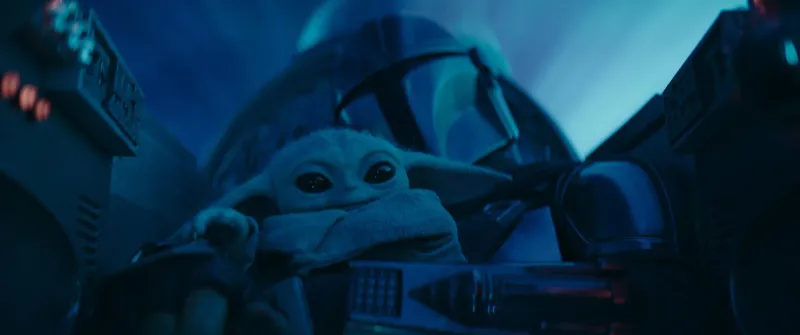
The Mandalorian Season 3 review – Beautiful, but diffuse
Good television, weaker Mandalorian. Season 3 has the most beautiful world-building the show has produced and a satisfying enough conclusion to the Gideon arc. But it misplaces its protagonists. 3.5/5.
The Mandalorian – A perfect dad story in space
The Mandalorian is Star Wars at its most honest about what it is really about. Not chosen ones or epic destinies. A man and a small creature who chose each other and refused to stop. Season 1 and 2 are exceptional. Season 3 is good. The whole is irreplaceable. 4/5.