
God Emperor of Dune - Frank Herbert's boldest book
The strangest and most divisive Dune novel: Leto II's 3,500-year reign as a human-sandworm tyrant. A flawed, fascinating, unforgettable book.
This post contains affiliate links. We may earn a commission if you make a purchase, at no extra cost to you. As an Amazon Associate, Dadnology earns from qualifying purchases.
Introduction
I need to describe the premise of this book plainly, because nothing else conveys how audacious it is. God Emperor of Dune takes place three and a half thousand years after the previous novel. The protagonist is Leto II, Paul’s son, who at the end of Children of Dune made a monstrous bargain: he merged his body with sandtrout to become a creature that is slowly, over millennia, transforming into a giant sandworm. He has ruled the known universe as an immortal tyrant-god ever since. This is a novel about a three-and-a-half-thousand-year-old man who is mostly worm, and it is one of the most genuinely original things ever published in mainstream science fiction.
There is no other book in the saga, or arguably the genre, quite like it. Most of the action of the previous novels is gone. In its place, Herbert gives us a sustained meditation on power, religion, freedom, and the long arc of human survival, delivered largely through conversations between the God Emperor and the handful of people who orbit him. It is, by some distance, the strangest mainstream sci-fi novel you will ever read, and that is exactly why it earns a 4.5 rather than dismissal.
This is the book where the saga stops being a story and becomes an argument. Whether that thrills or exhausts you is the whole question.
Plot & characters
What plot there is centres on Leto’s court. There is Moneo, his loyal and weary majordomo; Siona, Moneo’s rebellious daughter and the focus of Leto’s secret breeding plan; Duncan Idaho, returned yet again as a clone, or ghola, perpetually out of his own time; and a visiting ambassador whose presence sets a long-laid scheme in motion. The tension builds slowly toward rebellion against the Tyrant, but make no mistake, the events are a frame on which Herbert hangs his ideas.
Leto II himself is one of the great characters in science fiction precisely because he is so monstrous and so persuasive at once. He is a tyrant who oppresses humanity for thousands of years, and he genuinely believes, with prescient certainty, that this is the only way to save the species from extinction, his Golden Path. Herbert refuses to make him a simple villain or a simple saviour. He is both, and the book dares you to decide what you think of a god who imprisons you for your own ultimate good.
The human characters around him serve mainly to draw out his philosophy and to embody the freedom he has engineered them toward. Siona and the latest Duncan are the closest thing the book has to conventional protagonists, and their arc provides the emotional and narrative payoff. But the heart of the book is Leto’s loneliness, the unbearable isolation of a being who has outlived everyone and everything he ever loved.
Style, tone & atmosphere
This is Herbert at his most essayistic. Large stretches of the novel are Leto’s reflections, his journals, his dialogues on the nature of power and history. If you love big, chewy ideas, this is a feast. If you came to Dune for sandworm action, this is where the saga will test your patience the hardest, the worm is now the narrator, and he would rather lecture than fight.
The tone is melancholy, grand, and oddly intimate. For all its cosmic scale, the book is really a chamber piece about a desperately lonely god. There is a mournful beauty to it that has stayed with me longer than the spectacle of the earlier books. The atmosphere of a tamed, green Arrakis with one last desert preserved for the Tyrant is quietly devastating.
Be warned and be prepared: the pacing is glacial by conventional standards. This is a book to be savoured slowly, not raced through. Read it when you are in the mood to think, not to be thrilled.
The dad perspective: Reading experience & recommendation
Here is the honest truth, and it is the most useful thing in this review: God Emperor of Dune is where the saga becomes a genuine test of the reader. Some dads will find this the most profound and rewarding book in the series, a singular meditation on legacy, sacrifice, and the long game of survival. Others will find it where the series finally lost them. Both reactions are completely valid, and which one you have says more about your reading appetite than about the book’s quality.
For me, it lands at a 4.5 because nothing else is this brave. As a dad, the central idea hit hard: a parent figure who takes on an unbearable, lonely burden across an unimaginable span of time, sacrificing his own humanity so that those who come after will be free. That is parenthood abstracted to a cosmic, terrible scale, and it is genuinely affecting.
Practically, this is not a tired-Tuesday book. It demands a clear head and real attention. The audiobook can actually help here, letting Leto’s philosophy wash over you on a long drive, though you will lose some of the density. My advice: read it slowly, one section at a time, and let it breathe. Rush it and you will hate it.
Who is this for? The reader who fell in love with Dune’s ideas and wants to follow Herbert all the way to the end of his imagination. It is not for the reader who wants the desert adventure of book one, and you should know that going in.
Pros
- The single most original and audacious concept in the entire saga
- Leto II is a magnificent, morally complex character study
- A profound meditation on power, freedom, sacrifice, and the long arc of survival
- Lonely, melancholy, and beautiful in a way that lingers for years
Cons
- Glacially paced, with long stretches of pure philosophy and almost no action
- The most divisive book in the saga, this is where many readers give up
- Demands a clear head and full attention, not a casual evening read
Conclusion
God Emperor of Dune is a flawed, fascinating, utterly singular book. It is half philosophy lecture and half character study, and it will either be the high point of the saga for you or the wall you hit. I land firmly on the side of awe: nothing else in science fiction is this strange and this brave at once.
Recommendation: Read it if you love Herbert’s ideas and want the full, uncompromised vision. Approach it slowly and on its own terms. If you only wanted desert action, you may want to stop at Children of Dune instead.
🎧 Rather listen than read? Audiobooks are how busy dads actually finish books — start a free 30-day Audible trial and turn your commute into reading time.
Next in the series: Heretics of Dune.
FAQ
Is God Emperor of Dune the best or worst Dune book?
Do I need to read the first three books first?
What is the Golden Path in Dune?
How long is God Emperor of Dune?
Keep this in your inbox
One email a week: what we actually watched, built and reviewed — the stuff worth a dad's time. No hype, no daily spam.
Dadnology Weekly
One email a week: the LEGO, gaming and movie news worth a dad's time — plus what we actually reviewed. No hype, no daily spam.
Disclaimer: This review and its visuals were created with the help of AI. Some links may be affiliate links – we may earn a commission if you make a purchase, at no extra cost to you.
Current deals in Books & media
Verified live discounts tracked on Amazon
Books & media · Tested by Dadnology
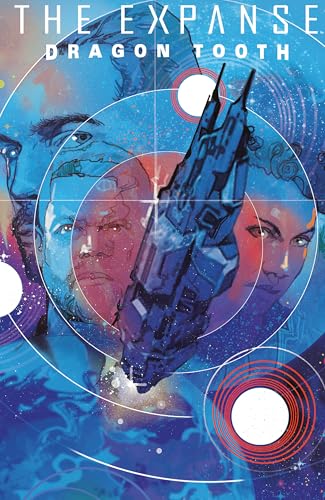
The Expanse: Dragon Tooth (Graphic Novel)
4.5/5“Bridging the void”Read our review
Books & media · Tested by Dadnology
The Art of The Legend of Vox Machina (Hardcover)
5/5“D&D-virginity meets fantasy chaos — and it's perfect.”Read our review
Books & media · Tested by Dadnology
The Hobbit Illustrated by the Author (Special Edition, Sprayed Edges)
5/5“A perfect page-Turner you'll want to read aloud”Read our reviewYou might also like
Chapterhouse: Dune - Frank Herbert's final novel
Chapterhouse: Dune is a tense, intimate finale that Herbert never got to finish, ending on a cliffhanger left forever open by his death. Strong, but bittersweet and incomplete. A 7.
Children of Dune by Frank Herbert - The twins inherit
Children of Dune closes the original trilogy with ambition and weirdness to spare, as Paul's twins inherit a changing Arrakis. Denser than book one, but a strong and rewarding read. An 8.
Dune: Part Three trailer drops, sets December date
The full Dune: Part Three trailer just dropped, and Villeneuve's finale to the trilogy is locked for a December 18, 2026 IMAX release.