
Dune by Frank Herbert - The novel that redefined sci-fi
Frank Herbert's 1965 masterpiece is the foundation of modern sci-fi and a perfect 5. The perfect starting point for the entire Dune saga.
This post contains affiliate links. We may earn a commission if you make a purchase, at no extra cost to you. As an Amazon Associate, Dadnology earns from qualifying purchases.
Introduction
There is a reason that, six decades after publication, every ambitious science fiction novel is still quietly measured against this one. Dune did not just tell a good story; it built a universe so complete, so internally consistent, that it made everything before it look like a sketch. Open the first page and you are dropped into a galaxy of feuding noble houses, a secret sisterhood breeding toward a messiah, and a desert planet whose sand hides both the most valuable substance in existence and monsters the size of cathedrals.
The setup is deceptively simple. The Atreides family is granted control of Arrakis, the only source of the spice melange, a drug that extends life and makes interstellar travel possible. It is a poisoned gift, a trap laid by their oldest enemies, and at the centre of it stands a fifteen-year-old boy, Paul Atreides, who may be the culmination of a centuries-long breeding program. That is the first act. What Herbert does with it across the next six hundred pages is the reason this book is a perfect 5.
I came to Dune expecting homework, the kind of foundational classic you read out of duty. I finished it genuinely shaken by how alive and propulsive it is. This is not a museum piece. It is a thriller with the soul of a philosophy seminar.
Plot & characters
The genius of Dune is that it is, on the surface, a straightforward hero’s journey, and underneath, a sustained interrogation of why hero’s journeys are dangerous. Paul is exiled, suffers, finds refuge among the desert-dwelling Fremen, and rises to lead them. You have seen that shape before. What you have not seen is an author so determined to show you the cost of it, the rivers of blood that a messiah’s rise sets in motion, the way prophecy can be a weapon manufactured generations in advance.
The supporting cast is extraordinary, and crucially, the adults are as important as the chosen one. Lady Jessica, Paul’s mother, is one of the great characters in the genre, a woman navigating impossible loyalties between her son, her order, and her murdered love. Duke Leto is a portrait of doomed nobility. Gurney Halleck, Duncan Idaho, the planetary ecologist Liet-Kynes, the monstrous Baron Harkonnen, each is drawn with enough specificity to anchor a novel of their own.
And then there is Arrakis itself, which is the real protagonist. Herbert was an ecologist at heart, and the desert is not a backdrop, it is a living system with its own logic, its own brutal economy of water and survival. The sandworms, the spice, the Fremen who have engineered an entire culture around scarcity, all of it interlocks. The antagonist is not really the Baron; it is the planet, and the terrible historical forces Paul unleashes upon it.
Style, tone & atmosphere
Herbert’s prose takes some acclimatising. He writes from inside multiple characters’ heads at once, slipping between their private thoughts mid-scene, and he refuses to explain his invented vocabulary up front. For the first hundred pages you are decoding as you read, picking up what a Kwisatz Haderach or a gom jabbar is from context. This is the single most common reason people bounce off the book, and it is worth pushing through, because once the vocabulary clicks, the density becomes intoxicating rather than exhausting.
The atmosphere is the novel’s superpower. Herbert makes you feel the heat, the obsessive preciousness of water, the religious awe the Fremen hold for the worms. There is a stillness to it, a patience, that the best film adaptation captured perfectly. This is a book that respects silence and dread as much as action.
Pacing-wise, be honest with yourself about the structure. The first third is a slow, deliberate political build. The middle and final acts accelerate hard. If you are reading on a fragmented dad schedule, the early going demands a little more concentration than the back half, which you will tear through.
The dad perspective: Reading experience & recommendation
I read most of Dune in the dead hours after bedtime, and it is a near-perfect book for that ritual, provided you commit to it. This is not a read-three-pages-and-doze-off book in the early going. It asks for your attention. But once Arrakis has its hooks in you, those stolen evening hours become something to look forward to all day.
What resonates most for a dad is the spine of the story: a father trying to prepare his son for a world that wants to destroy him, and a son inheriting a destiny he never asked for. The relationship between Leto and Paul, and then Jessica and Paul, gives this galaxy-spanning epic a beating human heart. Herbert is writing about legacy, about what we pass to our children whether we mean to or not, and that hits differently once you have kids of your own.
The audiobook is also exceptional and a genuinely good option for a commute, with a full-cast production that helps untangle the early vocabulary. If your reading time is the car or the train, that is the format I would point you to.
Who is this for? Any dad who wants science fiction that treats him as an intelligent adult and is willing to invest a few weeks of evenings into a world that will stay with him for life. It is not for someone who wants a quick, frictionless beach read. It asks for effort, and it repays it tenfold.
Pros
- The most complete and influential world in science fiction, realised down to its ecology and economics
- A thrilling hero's journey that simultaneously dismantles the idea of the hero
- Genuinely profound themes of legacy, fatherhood, and the danger of prophecy that resonate for dads
- A superb full-cast audiobook makes it surprisingly commute-friendly
Cons
- The first hundred pages demand patience as you decode Herbert's invented vocabulary
- The head-hopping point of view takes some getting used to
- The deliberate, political opening act is a slow burn before the story ignites
Conclusion
Dune is that rarest of things: a foundational classic that is also a genuinely gripping, emotionally resonant read. It earned its reputation and then some. Every theme modern science fiction wrestles with, ecology, empire, the cult of the chosen one, was mapped here first, and mapped better.
Recommendation: This is the only place to begin the saga, and it is essential reading for any dad who loves science fiction or the Villeneuve films. Push through the first hundred pages and you will own a story for life.
🎧 Rather listen than read? Audiobooks are how busy dads actually finish books — start a free 30-day Audible trial and turn your commute into reading time.
Next in the series: Dune Messiah.
FAQ
Is Dune suitable for teens or kids?
How long is Dune?
Do I need to read Dune before watching the films?
What makes Dune so important to science fiction?
Keep this in your inbox
One email a week: what we actually watched, built and reviewed — the stuff worth a dad's time. No hype, no daily spam.
Dadnology Weekly
One email a week: the LEGO, gaming and movie news worth a dad's time — plus what we actually reviewed. No hype, no daily spam.
Disclaimer: This review and its visuals were created with the help of AI. Some links may be affiliate links – we may earn a commission if you make a purchase, at no extra cost to you.
Current deals in Books & media
Verified live discounts tracked on Amazon
Books & media · Tested by Dadnology
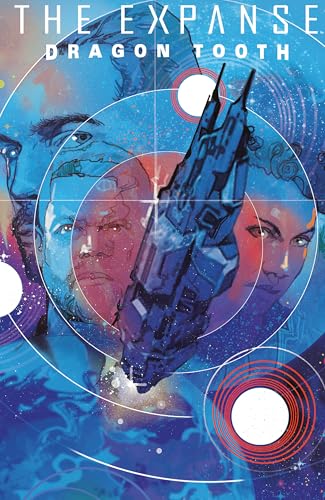
The Expanse: Dragon Tooth (Graphic Novel)
4.5/5“Bridging the void”Read our review
Books & media · Tested by Dadnology
The Art of The Legend of Vox Machina (Hardcover)
5/5“D&D-virginity meets fantasy chaos — and it's perfect.”Read our review
Books & media · Tested by Dadnology
The Hobbit Illustrated by the Author (Special Edition, Sprayed Edges)
5/5“A perfect page-Turner you'll want to read aloud”Read our reviewYou might also like
Chapterhouse: Dune - Frank Herbert's final novel
Chapterhouse: Dune is a tense, intimate finale that Herbert never got to finish, ending on a cliffhanger left forever open by his death. Strong, but bittersweet and incomplete. A 7.
Children of Dune by Frank Herbert - The twins inherit
Children of Dune closes the original trilogy with ambition and weirdness to spare, as Paul's twins inherit a changing Arrakis. Denser than book one, but a strong and rewarding read. An 8.
The Dune book series - Frank Herbert's complete saga
Six novels that go from a perfect 5 opening to one of the strangest, most ambitious sagas in sci-fi. Start with Dune, and let Herbert take you somewhere genuinely weird.