
Godox SL60IID review: The key light behind our LEGO photos
Our Godox SL60IID review: the 70W daylight LED that is the key light in our LEGO studio. A brightness dial we love, fixed 5600K we knew about. 5/5.
This post contains affiliate links. We may earn a commission if you make a purchase, at no extra cost to you. As an Amazon Associate, Dadnology earns from qualifying purchases.
The Godox SL60IID is the key light in our LEGO studio. If you have seen a Dadnology toy photo or a behind-the-scenes video, you have almost certainly seen its light: excellent, steady, and exactly where we want it. It gets 5 out of 5 from me. It has one limit, and I knew about it before I ordered it.
We bought it in June 2026 specifically for LEGO photography, and we have used it on every shoot since, without a single problem. It is the light our whole toy photography studio setup is built around, together with a Neewer CB60B as the fill light. Everything below comes from real shoots.
The best part: A dial for brightness
The feature I appreciate most is the simplest one. The SL60IID has a dial for brightness. You turn it, and the light gets brighter or dimmer, smoothly and immediately.
That sounds trivial until you work with it. Brightness is the one setting I actually change on our lights, and I change it often during a shoot. With a dial, that is a single, direct movement. On our second light, the Neewer, the same change means pressing buttons, and the dial on the Godox is clearly the more pleasant way to work.
Godox also offers its Godox Light app over Bluetooth and an included 2.4G remote. I use neither. I switch the light on with the physical button, and every change I make, I make directly on the light. For a light that sits next to the set, that is the fastest way anyway.
Steady, excellent light
The light itself is excellent: a constant, steady light that you can see in many of our photos and videos. Godox specifies a CRI of 96+ and a TLCI of 97+, which are the numbers that tell you how accurately a light reproduces colors.
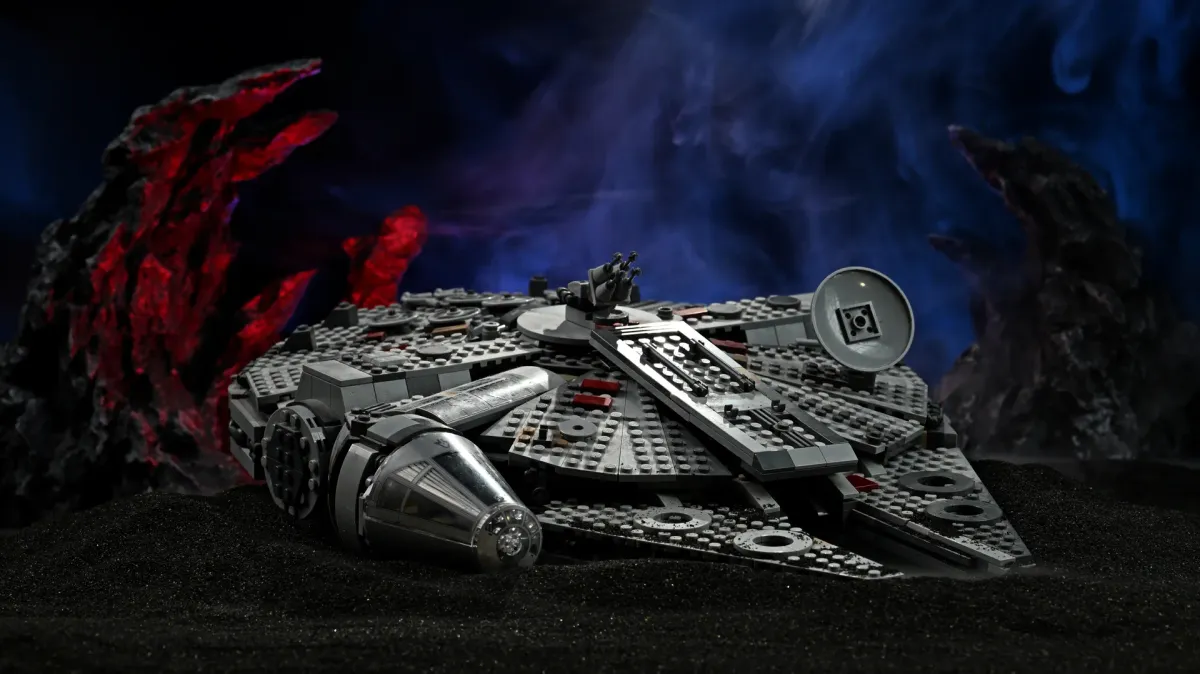
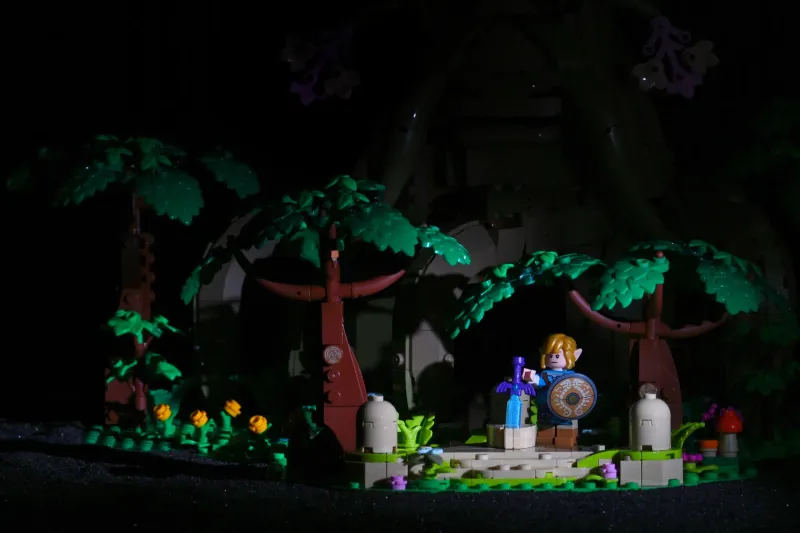
We run the light through a striplight softbox with a honeycomb grid. The grid keeps the light on the set and off the backdrop, which is what keeps the stage dark and cinematic. Because the SL60IID has a standard Bowens mount, softboxes like the Godox 60x90cm or the 30x120cm strip simply click on.
How bright do you actually need?
Godox rates the SL60IID at 70W and up to 18,600 lux at one meter with the standard reflector. On paper that is a lot of light for a tabletop. In practice, we run it at between 5 and 20 percent of its power, and that works perfectly.
That is worth knowing before you buy. For toy and LEGO photography you are not buying the SL60IID for its maximum output. You are buying it for clean, steady light that you can turn down very precisely, and for reserves when you light something bigger, film a person or bounce it off a wall.
Fixed 5600K: The one limit
The SL60IID only does daylight. The color temperature is fixed at 5600K, with a tolerance of ±200K according to Godox, and you cannot make it warmer or cooler.
We knew that before we bought it, and for our use case it is the right choice. Our whole studio runs at 5600K: the Neewer fill light is set to the same value, and the color moods in our photos come from other places, such as the blue accent light behind the set and the fog. If you want to mix warm and cool light from the same head, or match tungsten light in a room, you need a bi-color light instead. For us it is no reason to take a point off: we bought a daylight light on purpose.
Setup, mounting and noise
The included cables are long enough. That is a small thing that matters in a studio: the light sits on a stand next to the set, the power supply sits on the floor, and nothing has to be stretched or extended.
The light mounts on a light stand without any trouble, and the mounting lever is well designed: it stays out of the way and tightens firmly. On our Neewer, the lever gets in the way a little and does not always tighten all the way, so this is a real difference between the two. Softboxes are very easy to attach.
You can hear the fan slightly, but it is not disturbing at all, and we film our behind-the-scenes videos with it running.
How we use it: Cross-lighting with a fill
The SL60IID never works alone in our studio. It is the key light, the stronger of two lights, and the Neewer CB60B sits on the other side of the set as the fill. The asymmetry is the point. If both lights ran at the same power, the shadows would cancel each other out and the set would look as flat as a catalog page. With the fill a couple of stops below the key, the bricks get edges, depth and drama.
The light shaper matters as much as the light. Ours wears a striplight softbox with a honeycomb grid. The strip shape gives long highlights along ship hulls and armor, and the grid narrows the beam so the light lands on the set and only on the set. That is what keeps the backdrop dark and lets the fog and the blue accent light behind the set do their job.
We also film our behind-the-scenes videos under the same lights. Continuous light means you see exactly what the camera will see while you nudge a minifigure into place, and the same setup works for photos and video without changing anything.
Godox SL60IID vs Neewer CB60B
We own both lights and use them together, so this comparison is not theoretical.
| Godox SL60IID | Neewer CB60B | |
|---|---|---|
| Our role | Key light | Fill light |
| Color temperature | 5600K fixed | 2700K to 6500K |
| Brightness control | Dial | Buttons |
| Rated output | 18,600 lux at 1 m | 34,000 lux at 1 m |
| Mounting lever | Firm, out of the way | Can get in the way |
| Mount | Bowens | Bowens |
| Our rating | 5/5 | 4.5/5 |
In quality, handling and behavior, the two are very similar, and both run at 5600K in our setup. I cannot find any other weakness in one compared with the other. The difference I feel on every shoot is the control: the Godox dial suits my workflow, the Neewer buttons do not, and that is a decisive difference. The Godox mounting lever is also a little better. The Neewer can change color temperature, which the Godox cannot, but I have not needed that so far.
Who should buy it
The SL60IID is the right light if you shoot toys, LEGO, products or other tabletop subjects in daylight color and want one strong, steady key light with simple control. It is also a good first light for behind-the-scenes or YouTube video, because it is continuous and you see the result before you press the shutter.
Skip it if you need to change color temperature, for example to match warm room light or to mix warm and cool sources. Then a bi-color light like the Neewer CB60B is the better buy.
If you are just starting, read our toy photography studio setup first, and add small accent lights later: our SmallRig RM01 review shows the spots we use next to the big lights.
Pros
- Excellent, steady light in photos and video
- The brightness dial makes small adjustments fast and easy
- Cables long enough for a real studio layout
- Mounting lever holds firmly and stays out of the way
- Fan audible only slightly, never disturbing
- Bowens mount takes standard softboxes
- Plenty of reserve: we use 5 to 20 percent of its power
Cons
- Color temperature fixed at 5600K
The verdict
The Godox SL60IID is a great key light, and after five months without a single problem it gets the full 5 out of 5. It delivers excellent, constant light that you can see in many of our photos and videos, its brightness dial is the most pleasant control in our studio, the mounting lever and the softbox mount are easy, and the cables are long enough for a real setup. Its only limit is the fixed 5600K daylight, which we knew before we bought it and which fits our work.
The Final Word: If daylight is all you need, this is the key light to buy.
📌 FAQ
Is the Godox SL60IID good for toy and LEGO photography?
Can you change the color temperature on the Godox SL60IID?
Godox SL60IID or Neewer CB60B?
How bright is the Godox SL60IID?
Is the Godox SL60IID loud?
Keep this in your inbox
One email a week: what we actually watched, built and reviewed — the stuff worth a dad's time. No hype, no daily spam.
Dadnology Weekly
One email a week: the LEGO, gaming and movie news worth a dad's time — plus what we actually reviewed. No hype, no daily spam.
Disclaimer: This review and its visuals were created with the help of AI. Some links may be affiliate links – we may earn a commission if you make a purchase, at no extra cost to you.
Current deals in Cameras
Verified live discounts tracked on Amazon

Cameras · Tested by Dadnology
Nikon Z8 Body
5/5“The Endgame body. No more compromises.”Read our reviewPrice as of Nov 16, 08:46 PM UTC

Cameras · Tested by Dadnology
Nikon Z5 Body
5/5“The unbeatable on-ramp to full-frame mirrorless.”Read our reviewPrice as of Nov 16, 08:46 PM UTC

Cameras · Tested by Dadnology
Nikon NIKKOR Z 40mm f/2
5/5“Tiny, cheap, brilliant. The grab-and-go prime.”Read our reviewPrice as of Nov 16, 08:46 PM UTC
You might also like
Neewer CB60B review: The fill light in our LEGO studio
The Neewer CB60B is a 4.5/5 fill light: excellent light, adjustable color temperature if you need it, and no problems since June. What bothers us is that brightness, the one setting we change all the time, is set with buttons rather than a dial, and that the mounting lever gets in the way.
Beach toy photography: How to shoot action figures and LEGO in the sand
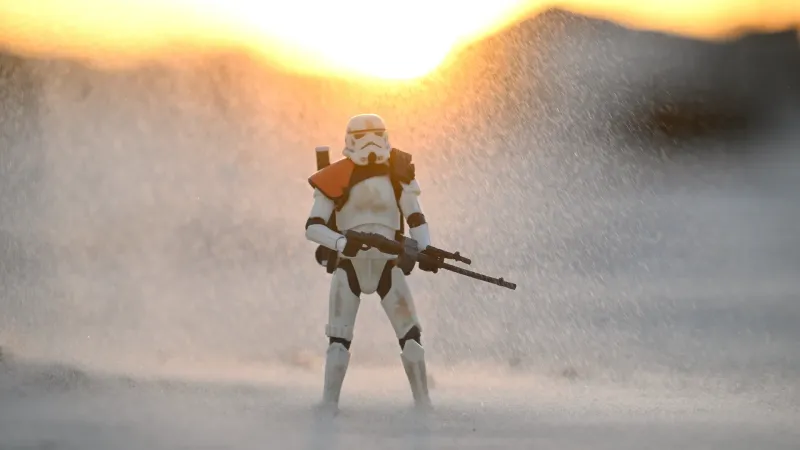
The beach is the ultimate outdoor studio for toy photography if you respect the elements. Low ground-level angles turn sand ripples into mountain ranges, golden hour softens harsh plastic reflections, and a helping hand creates breathtaking in-camera dust storms.
SmallRig RM01 Mini LED light kit review: The toy photography game-changer
For LEGO and toy photographers, the SmallRig RM01 3-Pack is an absolute game-changer. Three tiny, waterproof cube lights with silicone diffusers, honeycombs, and snoots let you light a 4cm minifigure with Hollywood precision without spilling light onto the backdrop. Rated 5/5.