
Is Marvel's Wolverine OK for kids? A dad's age-rating guide
Marvel's Wolverine lands September 15 rated Mature 17+. A dad's honest guide to what's in it, the gore toggle, and why Spider-Man was not this.
This post contains affiliate links. We may earn a commission if you make a purchase, at no extra cost to you. As an Amazon Associate, Dadnology earns from qualifying purchases.
🐾 The question is coming, and Spider-Man is why
Marvel’s Wolverine releases on September 15, 2026, exclusively on PS5, and a lot of households are going to walk into this one with the wrong assumption already loaded.
Here is the shape of it. Insomniac Games made Marvel’s Spider-Man, Miles Morales and Spider-Man 2. All three are rated Teen. For a great many families those games were a genuine gift — a superhero the kid already loved, in a game good enough that the adults wanted a turn. So when the same studio announces another Marvel game, the reasonable assumption is that it lives in the same neighbourhood.
It does not. Marvel’s Wolverine is rated Mature 17+ by the ESRB and PEGI 18 in Europe, and it is the first Insomniac Marvel title to land outside Teen territory. This guide is what is actually in it, what the much-discussed gore toggle does and does not change, and what to do with a nine-year-old who has just watched a trailer over your shoulder.
What the rating actually says
Ratings boards publish a summary alongside the letter, and it is worth reading, because “Mature 17+” on its own tells you very little.
The ESRB’s own description of Marvel’s Wolverine covers third-person melee combat in which players slash and stab enemies with Logan’s claws, rage modes that unlock faster combos and slow-motion finishers, and combat marked by frequent blood-splatter effects, screams of pain, and dismemberment and decapitation. Cutscenes depict graphic combat, and there are battlefields containing torsos and limbs. Beyond the violence, the listing notes brief partial nudity, dialogue referencing drugs including fentanyl production, and profanity — the strong words, not the mild ones — throughout.
That is not a cautious rating written by someone covering themselves. It is a description.
Two smaller things in the same listing are worth knowing. The rating carries In-Game Purchases as an interactive element, which is unusual on a single-player narrative game and worth watching for whatever it turns out to be. And the rating is listed for PlayStation 5 alone — there is no PS4 version, so an older console in the house is not a route in.
The gore toggle: What it does, and what it absolutely does not
This is the part most coverage gets slightly wrong, and it is the reason this guide exists.
Insomniac has built a set of options that let players reduce or switch off the graphic content: dynamic blood, dismemberment, and Logan’s own visible injuries can each be dialled down or turned off, the game censors things like pooling blood, exposed organs and the more graphic dismemberment shots, and some cutscenes are blurred when the setting is active. Insomniac has been clear that this is part of a broader accessibility system rather than a cosmetic extra, and by their account the combat still feels like itself with it enabled.
That is a genuinely good piece of design. Plenty of adults find gore unpleasant without wanting to skip the game, and until recently the only options were “endure it” or “do not play”.
It is an accessibility feature. It is not a parental control, and it should not be read as one.
Turning off the blood does not remove the fentanyl references. It does not remove the partial nudity. It does not remove a script in which characters swear the way adults swear. It does not change the rating, because the rating was never only about the blood. What you get with the toggle on is a Mature 17+ game with less visible viscera — which is a different thing from a game a twelve-year-old should be playing.
There is a subtler point too. Insomniac has said the intent is that a player who enables the setting should not suddenly run into content they expected to be hidden. That is a promise about consistency, not about scope, and it is the right way to read the whole feature: it is honest about what it covers, and what it covers is gore.
The Spider-Man trap, properly explained
If you take one thing from this page, take this one.
A household that bought Spider-Man 2 has been trained by experience: Insomniac makes Marvel games that a ten-year-old can play, that look spectacular, and that the parent enjoys watching. That experience is real and it is why the trust exists. It is also the exact reason this game is going to end up in front of children it is not for.
The difference is not that Insomniac changed studios or lost the plot. It is that the character is different in a way that goes all the way down. Spider-Man’s defining trait is that he does not kill people; the whole design — the web-swinging, the non-lethal takedowns, the comedy — follows from that. Wolverine’s defining trait is a set of blades that come out of his hands. A faithful Wolverine game cannot be Teen-rated without being a dishonest Wolverine game, and Insomniac has evidently decided not to make the dishonest version.
So the answer to “but he played the Spider-Man one” is not a judgement about your kid. It is that these are different games with the same logo on the box.
The real risk ranking
If you are weighing this for an older teenager rather than a child, it helps to rank what is actually in play rather than treating the rating as one undifferentiated block.
1. The violence, and specifically its intimacy. This is the one that matters most, and it is not about volume. Plenty of Teen-rated games have enormous body counts at a distance. Here the combat is close, melee, and personal — slow-motion finishers, dismemberment, screams. That lands differently than a shooter does, and it is worth being honest that “he has played Call of Duty” is not the same comparison.
2. The language. Pervasive strong profanity, per the rating. For many families this is a non-issue by a certain age; for others it is the actual line. Notably, it is the one thing the accessibility toggles do not address at all.
3. Drug references. Fentanyl production appears in the dialogue. That is a heavier, more current subject than the generic “drug reference” tag usually implies, and depending on your household it may be a conversation rather than a barrier.
4. Partial nudity. Brief, per the rating summary, and confined to cutscenes.
5. In-game purchases. Flagged by the ESRB, details not yet clear on a single-player game. Lock spending regardless — it costs nothing to do and removes the question.
The PS5 parental controls that actually work
Worth doing before September 15 rather than after, and it takes about five minutes.
On the PS5: Settings → Family and Parental Controls → Family Management. Select the child’s account, then set three things — the age level for PS5 games, a monthly spending limit (it defaults to zero, leave it there), and communication and user-generated content restrictions. Requests for exceptions come to you and can be approved from the PS App on your phone, which in practice is the part that makes the system survive contact with a real teenager.
The caveat that catches everyone: these controls apply to child accounts. If your teen’s account was set up years ago with an adult birth year — which happens constantly, usually because it was easier at the time — none of this applies to it, and no amount of fiddling in the menus will change that. Check which kind of account they actually have before you assume the console is handling it.
The better answer for a younger player
If the answer is no, the answer should come with something in its hand. These are not consolation prizes.
Marvel’s Spider-Man 2 is the obvious substitution and a genuinely great one — same studio, same city, rated Teen, and two playable Spider-Men. Our Spider-Man 2 review has the full verdict. For a first playthrough or a younger player, Miles Morales is shorter and warmer and works beautifully as an entry point, and the original Marvel’s Spider-Man still holds up. The Spider-Man games series hub has the whole run in order.
If what the kid actually wants is a Marvel team rather than a specific hero, Marvel’s Guardians of the Galaxy is one of the most underrated games on the console and rated Teen. And for genuinely young players, the LEGO Marvel games remain the right answer — all the characters, none of the content.
For the wider mutant conversation, our X-Men hub collects the films and shows, and it is worth knowing that X-Men ‘97 is a far better introduction to Wolverine for a child than any version of this game will be.
If your older teen is playing it anyway
For a sixteen or seventeen-year-old, this becomes a family judgement rather than a rule, and there are a few things that make it go better.
Play the opening hour yourself, or watch it. The rating tells you the categories; an hour tells you the tone, and tone is what you are actually deciding about. Keep the console somewhere shared rather than behind a bedroom door — not as surveillance, but because a game like this is better when someone else is occasionally in the room. Lock the spending regardless of your view on the content. And leave the gore toggle as their decision rather than yours; it is an accessibility setting, and framing it as a punishment is the fastest way to guarantee it gets switched off.
For the fuller version of this conversation on the other big autumn release, our GTA 6 age-rating guide covers the same ground with a heavier online dimension, and our news brief on the Wolverine trailer has the release details. It also sits alongside eight other releases in our September 2026 games picks, which is the wider month-at-a-glance if you are deciding what else lands on the console that week.
And when the next version of this question is about a film or a show rather than a game, every age guide we have written sits in one index.
The Dadnology Take
No — Marvel’s Wolverine is not OK for kids, and the rating boards are not being squeamish. Mature 17+ and PEGI 18 for a game whose own rating summary uses the words dismemberment and decapitation is a rating doing its job. The gore toggle deserves credit as accessibility work, and it deserves to be understood accurately: it turns down the blood, not the game. The one thing genuinely worth pre-empting is the Spider-Man assumption, because a household that has three Teen-rated Insomniac Marvel games on the shelf has every reason to expect a fourth. This is not that. If the answer is no, make it a no with Spider-Man 2 attached, and nobody in the house will feel short-changed.
Is Marvel's Wolverine OK for kids?
What is the official age rating for Marvel's Wolverine?
Does the gore toggle make Marvel's Wolverine suitable for children?
My child played Marvel's Spider-Man. Is this the same kind of game?
When does Marvel's Wolverine come out and on what platform?
What Marvel games should I get for a younger player instead?
How do I set up PS5 parental controls for a game like this?
Keep this in your inbox
One email a week: what we actually watched, built and reviewed — the stuff worth a dad's time. No hype, no daily spam.
Dadnology Weekly
One email a week: the LEGO, gaming and movie news worth a dad's time — plus what we actually reviewed. No hype, no daily spam.
Disclaimer: This review and its visuals were created with the help of AI. Some links may be affiliate links – we may earn a commission if you make a purchase, at no extra cost to you.
Current deals in Gaming
Verified live discounts tracked on Amazon
Gaming · Tested by Dadnology
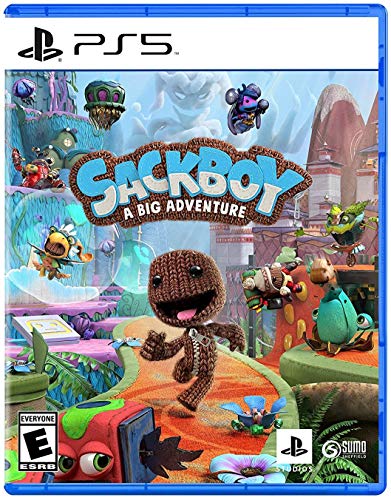
Sackboy: A Big Adventure (PS5)
4.5/5“Crafty co-op joy on PlayStation 5”Read our review
Gaming · Tested by Dadnology
The Last of Us Part I (PS5)
5/5“A masterpiece rebuilt for the modern era”Read our review
Gaming · Tested by Dadnology