
Best entry-level full-frame mirrorless cameras for beginners (2025) – Nikon, canon, Sony & Panasonic compared
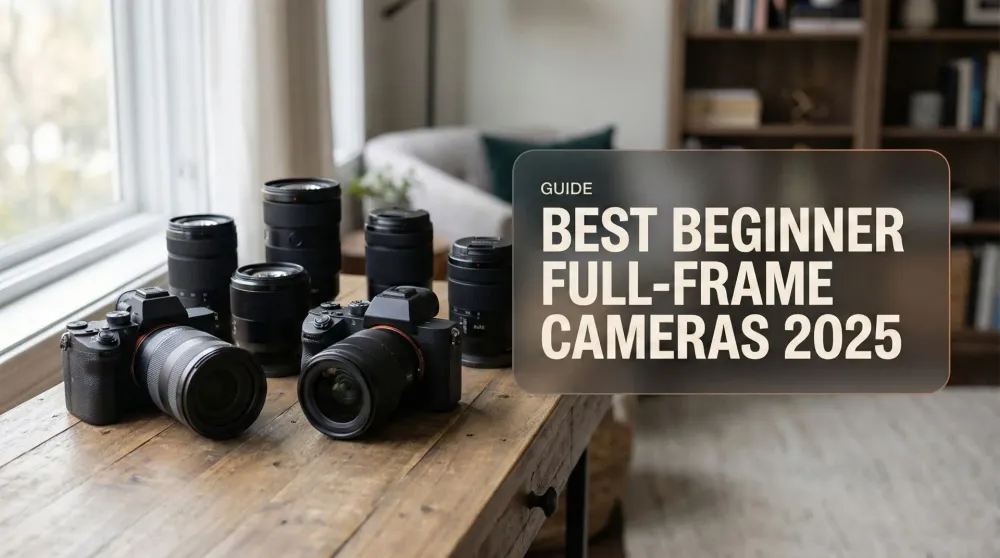
Ready to step up to full frame? We compare the best entry-level full-frame mirrorless cameras for beginners in 2025 – with hands-on experience from Nikon’s Z5/Z5 II plus Canon, Sony, and Panasonic rivals.
This post contains affiliate links. We may earn a commission if you make a purchase, at no extra cost to you. As an Amazon Associate, Dadnology earns from qualifying purchases.
Editor’s note: We’ve been Nikon shooters for many years. The Nikon Z5 served as a main workhorse camera for family, travel, and serious photography projects. This guide reflects that firsthand experience while also giving fair, brand-agnostic advice on Canon, Sony, and Panasonic alternatives.
🌍 Why step up to full frame instead of staying APS-C?
Full frame isn’t magic—but it does change the look and flexibility of your photos in ways that are hard to unsee once you’ve experienced it.
Compared to APS-C or a smartphone, a modern entry-level full-frame camera gives you:
- Cleaner high-ISO performance: Indoors, at night, or in bad weather, you can shoot higher ISO values with less noise and more detail.
- More dynamic range: You can pull detail from deep shadows and protect bright highlights in tricky light (think sunsets, backlit portraits, stage lighting).
- Stronger subject separation: With the same framing and aperture, a full-frame camera offers more background blur, especially with fast lenses—this is the “cinematic look” many people chase.
- Room to crop: 24 MP full-frame files can handle cropping for tighter framing while still holding up for prints and large screens.
In everyday family life, that translates to:
- Kids’ birthday parties in dim rooms that actually look clean and sharp.
- Christmas, Halloween, and school events that don’t fall apart into noisy mush.
- Portraits of your partner or kids that really separate them from messy backgrounds.
- Vacation landscapes with big, smooth skies and rich shadow detail.
If APS-C was your first serious camera step, full frame is often the long-term platform you can build a system around and keep for many years.
🎯 Our experience-based pick: Nikon Z5 / Z5 II
The Nikon Z5 spent years as a main camera in our kit. It traveled, photographed family, shot wildlife with the right glass, and handled “serious” sessions without drama. Its successor, the Z5 II, is essentially Nikon doubling down on that concept: an affordable full-frame body with the features that matter most in real-world use.
What makes the Nikon Z5/Z5 II so beginner-friendly?
- Image quality that just works: 24 MP full-frame is a sweet spot: big enough for large prints and cropping, not so big that files clog storage or slow down your computer.
- 5-axis in-body stabilization (IBIS): Works with almost any lens, including compact primes. Perfect for low-light family life and travel, where you can’t always use a tripod.
- Dual SD card slots: This is rare in “entry-level” full-frame. You can run backup recording or overflow—comforting for events, trips, or once-in-a-lifetime moments.
- Solid build and weather sealing: A magnesium-alloy chassis and sealing around buttons and seams mean the camera can handle bad weather better than budget bodies.
- Nikon Z-mount lenses: From budget kit zooms to stunning S-line primes, the mount is designed for sharp, modern glass. You can start small and grow over time.
The Z5 and Z5 II are not about insane burst rates or headline-grabbing specs. They are about being trustworthy. When you pick them up for a family weekend, a trip, or even light paid work, they behave predictably and deliver files you can rely on.
👨👩👧 Full frame for families & travel – What changes in practice?
If you already shoot with a DX camera like the Nikon Z50II, full frame can feel like a different category entirely.
Indoors and low light
- You’ll use ISO 3200, 6400, or even higher more confidently.
- With IBIS and a bright prime, you can shoot ambient light at home—that cozy, natural look phones simulate with heavy processing.
Portraits
- A 35mm or 50mm prime at f/1.8 on full frame gives a gentle, pleasing blur behind your subject.
- Skin tones look smoother, transitions from sharp to soft look more natural.
Travel & landscapes
- Wide-angle really means wide angle again.
- A 24 mm setting on full frame gives a big, immersive field of view that is perfect for cityscapes, vistas, and interiors.
Sports & wildlife
- Full frame doesn’t automatically make sports and wildlife easier—that’s more about autofocus and lenses—but the cleaner high-ISO and dynamic range help when light is bad or contrast is harsh.
You don’t suddenly become a pro by switching to full frame. But the files are more forgiving, and the camera gives you more latitude to grow.
🧰 A practical starter kit for Nikon full frame
If you pick the Nikon Z5/Z5 II as your first full-frame camera, you don’t need a huge lens collection. A smart, simple kit might look like this:
1) Nikon Z 35mm f/1.8 S – The everyday storyteller
- Ideal for family life, indoor scenes, environmental portraits, food, and travel.
- Bright f/1.8 aperture plus IBIS helps in dim rooms and evening light.
- Optical quality is excellent: sharp across the frame, pleasing bokeh, and consistent color.
2) Nikon Z 24–70mm f/4 S – The flexible all-round zoom
- Covers most real-life scenarios: landscapes, city trips, portraits, group shots, detail photos.
- Constant f/4 aperture is a good compromise between size, weight, and low-light ability.
- Optical performance is strong, and the lens packs down compactly with its retractable design.
With just these two lenses, you can cover 90% of what most families and travel shooters actually do. Add a telephoto later if you get into wildlife or sports.
🔍 Competitors in detail – Canon, Sony & Panasonic
Let’s look at how the main entry-level full-frame rivals behave in the real world if you don’t want to go with Nikon.
Canon EOS RP – Full frame on a tight budget
The Canon EOS RP is one of the most affordable ways to buy a new full-frame mirrorless body. It’s small, light, and feels familiar if you’ve used Canon DSLRs or Canon APS-C mirrorless before.
- Strengths: Price is hard to beat. Canon color science is flattering for skin tones. Dual Pixel AF is fast for stills.
- Weaknesses: No IBIS, weak 4K video (cropped), and small battery.
- Best for: Stills-focused beginners who want the full-frame look for the lowest possible cost.
Canon EOS R8 – Modern performance in a light body
The Canon EOS R8 is the step up from the RP, bringing a more advanced sensor and autofocus to the entry segment.
- Strengths: Excellent 24MP sensor (same as R6 II), advanced subject-detect AF for kids/pets/vehicles, uncropped 4K/60 video.
- Weaknesses: Still no IBIS, single card slot, and small battery.
- Best for: Hybrid shooters and parents who want the latest autofocus tech in a lightweight package.
Sony α7C – Pocketable full frame for travelers & creators
The Sony α7C packs the proven tech of the α7 III into a compact, rangefinder-style body.
- Strengths: Surprisingly small for a stabilized full-frame camera. Great battery life and reliable Real-time Eye AF.
- Weaknesses: Small viewfinder in the corner, menu-heavy controls compared to larger bodies.
- Best for: Travel and street photography where size and battery life matter most.
Panasonic Lumix S5 II – Hybrid powerhouse for photo & video
The Panasonic Lumix S5 II pushes the definition of “entry-level” on price, but delivers pro-level tools.
- Strengths: Best-in-class stabilization (IBIS), 6K video, 10-bit recording, dual card slots, and robust weather sealing.
- Weaknesses: L-mount lens selection is growing but heavier than rivals; AF is good but slightly behind Canon/Sony for erratic sports.
- Best for: Aspiring filmmakers and content creators who need serious video specs alongside photos.
🧠 Settings & practice tips for new full-frame shooters
Full frame rewards good technique. A few practical habits make a big difference:
- Use AF-C with eye/subject detection: Let the camera track faces and eyes, especially with fast primes where depth of field is thin.
- Mind your shutter speed:
- 1/125s or faster for calm portraits
- 1/250–1/500s for kids playing
- 1/1000s+ for sports or fast action
- Enable Auto ISO with a sensible max: For modern full-frame sensors, ISO 6400 or 12800 is often still usable, especially for family shots and web use.
- Shoot RAW from day one, even if you only process JPEGs right now: the full-frame files carry significantly more recoverable shadow and highlight detail than your phone or APS-C camera did, and learning to pull that latitude out of a RAW file is what makes the upgrade feel real rather than marginal.
Stop down slightly for groups: f/2.8–f/4 for multiple people keeps more faces sharp while still giving separation.
- Use the viewfinder often: Bracing the camera to your face stabilizes your shots and helps you see exposure and composition clearly.
🧩 Full frame vs APS-C – Which path should you choose?
Choose full frame if:
- You shoot a lot in low light and want cleaner, richer files.
- You care about portraits and background blur as part of your style.
- You want maximum flexibility for prints, cropping, and long-term growth.
Stick with APS-C (for now) if:
- You mainly shoot in good light and share online.
- You value weight and cost over maximum performance.
- Wildlife and sports are your main focus (crop factor = free zoom).
🗣️ Bottom line – Which camera should you actually buy?
For most beginners and enthusiast parents looking to step into full frame in 2025, our experience points to:
👉 Nikon Z5 or Nikon Z5 II as the most balanced, real-world choice:
- 24 MP full-frame sensor with excellent image quality
- 5-axis IBIS for low-light and primes
- Dual card slots for peace of mind
- Comfortable ergonomics and weather sealing
- A growing Z-mount lens ecosystem
If Nikon isn’t your brand:
- Canon EOS RP: The budget-friendly stills option.
- Canon EOS R8: The modern, fast, lightweight hybrid.
- Sony α7C: The compact travel companion.
- Panasonic Lumix S5 II: The video-first creator tool.
Pros
- Nikon Z5/Z5 II combines IBIS, dual card slots, and weather sealing at a price that entry-level rivals don't match
- Full-frame image quality is genuinely visible: cleaner high-ISO files, better dynamic range, and more natural background separation
- The Z-mount lens ecosystem offers a clear upgrade path from budget kit zooms to excellent S-line glass over time
- Canon EOS R8 brings cutting-edge autofocus and a modern sensor to the lightest, most affordable body in this comparison
- Sony α7C and Panasonic S5 II offer compelling alternatives for travelers and hybrid shooters who value compactness or cinematic quality
Cons
- Canon EOS RP and R8 lack in-body stabilization — a real disadvantage for low-light family shooting and handheld video
- Full-frame lenses cost more than APS-C equivalents; the body is just the beginning of the total system investment
- Panasonic S5 II's L-mount lens selection is smaller and generally more expensive than Nikon Z, Canon RF, or Sony FE
- Sony α7C's corner-mounted viewfinder and menu-heavy controls create a steeper ergonomic learning curve for beginners
- All five bodies reward deliberate technique — they're not shortcuts, they're platforms you grow into over time
For most beginners stepping into full frame for the first time in 2025, the Nikon Z5 II is the most balanced choice: IBIS, dual card slots, weather sealing, and genuinely excellent image quality in one body built for long-term use rather than just ticking spec boxes. If you’re a Canon shooter, the EOS R8 brings modern autofocus in the lightest full-frame package available. The Sony α7C is the right call if you’ll spend more time traveling than in a studio. And the Panasonic S5 II earns its price premium for anyone who’s as serious about video as they are about stills. Full frame is a long-term platform decision — any of these bodies will grow with you for years.
Related Dadnology guides: Best High-End All-Round Full-Frame Cameras (2025) · Best High-Resolution Full-Frame Cameras for Landscape Photography (2025) · Best Mirrorless Cameras for Dads (2026 Buyer’s Guide)
📌 FAQ – Entry-level full-frame mirrorless
Is full frame really worth it over APS-C for beginners?
Why do you recommend Nikon Z5/Z5 II as the first choice?
Do I need in-body stabilization (IBIS) in my first full-frame camera?
Which lenses should I start with for full frame?
Can I start on APS-C and move to full frame later?
Keep this in your inbox
One email a week: what we actually watched, built and reviewed — the stuff worth a dad's time. No hype, no daily spam.
Dadnology Weekly
One email a week: the LEGO, gaming and movie news worth a dad's time — plus what we actually reviewed. No hype, no daily spam.
Disclaimer: This review and its visuals were created with the help of AI. Some links may be affiliate links – we may earn a commission if you make a purchase, at no extra cost to you.
Current deals in Cameras
Verified live discounts tracked on Amazon

Cameras · Tested by Dadnology
Nikon Z8 Body
5/5“The Endgame body. No more compromises.”Read our reviewPrice as of Oct 17, 09:11 PM UTC

Cameras · Tested by Dadnology
Nikon Z5 Body
5/5“The unbeatable on-ramp to full-frame mirrorless.”Read our reviewPrice as of Oct 17, 09:11 PM UTC

You might also like

Nikon on sale: Buy the Z8, think twice about the Z6 II
The Z8, Z6II and Z5 all drop in price on sale days. Which one is worth it, from someone who owns a Z8 and shot a Z5 for years, plus the storage to go with it.
Nikon Z 70-200mm f/2.8 VR S vs VR S II: Which should you buy?
We've shot the original Nikon Z 70-200mm f/2.8 VR S for over five years and rate it a flat 5. Here's how it stacks up against the new VR S II - and which one you should actually buy.

Beach toy photography: How to shoot action figures and LEGO in the sand
The beach is the ultimate outdoor studio for toy photography if you respect the elements. Low ground-level angles turn sand ripples into mountain ranges, golden hour softens harsh plastic reflections, and a helping hand creates breathtaking in-camera dust storms.