
Best Outdoor & Camping Gear for Families (2026 Buyer's Guide)
Our dad-tested guide to the outdoor and camping gear that actually makes family trips work: a cooler, a mug, warmth and a seat. Buy it once, keep it for years.

This post contains affiliate links. We may earn a commission if you make a purchase, at no extra cost to you. As an Amazon Associate, Dadnology earns from qualifying purchases.
⛺ This guide is part of our Amazon Prime Day 2026 Deals Hub — our curated buying guides of the gear actually worth a dad’s money.
The Unglamorous Gear That Actually Makes a Family Trip Work
Nobody comes home from a camping trip raving about the cooler. They rave about the lake, the campfire, the kid who finally slept through the night in a tent. But ask any dad what actually ruined a trip, and the answer is never the scenery — it’s the warm milk on day two, the freezing 6 a.m. wait for the kettle, or the dawning realisation that five people brought four chairs. The trip is made or broken by the boring stuff: keeping things cold, staying warm, and having somewhere to put your tired backside.
This guide is for the family that does the lot — proper camping, music festivals, beach days, and the back-garden “campout” that lasts until the first mosquito. You don’t need a garage full of titanium ultralight kit; you need a handful of dependable, unglamorous things that work every single time and don’t fall apart by August. We’ve deliberately skipped the tent-and-stove headline gear here, because that’s where everyone already spends their attention. This is the supporting cast that quietly saves the day.
Here’s the honest editorial line, and it runs through every pick: buy it once. Cheap outdoor gear is a tax you pay annually. The discount cooler that holds ice for half a day, the supermarket blanket that pills and shrinks, the stool that snaps the first time a grown adult sits on it — each of those is cheaper today and more expensive over five summers. Some of the kit below carries a real premium (looking at you, YETI and Stanley), and we’ll be straight about when that premium is worth it and when it’s just a logo. But the gear that survives a decade of family chaos almost always costs less in the long run than the stuff you keep replacing.
Five things, five jobs. We’ve ranked them in the order they tend to matter on a real trip — cold storage first, because warm food ends a day faster than anything. Let’s dig in.
1. Stanley Adventure Outdoor Cooler — The Heavy-Duty Anchor
If you buy one piece of gear from this guide, make it this. A serious cooler is the foundation everything else sits on, because cold food and cold drinks are the difference between a relaxed family weekend and a series of grim ice-station runs. The Stanley Adventure is the heavy-duty cold box built to keep its contents cold for days, and it shrugs off the kind of abuse a family campsite throws at it.
AdStanley Adventure Outdoor Cooler (opens in a new tab)
Best overall: a heavy-duty cooler that keeps food and drinks genuinely cold for days, not hours.
What it does well
The headline is multi-day ice retention. This isn’t a “cold until lunchtime” picnic box — pack it properly with block ice and it holds temperature long enough to cover an entire weekend, which means the milk survives, the meat stays safe, and you make one ice run instead of three. The thick insulated walls and the tight-sealing lid are doing real work here, and you feel it on day two when everything inside is still genuinely cold.
Then there’s the durability, which is where the Stanley name earns its keep. The shell takes knocks, the handles and latches are built to be dragged, stacked, sat on and loaded into a car boot a hundred times without giving up. This is gear engineered to outlast the kids’ interest in camping entirely. It’s heavy and it’s solid, and after a few trips you stop noticing the weight and start trusting the thing completely — which is exactly what you want from the one item your family’s food depends on.
It’s also genuinely family-sized: enough capacity for a weekend’s worth of food and drink for a group, so you’re not playing real-life Tetris trying to fit a watermelon next to the juice boxes.
Where it falls short
Honesty time. It’s expensive, and it’s heavy — this is a base-camp cold box, not something you’ll happily carry half a mile to a remote pitch. The same thick walls that hold the cold make it a two-handed lift when loaded, and the price tag is a real wince at full RRP. If you camp once a year in a heatwave-free month, a cheaper cooler will technically get you through. But “technically gets you through” is how you end up owning three cheap coolers in five years.
Who should buy it
The family that camps, festivals, or beach-days more than a couple of times a season — anyone for whom keeping food safe and drinks cold over multiple days is a recurring problem. If your cooler is a once-a-year curiosity, you can size down. If it’s the hub of every family trip, this is the buy-it-once answer and you’ll never think about it again.
2. YETI Rambler 30 oz Travel Mug — The Bombproof Daily Carry
The cooler is the fridge; this is the cup. Where the Stanley keeps the whole family’s supplies cold at base camp, the YETI Rambler is the personal vessel that comes everywhere with you — the car, the touchline, the campsite at dawn, the desk on a Monday. It’s the one piece of “camping” gear that quietly earns its place in your daily life the other 360 days of the year.
AdYETI Rambler 30 oz Travel Mug (opens in a new tab)
Best daily carry: a bombproof insulated mug for the car, the campsite and the morning school run.
What it does well
The Rambler keeps hot drinks hot and cold drinks cold for hours, full stop. Pour a coffee at 7 a.m. before the drive and it’s still drinkable when you finally get a quiet minute at 10. Fill it with ice water on a sweltering beach day and it stays cold long after the bottled stuff has gone tepid. The 30 oz size is the sweet spot — big enough to mean business, small enough to fit a cup holder.
The build quality is the real story. This is stainless steel engineered to survive being dropped on concrete, kicked under a car seat, and chucked in a bag with keys and crayons. The lid is a sensible, leak-resistant design that survives the dishwasher and a toddler’s curiosity alike. It is, in the truest sense, bombproof — the kind of object you’ll still be using when your phone has been replaced four times over.
Where it falls short
It’s a premium price for a mug, and there’s no getting around that — you can buy a perfectly functional insulated cup for a fraction of the cost. It’s also on the heavier side because of that steel, and the 30 oz size is a touch large for a small cup holder or a kid’s hand. You are, undeniably, paying a logo premium here. The difference is that, unlike a lot of logo premiums, this one buys you genuine decade-long durability rather than just a badge.
Who should buy it
The dad who wants one mug to rule them all — campsite, commute and kitchen — and is tired of replacing flimsy travel cups that crack, leak, or lose their insulation after a year. If you’ll use it every day (you will), the cost-per-use makes the premium evaporate. If you only need a cup twice a summer, buy something cheaper and spend the difference on the cooler.
3. Sportneer Wearable Sleeping Bag — Warmth With Your Hands Free
Cold ends a family evening faster than tiredness does. The moment the sun drops, the toddler gets grizzly, and someone’s making the “can we just go to bed” face. The Sportneer wearable bag is the answer to chilly nights, late-evening stargazing, and frankly any outdoor moment where a normal sleeping bag would trap your arms and leave you helpless.
AdSportneer Wearable Sleeping Bag (Adults & Kids) (opens in a new tab)
Best for warmth: a wearable bag with armholes for chilly nights, stargazing and shivering touchlines.
What it does well
The clever bit is the armholes. A wearable bag with arm openings means you stay wrapped and warm while still being able to hold a torch, pass a snack, scroll a phone, or wrangle a child — which, as any parent knows, is the actual job description of a family evening. It turns “I’m freezing and immobilised in a cocoon” into “I’m warm and still functional,” and that’s a bigger upgrade than it sounds.
It comes in adult and kids sizes, so the whole family can be wrapped up for an evening around the fire or a late-night look at the stars. It’s genuinely cosy, packs down for transport, and doubles as an emergency warm layer for the cold-weather sports touchline or the festival night that turned unexpectedly bitter. For the price, it punches well above the flagship gear in this guide on pure usefulness-per-pound.
Where it falls short
It’s bulkier than a blanket when you’re carrying it, and it’s a specialist item — brilliant for sitting-and-staying-warm, less so for sleeping, where a proper sleeping bag still wins. The fit is generous rather than tailored, so it’s about cosy warmth, not technical thermal performance. And it’s the one pick here that’s more “very good value” than “buy-it-for-life heirloom” — but at this price, that’s an entirely fair trade.
Who should buy it
Families who spend evenings outdoors and lose them to the cold — campers, stargazers, festival-goers, and sideline parents at freezing weekend matches. If your trips keep ending early because someone got chilly, this is a cheap, genuinely effective fix. Buy a kids’ size too; you’ll thank yourself the first cold night.
4. Arcturus Military Wool Blanket — The Buy-It-For-Life Layer
Some gear you buy for a trip; this you buy for a decade. The Arcturus military wool blanket is the most flexible item in this guide — the thing you sit on at the beach, wrap around a kid at the campfire, spread on the grass for a picnic, and throw over your legs on a cold touchline. It does a dozen jobs and does them all for years.
AdArcturus Military Wool Blanket (opens in a new tab)
Best picnic and campfire blanket: warm, thick, washable, and the kind of thing you hand down.
What it does well
This is a thick, genuinely warm wool blanket, not a thin fleece that pretends. Wool’s trick is that it keeps you warm even when it’s a bit damp — which is exactly the condition every outdoor blanket eventually finds itself in — and it’s naturally tough and flame-resistant enough to sit near a campfire without you panicking about a stray spark. It’s a proper insulating layer for sitting on cold or damp ground, where a flimsy picnic rug just transmits the chill straight up.
Crucially, it’s washable and built to last. This is heirloom-grade kit: the kind of blanket that survives mud, juice, sand, sun cream and a decade of family use and comes out of the wash ready for the next trip. Roll it up, lash it to a bag, leave it in the car permanently. It is the definition of buy-it-once — the cheap fleece you’d otherwise replace every couple of summers simply never enters the equation.
Where it falls short
It’s heavy and bulky — this is real wool, so it has weight and it takes up room, which is the trade-off for the warmth and durability. Some wool can feel scratchy against bare skin compared to a soft synthetic throw, so it’s more “rugged outdoor layer” than “sofa cuddle blanket.” And it needs a touch of care in the wash to keep its life. None of that dents its core job: being the toughest, warmest, most versatile blanket your family owns.
Who should buy it
Honestly? Nearly everyone. If you do beach days, picnics, campfires, or cold-weather spectating, a proper wool blanket is one of those quiet purchases you’ll use far more than you expect. If you only buy one warmth item from this guide, make it this — it’s the more flexible everyday pick than the wearable bag, and it’ll outlive every other thing on this list.
5. Fishboy Collapsible Camping Stool — Somewhere to Finally Sit Down
Here’s the camping truth nobody admits: you always bring one chair too few. Someone ends up perched on the cooler or standing through dinner. The Fishboy collapsible stool is the unsexy fix — a flat-packing, near-weightless seat that lives in the car boot permanently so there is always one more place to sit.
AdFishboy Collapsible Camping Stool (400 lb) (opens in a new tab)
Best portable seat: packs flat, weighs nothing, and holds a fully grown dad without complaint.
What it does well
It packs nearly flat and weighs almost nothing, which is the entire point — it solves the seating problem without the bulk of another folding chair. You can keep it in the boot, the festival bag, or the beach kit and forget it’s there until the moment you desperately need it: the queue for the food truck, the touchline, the campsite where the proper chairs are still in their bags.
Despite folding down to nothing, it’s a real seat rated to 400 lb — which means it holds a fully grown, fully fed dad without so much as a creak. That weight rating matters: it’s the line between a genuine seat and a flimsy novelty that buckles the first time an adult trusts it. Set-up is instant, it’s stable on grass and sand, and at this price you can sensibly own two or three so the whole family’s covered.
Where it falls short
It’s a stool, not a lounger — there’s no backrest, so it’s for sitting at, not reclining in for three hours. It sits lower and smaller than a full camping chair, so for long, relaxed campfire evenings a proper chair is still more comfortable. Think of it as the brilliant supplementary seat, not the replacement for your main chairs. As an always-there extra, though, it’s close to perfect.
Who should buy it
Every family that camps, festivals, or beach-days and is permanently one seat short. Buy one (or three), throw them in the boot, and never stand awkwardly through dinner again. It’s cheap, it’s tiny, and it punches absurdly above its size for solving a problem you have on literally every trip.
How They Compare
Five items, five different jobs — so this isn’t a head-to-head where one wins. It’s a kit list where each piece covers a base the others don’t. Here’s how they line up.
| Item | Stanley Cooler | YETI Rambler | Sportneer Bag | Arcturus Blanket | Fishboy Stool |
|---|---|---|---|---|---|
| Job | Cold storage | Daily carry drink | Wearable warmth | Picnic / fire warmth | Portable seat |
| Durability | Heirloom-tough | Bombproof | Very good | Buy-it-for-life | Surprisingly rugged |
| Packs down? | No (bulky base) | Cup-holder size | Compresses | Rolls / bulky | Nearly flat |
| Best For | Multi-day trips | Car & campsite | Cold evenings | Sitting & wrapping | Always-spare seat |
| Verdict | Best overall | Best daily carry | Best for warmth | Most versatile | Best portable seat |
The table tells the real story: this is a layered kit, not a shortlist. The cooler and the mug handle cold; the bag and the blanket handle warm; the stool handles tired. Buy the cooler first because warm food ends a trip fastest, then fill in the others in whatever order matches how your family actually spends its time outdoors.
How to Choose: A Decision Framework
If you’ve read this far, here’s how to spend your money in the right order without overthinking it.
If you only buy one thing — buy the Stanley Adventure Cooler. Cold storage is the base everything sits on, and a warm cooler ruins a trip faster than any other failure. It’s the foundation purchase.
If your problem is the daily grind, not just trips — buy the YETI Rambler. It earns its keep every single day, camping or not, which makes the premium melt away over time.
If your evenings keep ending because someone got cold — buy the warmth. The Arcturus wool blanket is the more flexible everyday pick (sit on it, wrap in it); the Sportneer wearable bag is the specialist for hands-free warmth on cold nights. Most families want both eventually; start with the blanket.
If you’re forever one seat short — buy the Fishboy stool, probably two of them. It’s the cheapest fix for the most reliable annoyance in family camping.
If you’re torn between the cooler and “saving money on a cheaper one”: ask one question — how many times a year do you actually need cold food to last more than a day? If the answer is more than twice, the buy-it-once cooler is cheaper over five years than the string of cheap ones you’ll otherwise churn through.
AdStanley Adventure Outdoor Cooler (opens in a new tab)
Best overall: a heavy-duty cooler that keeps food and drinks genuinely cold for days, not hours.
The meta-advice, in proper tech-dad spirit: stop optimising for the upfront receipt. The true cost of outdoor gear is what you spend on it over five summers, including all the replacements. The premium kit that survives a decade of mud, sand and toddlers almost always wins that maths — and it spares you the worse cost of a trip ruined by gear that quit on day two.
Common Mistakes to Avoid
- Buying the cheap cooler to save money. It’s the classic false economy. The bargain box that holds ice for half a day means more ice runs, spoiled food, and a replacement next summer. A buy-it-once cooler is cheaper over its life, not more expensive.
- Sizing the cooler too small. The single most common camping regret. Size it for the longest, busiest trip you actually take, not the smallest — a cooler you can’t fit the food into is a cooler that failed.
- Forgetting somewhere to sit. Everyone packs the tent and forgets that five people need five seats. A flat-packing stool in the boot is the cheap insurance against standing through dinner.
- Treating warmth as optional. “It’ll be fine” is how trips end at 8 p.m. when the kids get cold. A proper blanket or wearable bag is the difference between an early night and a long, lovely evening outdoors.
- Paying full RRP in midsummer. Premium gear like the Stanley and YETI drops hard during sale events. Buying buy-it-once kit at full price right before a big sale is leaving real money on the table.
Pros
- Multi-day ice retention that keeps food safe and drinks cold for an entire weekend
- Heavy-duty shell, handles and latches built to survive years of family abuse
- Family-sized capacity for a group's worth of food and drink
- Genuinely buy-it-once durability that outlasts cheaper coolers several times over
Cons
- Expensive at full RRP
- Heavy and bulky once loaded — a base-camp box, not a carry-it-far cooler
Conclusion: The Bottom Line
After running through five essentials across cold, warm and tired, the honest take is simple: family trips are made by the unglamorous gear, and the gear that lasts is cheaper than the gear you keep replacing.
The anchor buy is the Stanley Adventure Cooler — keep the food safe and the drinks cold for days and half the battle’s won. Add the YETI Rambler as your bombproof daily-carry mug, the Sportneer wearable bag and Arcturus wool blanket for the warmth that saves your evenings, and the Fishboy stool so someone tired finally gets to sit down. Together they’re the supporting cast that quietly makes every camping trip, festival, and beach day actually work.
The Final Word: buy it once. The premium on the Stanley and YETI is real, but so is the decade you’ll get out of them — and that’s far cheaper than the annual replacement tax on bargain gear. Start with the cooler. Period.
Related Dadnology guides: Best Kitchen Tech for Family Dinners (2026 Buyer’s Guide) · Best Tablets for Family Life · Best Family Board & Card Games for Game Night
What is the best camping gear for families in 2026?
Is an expensive cooler like the Stanley worth it for family camping?
What should I look for in a family camping cooler?
Do we really need a wool blanket and a wearable bag, or is one enough?
Why does a folding stool matter when we already have camping chairs?
Is YETI or Stanley better for keeping drinks cold?
Keep this in your inbox
One email a week: what we actually watched, built and reviewed — the stuff worth a dad's time. No hype, no daily spam.
Dadnology Weekly
One email a week: the LEGO, gaming and movie news worth a dad's time — plus what we actually reviewed. No hype, no daily spam.
Disclaimer: This review and its visuals were created with the help of AI. Some links may be affiliate links – we may earn a commission if you make a purchase, at no extra cost to you.
You might also like
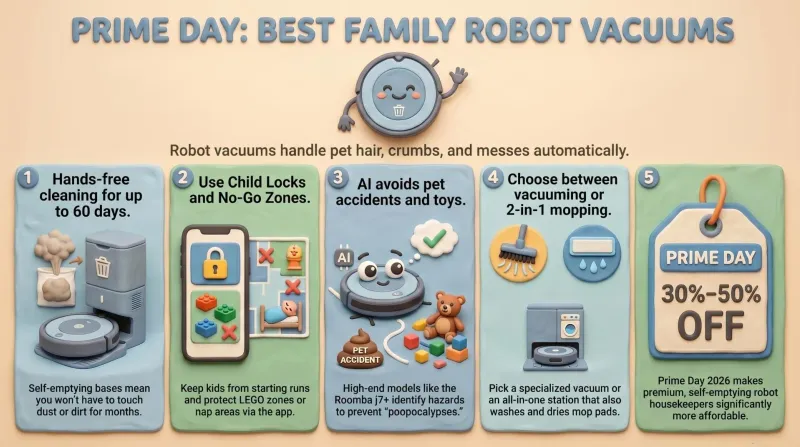
Prime Day 2026: 5 Best Robot Vacuums for Family Households
Our dad-focused Prime Day guide to the top 5 robot vacuums in 2026 that keep family homes clean – from self-emptying Roombas to powerful all-in-one stations from Shark, Dreame, and eufy.
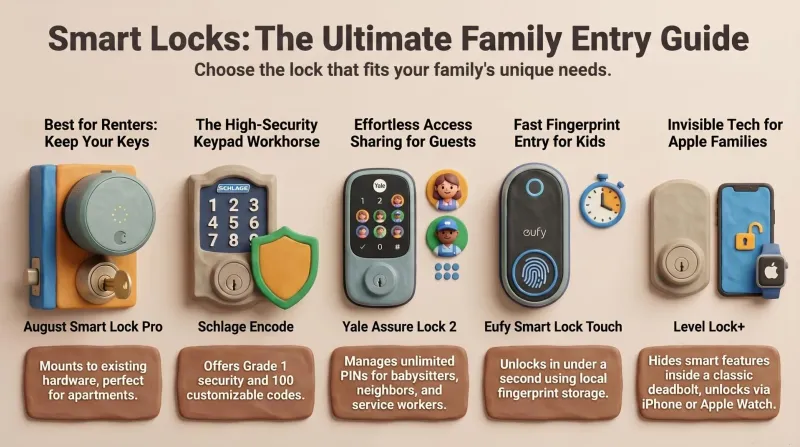
Never Get Locked Out Again: 5 Best Smart Locks for Families (Prime Day 2026)
A dad-focused guide to the best smart locks for U.S. family homes in 2026 – including August, Schlage, Yale, Eufy, and Level – with picks for renters, Apple families, fingerprint fans, and more.
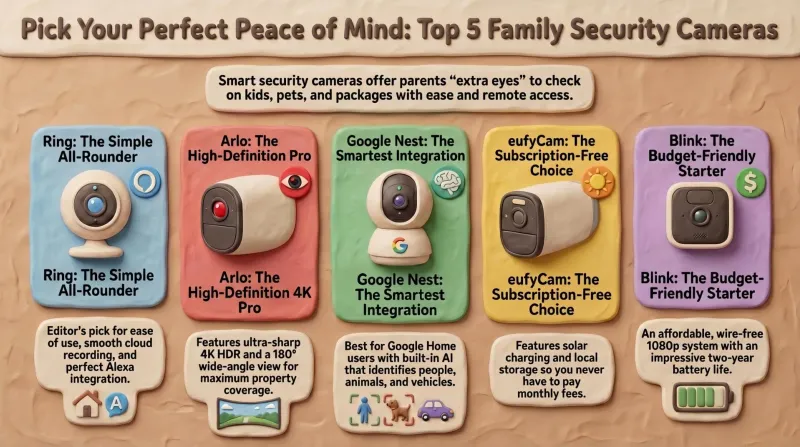
Top 5 Smart Security Camera Systems for Families (2026) – Dadnology Guide
Our dad-focused guide to the 5 best smart security camera systems for U.S. families in 2026 – from Ring and Arlo to Google Nest, eufy, and Blink – with options for every budget, ecosystem, and privacy preference.