
Best Family Board & Card Games for Game Night
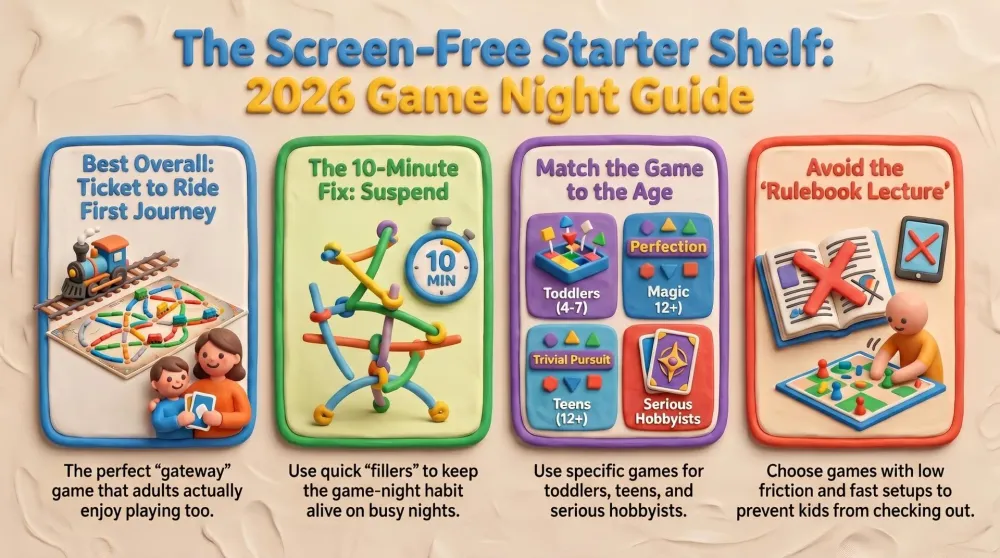
Our dad-tested guide to the best family board and card games for game night in 2026: gateway games for mixed ages, an easy card game for big groups, quick fillers, and a giggle pick for the little one. Top pick: Ticket to Ride First Journey.
This post contains affiliate links. We may earn a commission if you make a purchase, at no extra cost to you. As an Amazon Associate, Dadnology earns from qualifying purchases.
🎲 This guide is part of our Amazon Prime Day 2026 Deals Hub — our curated buying guides of the gear actually worth a dad’s money.
What Family Games Actually Get Replayed?
Here is the honest dad reality: getting everyone off their screens and around the same table is the single best evening you can have at home, and also the hardest to actually pull off. Everyone scatters to a different device, a different room, a different YouTube rabbit hole — and the family that was technically all home spent the night not really together at all. Game night is the oldest, cheapest, most reliable fix there is. It costs you the price of one good game and an hour of phones-in-a-drawer, and it works on a tired Tuesday far better than any expensive day out. The catch is that it only works if you pick games people genuinely want to replay — not the dusty box that gets opened once at Christmas and never again.
Because that is the failure mode, and it is brutal: you buy the game with the great cover art, play it once, discover it is either too complex for the youngest or too dull for the adults, and it goes on the shelf to die. The youngest checks out halfway through the rules explanation, reaches for a tablet, and the whole experiment collapses. The games that actually save game night are the ones that hit a narrow sweet spot — simple enough that the six-year-old is in the game by round two, but with enough genuine decision-making that you, the adult, are not quietly bored out of your mind. That balance is rarer than the toy aisle would have you believe, and it is the only thing this guide cares about.
So this is a screen-free starter shelf across the whole family range: nine games that, between them, cover the gateway board game for mixed ages, a deep bench of dead-simple card games (Skyjo, UNO, 6 nimmt! and L.A.M.A. Kadabra), a fast dice game, a general-knowledge classic for when the kids are older, a quick dexterity filler for short evenings, and a giggle-fueled pick for the little one. We are honest about age ranges and player counts throughout, because a “family game” that actually needs three older kids is no use to a family of two littles. And if your idea of family game night runs through a controller as often as a card deck, this pairs directly with our guide to the best Nintendo Switch games for family game night — the video-game half of the same evening. Every pick below is judged against one question: does it come back off the shelf next week?
We have ranked these in the order most families should consider them — the broadest, most universally satisfying pick first, then the specialists. Let’s get into it.
1. Ticket to Ride First Journey — The Gateway That Actually Works
If you buy exactly one game off this page for a mixed-age family, make it this one. Ticket to Ride First Journey hits the rarest sweet spot in family gaming: it is simple enough that a six-year-old genuinely plays it — not just moves pieces while the adults do the thinking — and it stays interesting enough that you, the parent, are actually playing too rather than babysitting. It is the kid-friendly version of the modern board-game classic, and it is the one most likely to become a regular fixture rather than a one-time experiment.
AdTicket to Ride First Journey (opens in a new tab)
Best overall family game: the kid-friendly version of the modern gateway classic, simple enough for a six-year-old and still fun for the adults.

What it does well
The core loop is brilliantly easy to grasp: you collect colored train cards, and when you have enough of a color you claim a route between two cities on the map. First to complete a set number of route tickets wins. That is the whole game — a kid understands it by the end of the first round, with no rulebook lecture that loses the youngest player before turn three. This is what “gateway game” actually means: it brings new players in without friction, and First Journey is the textbook example built specifically for the family table.
It is also fast and genuinely fun for adults, which is the part most kids games miss completely. Games run roughly fifteen to thirty minutes, so it fits before bed and never overstays its welcome — and there is real, light strategy in deciding which routes to grab and reading what your opponents are collecting. That means it works as a true mixed-age game for two to four players: the adult is not pretending to enjoy it, and the kid is not lost. The components are sturdy and colorful, the map is appealing, and it sets up quickly. It is the rare box that the whole table reaches for again next week.
Where it falls short
Let’s keep some Haltung here. By design it is the simplified version — if you are an adult who already loves the full Ticket to Ride, First Journey will feel thin, because it strips out the longer routes and deeper scoring that give the original its strategic bite. It is a kids-first game that adults can enjoy, not the other way around. It is also at its best with three or four players; the two-player game works but loses the route-blocking tension that makes the full table fun. And once your youngest is around eight, the family will likely outgrow it and want to graduate to the standard edition — which is less a flaw than a sign it did its job.
Who should buy it
The dad of a mixed-age family — roughly a six-year-old up through the adults — who wants one reliable game that everyone can actually play together without dumbing it down to nothing. If you want the game that pulls the whole table off their screens and keeps coming back, this is the one built for exactly that.
2. Skyjo — The Easy Card Game the Whole Table (Plus Guests) Can Play
This is the one that is currently on our own table more than anything else, and it earns the spot. Skyjo is a dead-simple number card game with a genuinely rare property: it scales from two players all the way up to eight without breaking a sweat, the rules land in about ninety seconds, and adults, kids and visiting grandparents are all on a level footing by the second round. When “family game night” quietly turns into “six people including two guests, and someone’s eight-year-old,” this is the game that still works.
AdSkyjo Card Game by Magilano (opens in a new tab)
Best easy card game for big groups: a dead-simple, wildly replayable number-card game for 2-8 players that kids, adults and guests all pick up in one round. Our current family favorite.
What it does well
The on-ramp is almost nonexistent. Each player has a grid of face-down number cards, from -2 up to 12, and on your turn you swap or flip to get your visible total as low as possible — line up three of a kind in a column and they vanish. That is the whole game. A brand-new player is competent by the end of round one, which is exactly what you want when half the table has never seen it before. There is no rulebook lecture, no fiddly setup, and no youngest-player-left-behind moment while someone reads out an exceptions list.
It is also built for a crowd, which almost nothing else on this list manages. Two to eight players means it absorbs a full family plus guests without anyone benched on the sofa — the thing that quietly kills most board games at a gathering. Rounds are short and stack up into a “play until someone hits 100” match, so you can bail after one hand or settle in for a long, laughing, slightly cutthroat session. And crucially there is just enough push-your-luck tension — take the safe known card, or gamble on a flip? — that adults stay genuinely engaged instead of politely enduring a kids’ game. It is cheap, it travels flat in any bag, and it comes off the shelf more than anything else we own right now.
Where it falls short
Keep some Haltung: it is light by design. There is no deep strategic arc here — it is a press-your-luck filler with a great social loop, not a game a strategy fan will chew over for hours. The official age is 8+, and while a sharp six- or seven-year-old can handle the flipping, the running-total scoring is where the youngest need a hand. And the luck swing is real: one bad flip can sink an otherwise good round, which is the whole point on game night but will grate on anyone who wants skill to win every single time. Judge it for what it is — the easiest, most inclusive card game for getting a big, mixed table playing together.
Who should buy it
Honestly? Almost everyone. The dad who wants one card game that works for two players or for eight, for a quiet family evening or a table full of guests, with a five-year-old’s-attention-span on-ramp. It is our current favorite for a reason: nothing else here gets this many different people playing together this fast.
3. UNO — The Classic Card Game Everyone Already Knows
Some games you have to teach; UNO you just deal. It is the most recognized family card game on the planet for a reason: match a card by colour or number, blitz your opponents with a Draw Four at exactly the wrong moment, and shout “UNO” when you are down to your last card. Nearly every adult already knows it, most kids pick it up in a single hand, and it scales to a genuinely large table.
AdUNO Card Game (Mattel) (opens in a new tab)
The classic everyone already knows: the no-teaching, deal-and-go colour-and-number card game for 2-10 players, ages 7+. Every family should own one.
What it does well
The zero-teaching on-ramp is the whole pitch. Match the top card by colour or number, play your action cards — Skip, Reverse, Draw Two, Wild, Draw Four — and race to empty your hand. A five-year-old is playing for real within one round, and there is no adult at the table who needs the rules explained. That makes it the ultimate “someone just showed up, deal them in” game.
It also scales to a crowd: two to ten players means UNO absorbs a big, mixed, multi-generation table without anyone benched, and the colour-blind-accessible symbols on the modern Mattel deck mean nobody is left out. Rounds are short, the swings are dramatic, and the shared groan when someone drops a Draw Four is exactly the kind of chaos that makes game night memorable. It is cheap, it survives a bag, and it is endlessly re-dealable.
Where it falls short
Keep the Haltung: UNO is luck-heavy and light on decisions — there is barely any strategy beyond holding your Wilds for the right moment, so a strategy fan will find it thin. It can also run long and turn mean: stacked Draw Fours and Reverses can gang up on one player and drag a round well past its welcome, which is funny for the table and miserable for the target. And because half the world already owns a copy, it is less a “discover this” and more a “make sure it is on the shelf.” Judge it for what it is — the universal, everybody-already-knows-it icebreaker.
Who should buy it
Honestly, every family should own one, and if yours somehow does not, this is the one to grab. The dad who wants the no-teaching, deal-and-go card game for a big, mixed table — ages seven and up, two players or ten. Around 7+ suits the reading and the “hold your Wild” timing; for younger hands, Skyjo or Perfection fit better.
4. 6 nimmt! Baron Oxx — The Card Game That Turns a Crowd Into a Contest
If UNO is the icebreaker, 6 nimmt! is the one that quietly becomes the table’s obsession. Baron Oxx is AMIGO’s 2024 reinvention of the modern card-game classic, and it is the pick that turns a big, noisy table into a genuine contest. Everyone plays a card at the same time, cards slot into five rows in order, and the moment a row overflows — six cards, or six oxen of one colour — whoever tipped it over scoops up all the penalties. The eccentric Baron Oxx card can rescue you from a bad row or bury you in minus points. Lowest score wins.
Ad6 nimmt! Baron Oxx (AMIGO) (opens in a new tab)
Best card game for a crowd: AMIGO's 2024 twist on the modern classic, with simultaneous play and real tension for up to 10 players, ages 8+.
What it does well
The genius is simultaneous play at scale. Everyone chooses a card at once, so there is no dead time waiting for nine other people to take a turn — which is exactly why it works so well for a full, two-to-ten-player table where most games bog down. The rules teach in two minutes, but the “oh no, I have to take that whole row” tension is real and delicious, and the Baron Oxx twist — a wild ox that can save or sink you — gives the classic just enough of a fresh decision to keep even people who have played the original hooked.
It is also brilliantly re-playable: rounds are quick, roughly twenty to thirty minutes, the deal is different every time, and the schadenfreude when someone else gets stuck with a fat row never gets old. For ages 8+ and up to ten players, it hits a sweet spot almost nothing else does — genuinely strategic for the adults, simple enough for the kids, and built for a crowd.
Where it falls short
Keep some Haltung: there is real luck in the draw, so a bad hand can leave you taking rows through no fault of your own — the point on game night, an irritant for a pure-strategy fan. The coloured-oxen twist takes a round to click if you know the numbered original, and the youngest at the table will need a hand tracking which row is about to overflow. And like most “avoid the penalty” games, it can feel a touch mean when the same player keeps getting stuck. It is the card game for a crowd that wants a little more bite than UNO, not a game for two on a quiet night.
Who should buy it
The dad who hosts the big, mixed table — cousins, grandparents, the kids and their friends — and wants one card game with genuine tension that still teaches in two minutes. Ages 8+, up to ten players. If your family loves Skyjo and wants the next step up in bite, this is it.
5. L.A.M.A. Kadabra — The Quick, Cheeky Push-Your-Luck Card Game
L.A.M.A. Kadabra is AMIGO’s 2024 follow-up to Reiner Knizia’s cult hit L.A.M.A., and it is the fast, do-you-dare card game for the gap between bigger games. The goal is simple: shed your cards and dump your minus points — but the Kadabra twist lets you slide those minus points onto everyone else, which is exactly as gleeful as it sounds.
AdL.A.M.A. Kadabra (AMIGO) (opens in a new tab)
Best quick card game: a fast, cheeky push-your-luck shedding game for 2-6 players, ages 8+, where you dump minus points and slide them onto everyone else.
What it does well
It is quick, cheeky and easy to grasp. Play a card equal to or one higher than the top of the pile, or fold and bail out of the round to protect your score — that push-your-luck “do I keep going or quit while I’m ahead?” decision is the whole engine, and a kid understands it in one hand. Rounds run about twenty minutes, so it fits the same short-evening slot as a filler but with more of a game underneath it.
The Kadabra additions give it teeth: special cards and chips let you shove minus points onto opponents, which turns a gentle Knizia shedding game into something with a bit of a mean streak — in the fun way. For two to six players, ages 8+, it is a superb “one more round” card game: light, fast, endlessly re-playable, and small enough to live in a jacket pocket for holidays and restaurants.
Where it falls short
Keep the Haltung: it is still a light filler — the push-your-luck loop is satisfying but shallow, so it is a between-games palate cleanser, not the centrepiece of a long night. The luck of the draw is real, and the youngest players can find the fold-or-continue judgement call frustrating until they have played a few rounds. And if you already own and love the original L.A.M.A., the Kadabra version is a variation on a theme rather than a wholly new game. It is the quick, gleeful card filler, judged as exactly that.
Who should buy it
The dad who wants a fast, funny push-your-luck card game for the short-evening slot — two to six players, ages 8+, in a box that fits a pocket. If Skyjo is your crowd game, L.A.M.A. Kadabra is your quick one; the two cover most card-game nights between them.
6. Qwixx — The Fast Dice Game the Whole Table Plays at Once
Qwixx is the roll-and-write that earns its spot on any family shelf: one set of dice, a little scoresheet each, and — crucially — everyone stays in the game on every single turn, not just their own. It is fast, it is almost all decisions, and it packs down to nothing, which makes it the dice game we reach for when we want something quick that still makes you think.
AdQwixx Dice Game (NSV) (opens in a new tab)
Best fast dice game: a roll-and-write for 2-5 players, ages 8+, where everyone plays on every turn — 15 minutes, almost all decisions, travel-friendly.
What it does well
The magic is that nobody is ever waiting. One player rolls the dice, but every player can use that roll to cross numbers off their own sheet, so all two-to-five players are engaged on every turn — the single biggest thing that keeps a mixed table from drifting to their phones. The rules teach in about ninety seconds, a game runs fifteen minutes, and the “do I take this number now or hold out for a better one?” tension is genuinely satisfying for adults while staying simple enough for an eight-year-old.
It is also wonderfully portable and re-playable: dice, scorepads and a pencil, and you are set — it lives in a bag for restaurants, holidays and the after-dinner ten minutes. For a fast game with real decisions and no downtime, at ages 8+ and two to five players, almost nothing beats it pound for pound.
Where it falls short
Keep some Haltung: it is a compact filler, not an epic — the decision space is tight and much the same every game, so it does not carry a whole evening the way a bigger game does. There is real dice luck, so a cold streak of rolls can sink a good sheet, which will nag a player who wants skill to win outright. And you eventually need to restock the scorepads — a minor running cost, but a real one. Judged for what it is, it is the best fast, everyone-plays-at-once dice game for a family shelf.
Who should buy it
The dad who wants a quick, brain-on dice game with zero downtime for two to five players, ages 8+ — the one that fills fifteen minutes better than almost anything. If your table likes Skyjo’s press-your-luck edge but wants dice instead of cards, Qwixx is the natural companion.
7. Hasbro Trivial Pursuit Classic Edition — The Game for When the Kids Finally Know Things
There comes a point where the kids are old enough that a quiz game stops being a massacre and becomes a genuine contest — and that is when Trivial Pursuit earns its place. This is the general-knowledge classic, the one almost every adult already knows the rules to, and it is the pick for an older-kids-and-adults table rather than a game for the little ones.
AdHasbro Trivial Pursuit Classic Edition (opens in a new tab)
Best for older kids and adults: the general-knowledge classic that finally levels the playing field once the kids are old enough to know things.
What it does well
It is the great equalizer. Once a kid is around twelve or older and has a head full of school facts, pop culture and random trivia, the playing field genuinely levels — and there is real joy in watching a teenager out-answer a parent on a category. Unlike a strategy game where adult experience usually wins, trivia rewards whatever happens to be in your head, which makes for upsets and laughter in equal measure. It is also a proper grown-up game that scales to a crowd, so it shines for family gatherings, holidays and the evenings when the older relatives are over and a kids gateway game would not fit.
The format is familiar and forgiving: roll, move, answer a question from a category, earn your wedges. Almost everyone over a certain age already knows how to play, so there is zero learning curve for the adults, and the six-category structure keeps it varied enough that no single person dominates every round. It is the dependable, no-explanation-needed choice once the family has aged past gateway territory.
Where it falls short
Be honest about who it is for: it is not a young-kids game. A six- or eight-year-old will get steamrolled by adult general knowledge and lose interest fast, so this is firmly for the older end of the family — roughly twelve and up. The questions in a classic edition also skew toward older general knowledge, which can leave younger or non-trivia-minded players cold. And as a roll-and-move design it can run long and drag if someone gets unlucky with categories — it lacks the brisk, everyone-engaged-every-turn pace of the gateway and filler picks. It is the right game for the right table, not a universal family pick.
Who should buy it
The dad of older kids and teens, or the host of multi-generational family nights, who wants a familiar, no-setup general-knowledge classic that finally lets everyone compete on an even footing. If your youngest is still little, save this one for a few years and reach for the gateway and filler picks instead.
8. Spin Master Suspend Balancing Game — The Thirty-Second Setup That Saves a Busy Night
Some evenings you do not have an hour and the patience for a full board game — you have ten minutes before dinner or bed and a couple of restless kids. That is exactly the gap a great quick filler fills, and Suspend is our pick: a tense little dexterity game that sets up in seconds and works for an unusually wide age range.
AdSpin Master Suspend Balancing Game (opens in a new tab)
Best quick filler: a fast, tense dexterity game that works for almost any age and sets up in thirty seconds.
What it does well
It is fast and friction-free. You hang notched wire rods off a central balancing stand, one at a time, trying not to topple the whole wobbling structure — and that is it. Setup takes about thirty seconds, a round runs ten to fifteen minutes, and there is essentially no rules explanation needed. That low overhead is the whole value of a filler: it slots into the awkward gap on a busy evening when a longer game would never get started, and it keeps the game-night habit alive on the nights you almost skipped it.
The tension is also genuinely universal, which is what makes it a real mixed-age game. The shared “don’t breathe, don’t bump the table” suspense lands the same for a young kid and an adult, so everyone is actually engaged rather than the youngest being carried. It is great for steady-hand fine-motor practice for the little ones, and it works for one player as a patience challenge or several as a turn-based nail-biter. For the price, it is one of the most reliable crowd-pleasers a family can keep on the shelf.
Where it falls short
It is, by nature, a filler, not a main event — there is no deep strategy or narrative arc, so it does not carry a full game night on its own; it is the warm-up or the palate cleanser between bigger games. Very young children may find the steady-hand requirement frustrating and knock it over constantly, which is funny once and tiresome by the fifth time. And the wobbly structure means it is easily disrupted by a bumped table or an over-eager toddler, so it suits a calm-ish table more than total chaos. Judge it for what it is: the perfect short-evening filler, not the centerpiece.
Who should buy it
The dad who wants a cheap, instant-setup game to keep on hand for the ten-minute gaps — before dinner, before bed, when a full game is too much. It is the filler that keeps game night alive on busy nights and works across almost the whole family at once.
9. Hasbro Perfection — The Beat-the-Timer Giggle Machine for the Little One
Game night with a young kid needs a game built for them — fast, loud, low-stakes and funny. Perfection is exactly that: a beat-the-timer shape-matching game where the whole point is the suspense and the inevitable, hilarious pop when the timer runs out. It is built for giggles, not strategy, and that is precisely right for the age.
AdHasbro Perfection Game (opens in a new tab)
Best for young kids: a beat-the-timer shape game where the pop is the whole point and the giggles are guaranteed.
What it does well
The genius is the tension-and-pop loop. The kid races to slot 25 shaped pieces into their matching holes before the timer springs the tray up and scatters everything — and that ticking-clock pressure followed by the explosive pop is pure, reliable comedy for young children. The dread of the pop is the fun; kids ask to play it again immediately, every time. As a young-kid game it absolutely nails the brief of being instantly understood and instantly entertaining.
It is also quietly a genuine learning toy in disguise. Matching shapes to slots under time pressure is real work on shape recognition, fine-motor speed and hand-eye coordination — the kid thinks they are just beating the clock, but they are practicing skills that matter at this age. Rounds last under a minute, so it fits a short attention span perfectly, and it works solo or as a take-turns challenge. For the youngest at the table, it is one of the most dependable picks going.
Where it falls short
The flip side of “built for the little one” is that it is firmly a young-kids game — older kids and adults will find a single shape-matching task thin fast, so it does not pull double duty as a whole-family game the way the gateway picks do. The pop is loud and the timer can genuinely startle a sensitive or very young child, so it is not for everyone in the toddler range. And the small pieces are easy to lose, which means a missing piece eventually makes the tray un-completable — keep them corralled. It is a specialist pick for the youngest, not a universal one.
Who should buy it
The dad of a young kid — roughly four to seven — who wants a fast, funny, genuinely engaging game pitched at the little one’s level rather than dragged down from an adult game. It is the giggle machine that gets the youngest fully into game night on their own terms.
How They Compare: The Game-Night Showdown
Nine games, nine completely different jobs. This is where you match the game to your actual table — pay attention to the Age and Players columns, because those two lines decide far more about whether a game gets replayed than the box art ever will.
| Game | Players | Age | Length | Best For |
|---|---|---|---|---|
| Ticket to Ride First Journey | 2-4 | 6+ | 15-30 min | Gateway board game, mixed ages |
| Skyjo | 2-8 | 8+ | ~30 min / to 100 | Easy card game for big groups |
| UNO | 2-10 | 7+ | ~30 min | The classic everyone knows |
| 6 nimmt! Baron Oxx | 2-10 | 8+ | 20-30 min | Card game for a crowd |
| L.A.M.A. Kadabra | 2-6 | 8+ | ~20 min | Quick push-your-luck card game |
| Qwixx | 2-5 | 8+ | ~15 min | Fast dice game, no downtime |
| Trivial Pursuit | 2-6 | 12+ | 30-90 min | Older kids & adults |
| Suspend | 1-4 | 4+ | 10-15 min | Quick dexterity filler |
| Perfection | 1+ | 4-7 | Under 1 min/round | Young kids |
The table tells the real story: there is no single “best family game,” only the best game for the table you actually have and the time you actually have tonight. Ticket to Ride First Journey is the do-everything gateway for a mixed-age crowd; Skyjo is the dead-simple card game that stretches to a table of eight; Trivial Pursuit is the leveler once the kids are older; Suspend is the ten-minute filler that fits any age; and Perfection is the giggle pick for the littlest. Note the Age and Players rows especially — together they are the single biggest predictor of whether a game gets replayed or shelved, because nothing kills game night faster than a game pitched at the wrong end of the family or built for the wrong-size group.
Best Family Games by Age
The single question that decides more than any other before you buy: how old is the youngest player who has to be included? Pitch the shared game at them, and let the older kids stretch into deeper games in their own time. Here is how these picks map onto the ages at your table.
Ages 4-5 (preschool): Start with Perfection — the beat-the-timer pop is understood instantly and rounds last under a minute, which is about the length of a four-year-old’s patience. Suspend also works from four with a steadying hand, and doubles as fine-motor practice.
Ages 6-7: This is Ticket to Ride First Journey’s home turf: the first “real” board game a six-year-old can genuinely play rather than just move pieces for. It is the single best gateway for this age, and the adults are not faking their fun. This is also where UNO (7+) lands — the no-teaching card game a new reader can jump straight into.
Ages 8-9: Eight is when the card-and-dice bench opens up. The running-total scoring in Skyjo clicks, and with it the whole 8+ shelf — 6 nimmt! Baron Oxx, L.A.M.A. Kadabra and Qwixx — all become real games the kid plays properly rather than being carried through. These are the picks that grow with the kid instead of getting outgrown. It is also the age most families graduate from First Journey to the full standard Ticket to Ride, with its longer routes and deeper scoring.
Ages 10-12 and up: Once a kid is full of school facts and pop culture, Trivial Pursuit stops being a massacre and becomes a genuine contest — the great equalizer for a mixed older table, holidays and multi-generational nights.
No single game spans a four-year-old and a fourteen-year-old — nothing does. The trick is a small shelf that covers the ages you actually have, anchored by a gateway the youngest can play and a crowd-friendly card game like Skyjo that stretches across the widest range at once.
How to Choose: A Decision Framework
If you’ve read this far, here’s how to actually decide without standing paralyzed in the aisle (or the Prime Day cart).
If you want one game for a mixed-age family, buy the gateway. Ticket to Ride First Journey is the answer for the most common situation — a six-year-old, maybe a couple of kids, and the adults all at one table. It is simple enough for the youngest and fun enough for you, which is the entire definition of a gateway game and the reason it is our overall pick.
If you only have ten minutes, reach for the filler. Suspend sets up in thirty seconds and works across almost any age, so it is the game that keeps the habit alive on busy nights when a full board game would never get off the ground. Every family shelf needs one fast filler, and this is ours. For the youngest specifically, Perfection plays the same short-and-sweet role with rounds under a minute.
If game night regularly balloons into a crowd, keep a card game on the shelf. When it is not just your family but cousins, grandparents or the kids’ friends, the card games do the heavy lifting: Skyjo (up to 8) and UNO or 6 nimmt! Baron Oxx (up to 10) all get everyone — including a total newcomer — playing inside a round or two. They are the most reliable “big, mixed, half-of-them-have-never-played” picks here, and between them they cover the whole card-game half of the title on this page.
If your family has aged up — or one kid has — match the depth to the player. Once the kids are around twelve and full of facts, Trivial Pursuit finally becomes a real contest for the whole older table. The trap is buying one game and expecting it to serve a four-year-old and a fourteen-year-old equally. It will not; nothing does — which is why a small shelf of two or three games beats one over-ambitious box.
AdTicket to Ride First Journey (opens in a new tab)
Best overall family game: the kid-friendly version of the modern gateway classic, simple enough for a six-year-old and still fun for the adults.
The meta-advice, in proper tech-dad spirit: stop buying the game with the best box and start buying the game your actual family will replay. A game pitched too hard for the youngest, or too dull for the adults, gets played once and dies on the shelf — and a dead game is worse than no game, because it taught the family that game night is boring. The game worth your money is the one that fits the ages at your table tonight and still sounds fun next week. That’s the metric. Box art optional; replay value mandatory.
Common Mistakes to Avoid
- Buying a game too complex for the youngest player. This is the number-one game-night killer. If the six-year-old cannot follow the rules, they check out, reach for a screen, and the whole evening unravels. Pitch the family game to the youngest who needs to be included — a true gateway like Ticket to Ride First Journey — and let the deeper games wait for the kids who can handle them. Match the game to the youngest at the table, not the smartest.
- Buying for the box, not the replay. The game with the spectacular cover and the clever theme is engineered to win the five-second sell in the aisle, not the five-month rotation on your shelf. The honest test before any purchase is “will we actually play this again next week?” Plenty of gorgeous games get opened once and abandoned. Buy the game with replay value, not the one with the best marketing.
- Ignoring the player count. A “family game” that really shines at four players is a frustrating slog for two, and a party trivia game built for a crowd falls flat with a tiny family. Check the player count against your family’s actual size before you buy — Suspend and Perfection flex down to small groups, Skyjo (8), UNO and 6 nimmt! Baron Oxx (10) stretch up for a crowd, Qwixx and L.A.M.A. sit in the middle at 5-6, Trivial Pursuit wants a group, and Ticket to Ride First Journey is at its best with three or four. The right player count is the difference between a hit and a shelf-filler.
Pros
- True gateway design — a six-year-old grasps it in one round, no rulebook lecture
- Genuinely fun for adults too, so it is a real mixed-age game, not a chore
- Fast 15-30 minute games fit before bed and never overstay their welcome
- Light, satisfying route-and-blocking strategy keeps the whole table engaged
- Sturdy, colorful components and quick setup make it the box that comes back next week
Cons
- Simplified by design — adults who love the full Ticket to Ride will find it thin
- Best with three or four players; the two-player game loses its tension
- Families outgrow it around age eight and graduate to the standard edition
Conclusion: The Bottom Line
After lining up nine very different games, the honest take is simple: there’s no universal “best family game,” only the right game for the table and the time — but if you want the one that does the most for the most families, it’s the gateway game everyone can actually play together.
For a game that pulls a mixed-age family off their screens and onto the table, the Ticket to Ride First Journey is our overall pick. On the card shelf, Skyjo is our current favourite and the easiest crowd-pleaser, UNO is the no-teaching classic everyone already knows, 6 nimmt! Baron Oxx brings real tension to a big table, and L.A.M.A. Kadabra is the quick, cheeky filler; Qwixx does the same fast job with dice. Then match the specialists to your table: Trivial Pursuit once the kids are older, Suspend for a ten-minute dexterity filler, and Perfection for the youngest.
The Final Word: start with the gateway game the whole table can play — for most families, that’s Ticket to Ride First Journey. Add a quick filler for short nights, and match anything deeper to the actual ages at your table.
Related Dadnology guides: Best Wooden & Learning Toys for Kids (Screen-Free Play) · Best Outdoor & Camping Gear for Families (2026 Buyer’s Guide) · Best Kitchen Tech for Family Dinners (2026 Buyer’s Guide)
What is the best family board game for mixed ages?
What are the best family card games?
What is a gateway game and why does it matter?
Is Ticket to Ride First Journey the same as the regular Ticket to Ride?
What is a good quick game when we only have ten minutes?
How many people can play Skyjo, and is it good for families?
Which family board game is best for a 6, 8 or 10 year old?
How do I get my family off screens and onto game night?
Keep this in your inbox
One email a week: what we actually watched, built and reviewed — the stuff worth a dad's time. No hype, no daily spam.
Dadnology Weekly
One email a week: the LEGO, gaming and movie news worth a dad's time — plus what we actually reviewed. No hype, no daily spam.
Disclaimer: This review and its visuals were created with the help of AI. Some links may be affiliate links – we may earn a commission if you make a purchase, at no extra cost to you.
You might also like
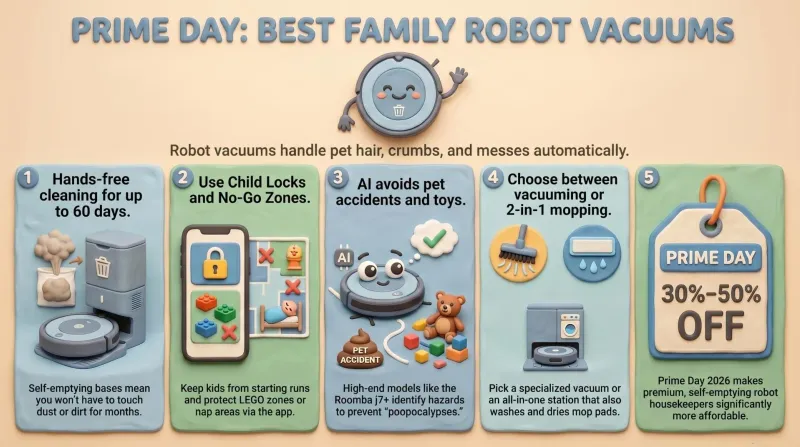
Prime Day 2026: 5 Best Robot Vacuums for Family Households
Our dad-focused Prime Day guide to the top 5 robot vacuums in 2026 that keep family homes clean – from self-emptying Roombas to powerful all-in-one stations from Shark, Dreame, and eufy.
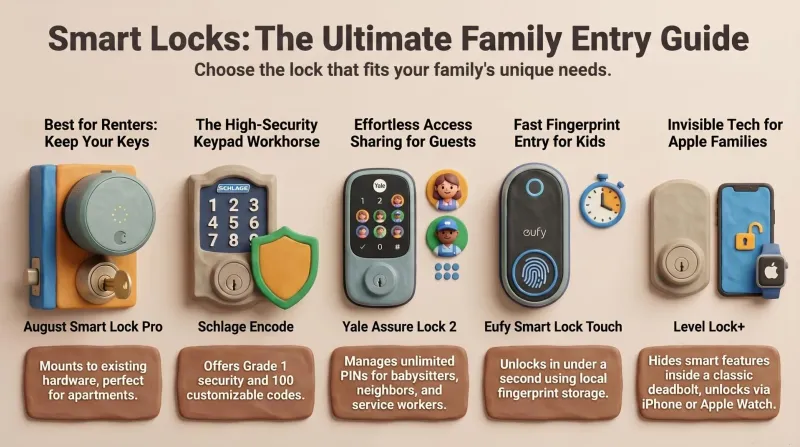
Never Get Locked Out Again: 5 Best Smart Locks for Families (Prime Day 2026)
A dad-focused guide to the best smart locks for U.S. family homes in 2026 – including August, Schlage, Yale, Eufy, and Level – with picks for renters, Apple families, fingerprint fans, and more.

Top 5 Smart Security Camera Systems for Families (2026) – Dadnology Guide
Our dad-focused guide to the 5 best smart security camera systems for U.S. families in 2026 – from Ring and Arlo to Google Nest, eufy, and Blink – with options for every budget, ecosystem, and privacy preference.