
Best PC & Gaming Upgrades for Dads (Biggest Bang for the Buck)
Limited time and budget? This dad's guide ranks the PC and gaming upgrades that actually help — storage, RAM and a great mouse beat chasing a new GPU.

This post contains affiliate links. We may earn a commission if you make a purchase, at no extra cost to you. As an Amazon Associate, Dadnology earns from qualifying purchases.
🖥️ This guide is part of our Amazon Prime Day 2026 Deals Hub — our curated buying guides of the gear actually worth a dad’s money.
The Truth Most Dads Need to Hear About Upgrades
Here’s the conversation that plays out in a thousand home offices: the PC feels slow, a game takes forever to load, and the internet whispers that the fix is a shiny new graphics card. So you spend a small fortune on a GPU, plug it in, and discover the machine still takes 40 seconds to open a project and you still have to uninstall something every time you want to try a new game. The money’s gone, and the daily frustration is exactly where it was.
This guide is for the dad with a real constraint: limited time and limited budget. You can’t spend three weekends benchmarking, and you can’t drop a month’s hobby money on a single part. You want to know the smallest amount you can spend to make the machine you already own genuinely better — for both the work it does during the day and the gaming you sneak in once the kids are asleep. That’s it. No leaderboard chasing, no future-proofing for a 4K dream you’ll never have time to enjoy.
Here’s the honest philosophy behind these picks, in proper tech-dad spirit: spend on what you feel, not on what looks impressive in a spec sheet. An SSD and more RAM transform a “slow” PC far more cheaply and dramatically than a new graphics card, because they kill the waiting — boots, loads, alt-tabbing, opening a browser with 30 tabs. And a great mouse, the thing your hand touches for hours every day, beats RGB lighting you glance at twice and forget. We’ve ranked these five upgrades in the order most dads should actually buy them. Follow the order and you’ll spend the least to fix the most.
Let’s go through them in buying order — storage first, then memory, then the peripherals you’ll actually touch every day.
1. Crucial P3 2TB NVMe SSD — The Best Overall Upgrade, Full Stop
If you do one thing after reading this guide, do this one. A big, fast NVMe SSD is the upgrade that makes the entire computer feel new — and it does it for less money than almost anything else on this list. For most dads, this is where the budget should go first, before RAM and long before a GPU.
AdCrucial P3 2TB PCIe NVMe M.2 SSD (opens in a new tab)
The best overall upgrade for most dads: cheap, huge, and the single change you feel the most all day.
What it does well
The headline isn’t a benchmark number — it’s the feeling. Your PC boots in seconds. Apps that used to make you stare at a spinning icon now snap open. And games load fast enough that the kids stop asking “is it broken?” while a level streams in. If your current drive is a spinning hard disk, or a small SSD that’s been 95% full for two years, swapping to a roomy NVMe drive is the single most dramatic upgrade available — far more noticeable than a faster processor or a new graphics card.
Then there’s the 2TB capacity, which solves a specific, infuriating dad problem: the delete-a-game-to-install-one shuffle. Modern games are 100GB-plus each. On a 500GB or 1TB drive you’re constantly uninstalling something the kids loved last month to make room for something they want this month. Two terabytes ends that. You can keep the family’s whole rotation installed — the racing game, the building game, the co-op game, the one you actually play after bedtime — and stop treating storage like a game of musical chairs.
Crucial is a Micron brand, which matters: this is one of the major memory and storage makers, not a no-name listing that vanishes after the warranty claim. The P3 is a sensible, reliable, cost-per-gigabyte champion. It’s not the fastest drive money can buy on a synthetic benchmark, and that’s exactly the point — you will never feel the difference between this and a drive that costs twice as much, but you will absolutely feel the difference between this and the drive you have now.
Where it falls short
Honesty time. The P3 is a value-tier QLC drive, so its peak sequential speeds and sustained write performance trail the flagship Gen4 and Gen5 drives the enthusiast forums obsess over. If you’re a professional editing 8K video off your boot drive all day, there are faster (pricier) options worth paying for. For literally everything a dad does — gaming, browsing, office work, family photos, the occasional video for the grandparents — that gap is invisible. The only other catch is fit: confirm your motherboard has a free M.2 slot before you buy, which takes one glance at the manual.
Who should buy it
Every dad whose PC feels slow, or whose drive is permanently full. If you’re still on a hard drive or a cramped first-gen SSD, this is the upgrade that will make you grin the first time you reboot. It’s the default recommendation, and the one most people should buy before anything else on this list.
2. Crucial Pro DDR5 32GB Kit — The Best RAM Upgrade
Once your storage is fast and roomy, the next thing dads feel is memory pressure — the stutter when you alt-tab out of a game to a browser, the slowdown when too many things are open at once. A 32GB DDR5 kit is the modern sweet spot, and it’s the second-best money you can spend.
AdCrucial Pro DDR5 32GB RAM Kit (2x16GB) (opens in a new tab)
The modern sweet spot: 32GB keeps games, Discord, a browser full of tabs and a stream open without stutter.
What it does well
32GB is the number that just works in 2026. 16GB still runs most games on its own — but the reality of a dad’s PC is never “just the game.” It’s the game, plus Discord, plus a launcher, plus a browser with a dozen tabs you forgot to close, plus maybe a Twitch stream in the corner. That’s exactly the load that pushes 16GB to its limit and produces the micro-stutters and slow alt-tabs that make a perfectly capable machine feel old. Doubling to 32GB gives you headroom for years and makes multitasking feel effortless.
Buying it as a matched 2x16GB kit matters more than people realize. Two sticks let the system run in dual-channel mode, which meaningfully improves memory bandwidth — important for gaming, where some titles are sensitive to RAM speed. A matched kit is also tested to run together at its rated speed, so you sidestep the compatibility headaches that come from mixing two random single sticks. Crucial Pro is rated, reliable memory from a major maker, with a limited lifetime warranty — the kind of part you install once and forget about.
Where it falls short
RAM is the upgrade that only helps if RAM is your actual bottleneck. If you already have 32GB, going to 64GB does nothing for gaming — that’s money lit on fire unless you’re editing heavy video or running virtual machines. The bigger gotcha is compatibility: DDR5 only works in a DDR5 motherboard. You can’t drop this into an older DDR4 board, and you’ll want to confirm the speed your board supports, then enable the XMP or EXPO profile in the BIOS so the RAM actually runs fast instead of defaulting to a sluggish base speed. None of that is hard, but skipping it means paying for speed you never switch on.
Who should buy it
The dad currently on 8GB or 16GB who notices stutter when multitasking, on a platform that supports DDR5. If your PC is fine until you open “one more thing” and then chugs, this is your fix. If you’re already at 32GB, skip this and put the money toward the mouse.
3. Razer Viper V3 Pro — The Best Gaming Mouse
Now we leave the inside of the case. Here’s the upgrade philosophy nobody markets to you: the part you physically touch for hours every day deserves real money, and the lighting you glance at twice does not. A great mouse is a daily-use upgrade in the most literal sense, and the Viper V3 Pro is the one to beat for fast-paced gaming.
AdRazer Viper V3 Pro Wireless Gaming Mouse (opens in a new tab)
The ultralight wireless esports mouse: the upgrade your hand notices every single day.
What it does well
The Viper V3 Pro is an ultralight, symmetrical wireless mouse built for one thing: getting out of your way. At well under 60 grams it’s so light that flicking and repositioning feels effortless, which is the whole point in shooters and anything that rewards quick aim. The wireless connection is a competition-grade low-latency link — this is genuinely wireless with zero feel of lag, not a budget dongle that hitches at the worst moment. The sensor is flagship-tier and tracks flawlessly, and the battery lasts long enough that charging is a once-a-week afterthought rather than a daily chore.
For a dad, the underrated win is the clean, ambidextrous shape and the lack of nonsense. No fragile flagship gimmicks, no software you have to babysit — just a precise, reliable, featherweight mouse that makes your limited gaming time feel sharper. After years of a heavy office mouse, the first session with something this light genuinely re-sells you on PC gaming.
Where it falls short
Ultralight is a preference, not a universal good. The low weight and the symmetrical, fairly flat shape suit fingertip and claw grips beautifully, but if you’re a palm-gripper with large hands, a small light mouse can feel like it’s hiding from you — that’s exactly what the DeathAdder below is for. It’s also a premium peripheral at a premium price, and the minimalist design means no thumb-rest wings or extra side buttons beyond the standard two. If you want an MMO’s worth of buttons, look elsewhere.
Who should buy it
The gaming dad who plays shooters, plays anything twitchy, or just wants the lightest, fastest-feeling mouse available — and who uses a fingertip or claw grip. If your aim feels sluggish and your current mouse feels like dragging a brick, this is the fix you’ll notice in the first ten minutes.
4. Razer DeathAdder V4 Pro — The Best Ergonomic Mouse
Not every hand wants a featherweight. The DeathAdder is the most famous shape in gaming mice for a reason — it’s the comfortable, sculpted ergonomic curve that just fits, and the V4 Pro modernizes that classic into a 56g wireless flagship. If the Viper sounds too small and flat for your hand, this is your mouse.
AdRazer DeathAdder V4 Pro Wireless Gaming Mouse (opens in a new tab)
The classic comfortable shape, now 56g and wireless — the ergonomic pick for longer hands and longer sessions.
What it does well
The DeathAdder’s whole appeal is comfort over long sessions. The right-handed ergonomic shape supports your palm and guides your grip, so a three-hour co-op night doesn’t leave your hand cramped the way a tiny flat mouse can. What’s remarkable about the V4 Pro is that Razer kept that supportive shape while dropping the weight to around 56 grams — historically the DeathAdder was the comfortable-but-heavy option, and now it’s comfortable and light. You get the same competition-grade wireless link, the same flagship sensor and the same long battery life as the Viper, just wrapped in a body built for palm grippers and bigger hands.
For a dad, this is often the smarter buy of the two mice. Most of us don’t play ranked shooters at a professional level — we play a mix of games for a couple of hours when we get the chance, and comfort matters more than shaving a gram. The DeathAdder is the mouse that’s still pleasant at hour three.
Where it falls short
The trade-off is the mirror image of the Viper’s. The DeathAdder is right-handed only — lefties are out — and its larger, sculpted body, while featherweight by its own history, is still bigger and heavier than the ultralight Viper. Twitch-aim purists who chase the absolute lowest weight will prefer the Viper. And like its sibling, it’s a premium mouse at a premium price, so it’s an upgrade you justify by how many hours your hand spends on it.
Who should buy it
The dad with larger hands, a palm grip, or who simply values comfort over the last gram of speed — especially for longer or more varied gaming sessions. If your current mouse leaves your hand aching after a long night, the DeathAdder’s shape is the cure.
5. Samsung EVO Select microSD — The Best Cheap Add-on
The smallest, cheapest upgrade on this list, and a genuinely useful one if you own a handheld or a camera. A good microSD card is pocket money that buys instant breathing room, and the Samsung EVO Select is the reliable, sensible default.
AdSamsung EVO Select microSD Card (opens in a new tab)
The cheap storage add-on for a Steam Deck, Switch, handheld or camera — tiny price, instant breathing room.
What it does well
This is the storage fix for everything that isn’t your desktop. A Steam Deck, a Nintendo Switch, a Switch 2 or any handheld fills up fast — a big microSD card lets you keep more games installed without the constant uninstall shuffle, exactly like the SSD does for your PC but for a fraction of the price. It also doubles as overflow and a spare card for a camera, so the same cheap purchase solves two problems. Samsung is a reliable maker, the EVO Select is a long-running, well-proven card, and it comes in capacities big enough that you stop thinking about storage on your handheld entirely.
The appeal here is pure value: for the price of a couple of takeaway coffees, you remove a daily annoyance from whatever device the family actually uses on the couch.
Where it falls short
A microSD card is not an NVMe SSD, and it’s important to be honest about that. It’s far slower than an internal drive, so on a desktop it’s strictly for storing games, media and backups — never as your main fast drive. Games load a touch slower from a card than from a handheld’s internal storage, which most people won’t notice but enthusiasts will. And as with any flash storage, buy from a reputable seller to avoid the counterfeit cards that plague this category. It’s a great add-on, not a substitute for the SSD at the top of this list.
Who should buy it
The dad with a Steam Deck, Switch, other handheld, or a camera that’s perpetually short on space. It’s the easiest, cheapest “yes” on this list — if you own a device that takes one, just buy it.
How They Compare: Bang for the Buck, Side by Side
The point of this table isn’t raw specs — it’s matching the upgrade to the frustration you actually have. Find your problem in the “What it fixes” row and the decision makes itself.
| Upgrade | Type | What it fixes | Difficulty to install | Best For | Verdict |
|---|---|---|---|---|---|
| Crucial P3 2TB | Storage (NVMe) | Slow boots, full drive, long loads | Easy (one screw) | Almost everyone | Buy this first |
| Crucial Pro 32GB DDR5 | Memory (RAM) | Stutter when multitasking | Easy (clip in) | Multitaskers on DDR5 | Buy this second |
| Razer Viper V3 Pro | Peripheral (mouse) | Sluggish, heavy aim | Plug and play | Twitchy gamers, claw grip | Best light mouse |
| Razer DeathAdder V4 Pro | Peripheral (mouse) | Hand cramp, long sessions | Plug and play | Palm grip, larger hands | Best comfy mouse |
| Samsung EVO Select | Storage (microSD) | Full handheld or camera | Plug and play | Steam Deck / Switch owners | Cheap easy win |
The story the table tells: the two storage upgrades and the RAM are about killing the waiting — they make the machine you own feel new. The two mice are about the thing your hand touches all day. Notice what isn’t here: a graphics card. That’s deliberate.
How to Choose: The Upgrade Order That Saves You Money
If you’ve read this far, here’s the framework — and it’s mostly about doing things in the right order.
Start with storage. If your PC feels slow or your drive is full, buy the Crucial P3 2TB SSD first. It’s the cheapest upgrade with the biggest felt improvement, full stop. Nothing else on this list moves the needle as much for as little.
Then add RAM — if you’re below 32GB and you multitask. Once the drive is sorted, a 32GB DDR5 kit is the next thing dads feel, provided your motherboard supports DDR5 and you currently have 8GB or 16GB. If you already have 32GB, skip it.
Then upgrade the mouse you touch every day. Peripherals are where comfort and feel live, and they outlast every other part — a great mouse moves to your next PC. Pick by hand: Viper V3 Pro for light and twitchy, DeathAdder V4 Pro for comfortable and ergonomic.
Add the microSD any time — it’s cheap enough to buy alongside anything else, the moment you own a handheld that takes one.
If you’re truly torn between spending on an upgrade here or saving for a new GPU: ask one question — is your game stuttering and slow to load, or is it running at a low frame rate even after it loads? Slow loads and stutter are storage and RAM problems these parts fix cheaply. A genuinely low frame rate in a demanding game is the one case for a GPU — and it should be the last thing you buy, once everything here is no longer the bottleneck.
AdCrucial P3 2TB PCIe NVMe M.2 SSD (opens in a new tab)
The best overall upgrade for most dads: cheap, huge, and the single change you feel the most all day.
The meta-advice, in proper tech-dad spirit: the GPU gets all the marketing because it’s the most expensive, most photogenic part. But for most dads, most of the time, the thing making your PC feel old is a slow, full drive and not enough memory — and those cost a fraction of a graphics card to fix.
Common Mistakes to Avoid
- Buying a graphics card first. It’s the most expensive upgrade and the one least likely to fix the actual problem — slow loads and stutter come from storage and RAM, not your GPU. Buy the GPU last, once nothing else is holding you back.
- Saving a few euros on a no-name SSD. Your data lives on this part. A cheap unknown-brand drive with mystery flash and no real warranty is a false economy. Stick to a major maker like Crucial — the price difference is small and the peace of mind isn’t.
- Ignoring RAM speed and compatibility. DDR4 and DDR5 are not interchangeable; buy the wrong type and it physically won’t fit. And if you don’t enable XMP or EXPO in the BIOS, your fast new kit runs at a slow default speed — you paid for performance you never switched on.
- Spending on RGB and skipping the mouse. Lighting is the upgrade you notice for a week. The mouse is the upgrade your hand notices every single day. Spend accordingly.
- Overbuying. 64GB of RAM and a Gen5 flagship SSD won’t make your games load faster than the sensible picks here. Buy what fixes your bottleneck, not what wins a benchmark you’ll never run.
Pros
- Cheapest upgrade with the biggest felt improvement — boots, loads and apps all get faster
- 2TB ends the delete-a-game-to-install-one shuffle for the whole family's rotation
- Crucial is a major maker (Micron) — reliable flash and a real warranty, not a no-name listing
- Excellent cost per gigabyte and dead easy to install with one screw
Cons
- Value-tier QLC drive — peak speeds trail pricier Gen4/Gen5 flagships (you won't feel it)
- Needs a free M.2 slot — check your motherboard before buying
Conclusion: The Bottom Line
After ranking five upgrades, the honest take is simple: for most dads, the biggest bang for the buck isn’t a new graphics card — it’s a big SSD and more RAM, then a mouse you actually enjoy using.
Quick recap of who each pick is for. The Crucial P3 2TB is the upgrade almost everyone should buy first — it makes the whole machine feel new for the least money and ends the storage shuffle. The Crucial Pro 32GB DDR5 kit is the next step if you’re below 32GB and multitask on a DDR5 board. The Razer Viper V3 Pro and DeathAdder V4 Pro are the daily-use peripheral upgrades — light-and-twitchy versus comfortable-and-ergonomic, pick by your hand. And the Samsung EVO Select is the cheap, easy win for any handheld or camera owner.
The Final Word: if your PC feels slow, buy the SSD first. Most dads should fix storage and RAM before they ever look at a GPU. Period.
Related Dadnology guides: Best Gaming Headsets for Dads (2026 Buyer’s Guide) · Best Game Controllers for Every Setup (2026 Buyer’s Guide) · Best Gaming Monitors for Dads (2026 Buyer’s Guide)
What is the best PC upgrade for the money?
Should I upgrade my SSD and RAM before buying a new graphics card?
Is 32GB of RAM enough for gaming in 2026?
Which Razer mouse should I buy, the Viper V3 Pro or the DeathAdder V4 Pro?
Do I need DDR5 RAM, and will any kit work in my PC?
Is a microSD card worth it for a Steam Deck or Switch?
Keep this in your inbox
One email a week: what we actually watched, built and reviewed — the stuff worth a dad's time. No hype, no daily spam.
Dadnology Weekly
One email a week: the LEGO, gaming and movie news worth a dad's time — plus what we actually reviewed. No hype, no daily spam.
Disclaimer: This review and its visuals were created with the help of AI. Some links may be affiliate links – we may earn a commission if you make a purchase, at no extra cost to you.
You might also like

Prime Day 2026: 5 Best Robot Vacuums for Family Households
Our dad-focused Prime Day guide to the top 5 robot vacuums in 2026 that keep family homes clean – from self-emptying Roombas to powerful all-in-one stations from Shark, Dreame, and eufy.
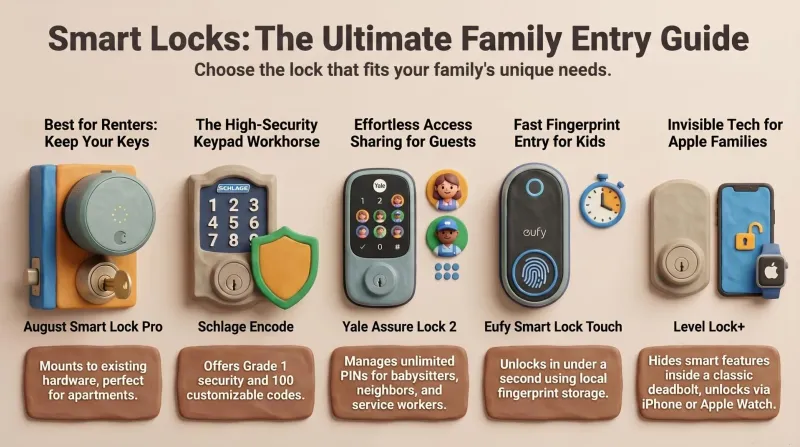
Never Get Locked Out Again: 5 Best Smart Locks for Families (Prime Day 2026)
A dad-focused guide to the best smart locks for U.S. family homes in 2026 – including August, Schlage, Yale, Eufy, and Level – with picks for renters, Apple families, fingerprint fans, and more.

Top 5 Smart Security Camera Systems for Families (2026) – Dadnology Guide
Our dad-focused guide to the 5 best smart security camera systems for U.S. families in 2026 – from Ring and Arlo to Google Nest, eufy, and Blink – with options for every budget, ecosystem, and privacy preference.