
Best Wooden & Learning Toys for Kids (Screen-Free Play)
Our dad-tested guide to the best wooden and learning toys for kids in 2026: open-ended pretend play, fine-motor skill builders, and durable picks that survive a sibling. Top pick: the Melissa & Doug Take-Along Farm.

This post contains affiliate links. We may earn a commission if you make a purchase, at no extra cost to you. As an Amazon Associate, Dadnology earns from qualifying purchases.
🧸 This guide is part of our Amazon Prime Day 2026 Deals Hub — our curated buying guides of the gear actually worth a dad’s money.
What Toys Are Actually Worth Buying?
Here is the dad reality: you walk into a toy aisle, and ninety percent of it is another flashing, beeping plastic screen-in-disguise — a toy that does the playing for your kid, runs on four AA batteries you’ll be replacing by the weekend, and is forgotten in a drawer three weeks after the unboxing. Screen-free play isn’t anti-tech snobbery — and coming from this blog, that should mean something. It’s the simple, slightly grumpy observation that open-ended wooden and learning toys out-teach and outlast the battery junk every single time. They survive a sibling. They hold genuine hand-me-down value. And they don’t try to entertain your kid into passivity.
The reason is boringly straightforward: a toy that supplies its own story, lights and sounds gives a kid nothing to do. A wooden farm or a pretend-play grill is the opposite — it’s an empty stage the kid fills with their own imagination, and an empty stage never runs out of new scenes. That’s also where the real developmental work happens. The pretend play (running a farm, flipping a burger, scooping ice cream) builds language, sequencing and social skills, while the physical handling — gripping, pinching, scooping, sorting, folding — quietly trains the fine-motor control that matters far more at this age than memorizing colors. The battery toy that “teaches” by reciting facts at a passive kid is doing the easy, useless half of the job.
And then there’s the unglamorous dad metric: durability and resale. A solid wooden toy or a well-built pretend-play set takes a beating, gets handed down from the four-year-old to the toddler, and still sells on or passes to a friend years later. That’s value the flashing plastic box can never offer — it’s landfill the moment the novelty dies. This guide is a screen-free starter list across the toddler-to-early-primary range: five toys that, between them, cover open-ended wooden play, role-play sets, gentle-electronics learning, STEM sorting, and a budget gift that punches way above its price. Every pick is judged against one honest question — will it still be played with in three weeks?
We’ve ranked these in the order most families should consider them — the broadest, most universally satisfying pick first, then the specialists. Let’s get into it.
1. Melissa & Doug Wooden Take-Along Tabletop Farm — The One That Outlasts Everything
If you buy exactly one toy off this page, make it this one. The Take-Along Farm hits the rarest sweet spot for the toddler-to-preschool years: it’s classic, open-ended wooden pretend play that asks nothing of a battery and survives being loved, chewed, dropped and inherited. It’s the toy still in the rotation when the flashing junk bought the same week is long gone.
AdMelissa & Doug Wooden Take-Along Tabletop Farm (17-Piece) (opens in a new tab)
Best overall and best wooden pretend play: a travel-friendly, battery-free farm that folds into its own carry case and survives a sibling.
What it does well
The magic is that it does nothing on its own — which is the entire point. There’s no script, no sound chip, no “right” way to play. It’s a barn, a fence, some animals and a farmer, and the kid supplies everything else: the story, the voices, the chaos of a cow that has somehow ended up on the roof. That open-endedness is what makes it last for years rather than weeks, because the play never gets “solved.” A two-year-old just makes the animals walk and moo; a four-year-old runs an entire dramatic farm soap opera. Same toy, growing with the kid.
It’s also genuinely built for real life. The 17 wooden pieces are chunky enough for toddler hands to grip — quietly training that pincer grasp — and the whole thing folds up into its own barn-shaped carry case with a handle. That travel-and-storage trick is underrated gold: it lives in a bag for the restaurant, the train, the in-laws’ house, and it packs itself away instead of becoming 17 pieces of floor shrapnel. And being solid wood, it takes the abuse and hands down beautifully — this is a toy you keep for the second kid.
Where it falls short
Let’s keep some Haltung here. It is a tabletop farm, so it’s smaller and more compact than the giant plastic playsets with ramps and barn doors that moo — if your kid’s seen those at a friend’s house, the wooden version looks understated by comparison until they actually start playing. It’s also pure imagination fuel with no built-in learning hook: it won’t teach counting or colors by name, because that’s not its job. And as quality wood goes, it’s pricier than an equivalent blow-mold plastic farm — you’re paying for the material and the longevity, which is exactly the trade this guide argues for, but it’s a real upfront cost.
Who should buy it
The dad who wants one durable, screen-free toy that travels, stores itself, grows with the kid from toddler through preschool, and survives into a younger sibling. If “I want a toy that lasts and lets my kid actually imagine, not just press buttons” describes you, this is the one built for exactly that.
2. Melissa & Doug Deluxe Wooden Barbecue Grill, Smoker & Pizza Oven — The Role-Play Showpiece
Some kids don’t want to hold a toy — they want to run something. They want a station, a job, a thing to be in charge of. For that kid, a pretend-play kitchen set is gold, and this wooden barbecue rig is the dad-coded pick: it’s a backyard cookout the kid operates, and it’s built like furniture.
AdMelissa & Doug Deluxe Wooden Barbecue Grill, Smoker & Pizza Oven (opens in a new tab)
Best pretend-play set: sturdy, role-play-rich kitchen gear that turns a tired evening into a backyard cookout the kid runs.
What it does well
This is where pretend play gets rich and sustained. A grill, a smoker and a pizza oven give a kid a whole sequence to act out — take the order, fire it up, flip the burger, plate it, serve it to a long-suffering parent — and that role-play structure builds language, turn-taking and sequencing far better than any toy that just talks at them. It’s also a brilliant shared activity: the kid cooks, you “eat,” everyone’s involved, and it turns a flat tired evening into a thing that’s actually happening in the living room.
The other standout is build quality. This is sturdy wood, not the wobbly plastic that cracks the first time a kid leans on it, so it stands up to daily use and the inevitable two-kids-fighting-over-the-spatula moment. The food and accessories are generous and tactile, the dials turn, and the whole thing has real presence — it reads as a proper toy a kid feels ownership of. That solidity is what gets it played with long-term and lets it hand down intact.
Where it falls short
It is, by design, the biggest-footprint toy here — it’s a floor-standing station, not something that folds into a bag, so you need the space and a tolerance for it living in the corner. It’s also the priciest pick on the list; this is an occasion purchase, not an impulse grab. And the appeal is real but specific: a kid who isn’t into pretend cooking won’t be sold by the build quality alone. Match it to the kid who already turns everything into a restaurant, not the one who’d rather sort and stack.
Who should buy it
The dad of a confident pretend-player (roughly 3 and up) who loves running their own world, plus the space to keep a standing set out. If your kid’s already serving you imaginary dinners on a stick, this gives that instinct a proper stage — and it’s well-built enough to survive the years and the second child.
3. LeapFrog Scoop and Learn Ice Cream Cart — Gentle Electronics Done Right
Now the honest counterpoint to the “screen-free” purism: not all electronics are battery junk. The difference between a good learning toy and landfill-with-lights is whether the electronics serve the play or replace it. The Scoop and Learn Ice Cream Cart is the good version — and the proof that this guide isn’t dogmatic.
AdLeapFrog Scoop and Learn Ice Cream Cart (opens in a new tab)
Best learning toy: gentle electronics that teach counting and colors through a scooping role-play game, not a flashing screen.
What it does well
It teaches by playing first. The core activity is scooping ice cream onto a cone and serving it — a hands-on, role-play loop a toddler instantly gets — and the gentle electronics ride on top of that: it calls out an order, names the colors and counts the scoops, so the kid practices counting, color recognition and following instructions without ever feeling lectured. The scooping itself is a genuine fine-motor workout (that twist-and-lift grip is real work for little hands). Crucially, the sounds are calm and purposeful, not a relentless arcade of beeps — it prompts and praises rather than blaring to hold attention.
It’s also a complete, self-contained little world: cart, scooper, cones and toppings all in one, with a clear scoop-serve-repeat game that gives a younger kid that satisfying sense of a task completed. For the 2-to-4 range it nails the brief of structured learning that still feels like a toy, not a tablet.
Where it falls short
It does run on batteries, and the electronics mean its play is more fixed than an open-ended wooden toy — there’s a routine to the prompts, and a kid can eventually “solve” it, so it has a shorter open-ended life than the farm. It’s plastic, so it won’t hand down with the same dignity as wood, and the calm-versus-grating verdict on the audio depends on your tolerance after the hundredth “two scoops of strawberry.” It’s the structured-skills tool in the box, not the imagination engine — buy it as a complement to the wooden picks, not a replacement.
Who should buy it
The dad who wants a genuine learning toy for the 2-to-4 range — gentle electronics that build counting and colors through play — without surrendering to the flashing-screen junk. Pair it with an open-ended wooden toy and you’ve got both halves of the toy box covered.
4. Learning Resources Rock ‘n Gem Surprise — The Sorting & STEM Itch
Some kids are collectors and categorizers by nature — the ones who line up their cars by color and lose their minds over a tray of compartments. For that kid, sorting is the play, and the Rock ‘n Gem Surprise turns that instinct into a tidy little STEM exercise with no batteries in sight.
AdLearning Resources Rock 'n Gem Surprise (opens in a new tab)
Best STEM and sorting: a sorting, matching and counting set that scratches the collect-and-categorize itch with zero batteries.
What it does well
It’s built around the developmental gold of sorting, matching and counting. Cracking open a rock to find a gem, then grouping the gems by color or shape, hits the exact satisfaction a preschooler gets from imposing order on a pile of stuff — and that sorting-and-classifying is foundational early-math and logic work, dressed up as a treasure hunt. The small pieces also demand a precise pincer grip to pick up and place, so it doubles as a fine-motor builder while the kid thinks they’re just digging for jewels.
It’s also a great calm-focus toy — the kind of quiet, absorbing, table-top activity that’s a genuine relief on an evening when you need ten minutes of concentrated play rather than a tornado. No screen, no noise, no batteries: just a kid lost in sorting. And the surprise-reveal element gives it a hook of novelty that gets a kid in the door before the sorting habit takes over.
Where it falls short
Small pieces mean it’s strictly for older toddlers and up — this is not a toy for a baby who still mouths everything, and the choke-hazard reality means it needs the right age and a bit of supervision. The collect-and-sort appeal is also a personality fit: the kid who lives to categorize will adore it, while a pure pretend-player may sort it once and drift back to the farm. And like any “surprise reveal” toy, the wow of the unboxing fades — its long-term value rests on the sorting play, so judge it on that, not the novelty.
Who should buy it
The dad of a sorter — the methodical kid (roughly 3-plus) who loves order, matching and small treasures — who wants a screen-free toy that quietly builds early-math and fine-motor skills. It’s the calm-focus, STEM-leaning pick for the toy box, and a great counterweight to the loud pretend-play sets.
5. Melissa & Doug Fill & Fold Taco & Tortilla Set — The Gift That Punches Above Its Price
Buying a toy as a gift — for a birthday party, a niece, a kid who seemingly owns everything — is its own skill, and the trick is the toy that feels generous without costing a fortune. The Fill & Fold Taco Set is the budget hero that reliably over-delivers: cheap, beloved, and weirdly one of the most-played-with toys a kid owns.
AdMelissa & Doug Fill & Fold Taco & Tortilla Set (43-Piece) (opens in a new tab)
Best budget and gift: a cheap, beloved, generous pretend-food set that lands as a present and gets played with for years.
What it does well
It is absurd value for the money. For the lowest price on this list you get a genuinely generous 43-piece set — tortillas, fillings, toppings — and the play is pure open-ended pretend food: building tacos, taking orders, running a taco stand, feeding the dog under the table. That role play builds the same language and sequencing skills the big grill does, at a fraction of the cost. The hook-and-loop fillings the kid assembles and “cuts” are also a sneaky fine-motor workout (pressing, pulling, folding), and the sheer number of pieces means endless combinations and a play life that genuinely lasts.
It’s also the perfect gift price point — substantial enough to feel like a real present, cheap enough you don’t flinch buying it for someone else’s kid, and broadly appealing enough that almost any toddler-to-early-primary kid clicks with pretend food. It stores small, travels reasonably, and because it’s a beloved staple, it’s the rare budget toy that earns its place for years rather than weeks.
Where it falls short
The flip side of “43 pieces” is 43 small pieces to lose — pretend-food sets scatter, and you will be finding a felt lettuce leaf under the sofa for months. The hook-and-loop wears over heavy use, and as a fabric-and-soft-plastic set it doesn’t have the heirloom durability of solid wood. It’s also a pure pretend-play toy with no learning hook and no showpiece presence — it’s the cheerful, reliable workhorse of the toy box, not the centerpiece. None of which matters for what it’s for.
Who should buy it
The dad (or aunt, or family friend) who needs a reliable, generous, well-priced gift that gets played with hard — or who just wants to test whether pretend food clicks for a kid before committing to the big grill. At this price it’s a no-brainer, and it lands as a present far more often than it has any right to.
How They Compare: The Toy-Box Showdown
Five toys, five completely different jobs. This is where you match the toy to your actual kid and situation — pay attention to the Material and Skills rows, because those two lines decide more about long-term play (and your wallet) than the price tag does.
| Feature | Take-Along Farm | Wooden Grill | Ice Cream Cart | Rock 'n Gem | Taco Set |
|---|---|---|---|---|---|
| Age | 2+ | 3+ | 2-4 | 3+ | 2+ |
| Skills | Imagination, fine-motor | Pretend role play, language | Counting, colors | Sorting, matching, counting | Pretend role play, fine-motor |
| Material | Solid wood | Solid wood | Plastic (batteries) | Plastic, no batteries | Fabric & soft plastic |
| Best For | Open-ended travel play | Big pretend-play station | Gentle-electronics learning | STEM-leaning sorters | Budget gift |
| Hand-me-down value | Excellent | Excellent | Fair | Good | Fair |
| Verdict | Best overall | Best role play | Best learning toy | Best STEM / sorting | Best budget / gift |
The table tells the real story: there is no single “best toy,” only the best toy for the job you’re hiring it to do and the kid you actually have. The farm is the durable, travel-anywhere imagination engine; the grill is the big role-play station for the kid who runs worlds; the ice cream cart is structured learning that still feels like play; the Rock ‘n Gem set is the calm STEM toy for the sorter; the taco set is the cheap gift that punches up. Note the hand-me-down row — that’s the column that quietly justifies spending a bit more on wood.
How to Choose: A Decision Framework
If you’ve read this far, here’s how to actually decide without standing paralyzed in the aisle (or the Prime Day cart).
Start with age. A 2-year-old wants chunky, mouth-safe, open-ended pieces — the Take-Along Farm or the Taco Set. A 3-plus kid can handle the role-play station (the grill) and the small-piece sorting of the Rock ‘n Gem set. The ice cream cart owns the 2-to-4 learning sweet spot. Matching age honestly is the single biggest factor in whether a toy gets played with or abandoned in frustration.
Then pick the skill focus. If you want pure imagination and longevity, go open-ended wooden (the farm or grill). If you want a targeted learning hook — counting and colors — the LeapFrog cart is the gentle-electronics pick. If your kid is a sorter and categorizer, the Rock ‘n Gem set turns that instinct into early-math play. Buy for the kid’s actual temperament, not the skill you wish they’d develop.
Finally, decide wood vs electronic — and don’t be dogmatic. Open-ended wooden toys win on durability, hand-me-down value and imagination, and they should be the backbone of the toy box. But a well-made learning toy with gentle electronics, like the ice cream cart, earns its spot as a complement — the structured-skills tool alongside the imagination engines. The trap isn’t electronics; it’s bad electronics that flash and beep and teach nothing. One good learning toy plus two open-ended wooden ones is a better box than five of either.
AdMelissa & Doug Wooden Take-Along Tabletop Farm (17-Piece) (opens in a new tab)
Best overall and best wooden pretend play: a travel-friendly, battery-free farm that folds into its own carry case and survives a sibling.
The meta-advice, in proper tech-dad spirit: stop buying the toy that does the playing for your kid. A toy that lights up, talks and runs its own routine leaves the child as a spectator — and a spectator gets bored and wanders off in three weeks. The toy worth your money is the one that hands the kid an empty stage and says “you do the rest.” That’s the metric. Batteries optional; imagination mandatory.
Common Mistakes to Avoid
- Buying too young or too old to look generous. A choke-hazard sorting set for a one-year-old who still mouths everything, or a tabletop farm for a kid who’s aged out of pretend play, are both money wasted. The age ranges aren’t suggestions — they’re where the toy actually clicks. Match them honestly and the toy gets played with.
- Falling for battery junk because it demos well in the store. The toy that lights up and sings in the aisle is engineered to win the five-second sell, not the five-month play. Flashing, beeping plastic that does the playing for the kid is the fastest route to a forgotten drawer. Ask what the kid actually does with it, not what it does at them.
- Equating “educational” labels with learning. A box that says STEM or “learning” on it can still be passive junk. Real learning toys make the kid do something — sort, scoop, build, count by handling. The label is marketing; the activity is the truth.
- Buying the clutter you’ll trip over in three weeks. The honest test before any purchase is “will this still be in play next month?” Open-ended toys (farm, grill, taco set) keep earning their floor space because the play never runs out; a one-trick toy gets solved and abandoned. Buy infinite-trick toys, not one-trick ones.
Pros
- Pure open-ended pretend play that grows with the kid from toddler to preschool
- Solid wood survives daily abuse, a sibling, and years of hand-me-down use
- Chunky pieces are toddler-safe and quietly train the pincer grip
- Folds into its own carry case — travels anywhere and stores itself
- No batteries, no noise, no routine to get bored of
Cons
- Tabletop scale looks understated next to giant plastic playsets
- No built-in learning hook — it's imagination fuel, not a counting lesson
- Pricier upfront than an equivalent blow-mold plastic farm
Conclusion: The Bottom Line
After lining up five very different toys, the honest take is simple: there’s no universal “best toy,” only the right tool for the job and the kid — but if you want the one that does the most for the most families, it’s the durable, open-ended wooden one.
For a screen-free toy that travels, stores itself, grows with the kid, and survives into a younger sibling, the Take-Along Farm is our overall pick. The wooden grill is the call for the big pretend-play kid; the LeapFrog ice cream cart is the rare learning toy with gentle electronics done right; the Rock ‘n Gem Surprise is the STEM-leaning pick for the sorter; and the Fill & Fold Taco Set is the budget gift that lands every time.
The Final Word: start with the open-ended wooden toy that hands your kid an empty stage — for most dads, that’s the Take-Along Farm. Add one good learning toy alongside it, and skip the flashing junk entirely.
Related Dadnology guides: Best Outdoor & Camping Gear for Families (2026 Buyer’s Guide) · Best Kitchen Tech for Family Dinners (2026 Buyer’s Guide) · Best Tablets for Family Life
What is the best wooden toy for a toddler?
Are learning toys with electronics bad?
What is the difference between wooden toys and plastic learning toys?
How much should I spend on a toy that will actually get played with?
What toys actually build fine-motor skills?
Will my kid still play with this in three weeks?
Keep this in your inbox
One email a week: what we actually watched, built and reviewed — the stuff worth a dad's time. No hype, no daily spam.
Dadnology Weekly
One email a week: the LEGO, gaming and movie news worth a dad's time — plus what we actually reviewed. No hype, no daily spam.
Disclaimer: This review and its visuals were created with the help of AI. Some links may be affiliate links – we may earn a commission if you make a purchase, at no extra cost to you.
You might also like
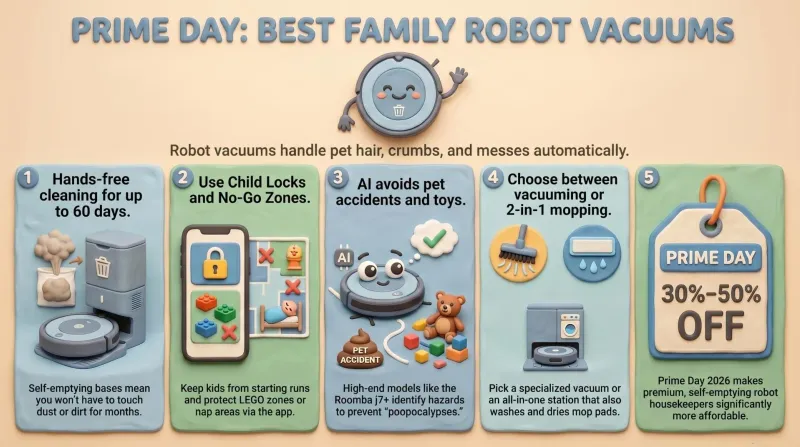
Prime Day 2026: 5 Best Robot Vacuums for Family Households
Our dad-focused Prime Day guide to the top 5 robot vacuums in 2026 that keep family homes clean – from self-emptying Roombas to powerful all-in-one stations from Shark, Dreame, and eufy.
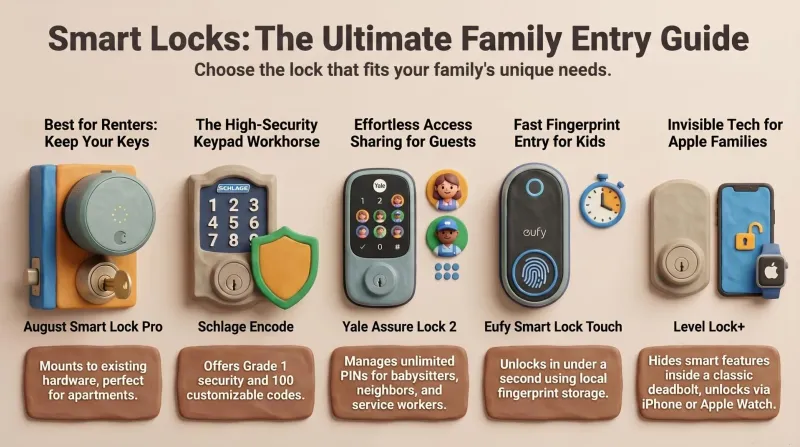
Never Get Locked Out Again: 5 Best Smart Locks for Families (Prime Day 2026)
A dad-focused guide to the best smart locks for U.S. family homes in 2026 – including August, Schlage, Yale, Eufy, and Level – with picks for renters, Apple families, fingerprint fans, and more.
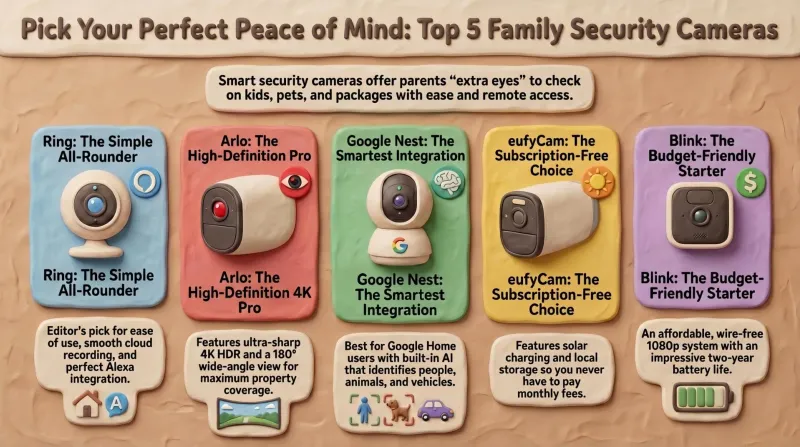
Top 5 Smart Security Camera Systems for Families (2026) – Dadnology Guide
Our dad-focused guide to the 5 best smart security camera systems for U.S. families in 2026 – from Ring and Arlo to Google Nest, eufy, and Blink – with options for every budget, ecosystem, and privacy preference.