
Best Photography Spots in the Alps & Germany: A US Traveler's Guide
The real photography spots worth the jet lag — Alps, Dolomites, Black Forest and the Baltic coast, shot on Nikon and grouped for a US road trip.
This post contains affiliate links. We may earn a commission if you make a purchase, at no extra cost to you. As an Amazon Associate, Dadnology earns from qualifying purchases.
📷 This guide is part of our Nikon Brand Hub — every Nikon Z body and lens we’ve tested, from wildlife glass to landscape and family photography kits.
I get asked some version of the same question every time someone finds out I’ve been shooting Nikon since 2009 and my camera roll is full of Alpine lakes instead of the usual capital-city landmarks: “if I only have one trip to Europe, where do I actually point the camera?” Every generic travel site gives you the same fifteen Instagram-famous names in a slideshow. This is a different list — twenty-three real photographs, shot over eight years and three camera generations, most of them with a kid somewhere nearby waiting for me to stop fiddling with a tripod.
AdNikon NIKKOR Z 14-30mm f/4 S (opens in a new tab)
The lens that shot roughly two-thirds of the photos in this guide. Compact, weather-sealed, takes standard 82mm filters — the one wide-angle lens I never left in the hotel room.

This guide is for the American planning their first serious Europe trip who wants more from it than a phone full of landmark selfies — and specifically for the dad who’s going to have a partner and kids in the back seat, not a solo three-week backpacking window. Everything here is grouped by region, because the single biggest mistake in a first Europe photography trip is treating a map like a shopping list instead of a route. I’ll tell you honestly which of these are easy family stops and which need an early alarm and a bit of hiking, and I’ll flag the one spot on this list that has genuinely gotten too crowded for its own good.
Bavaria & Tyrol: The Easy, High-Payoff First Stop
If this is your first Alps trip, start here. Everything in this section sits within roughly a two-hour drive of Munich, most of the lake viewpoints are a short, mostly flat walk from parking, and the payoff-to-effort ratio is the best on this whole list.
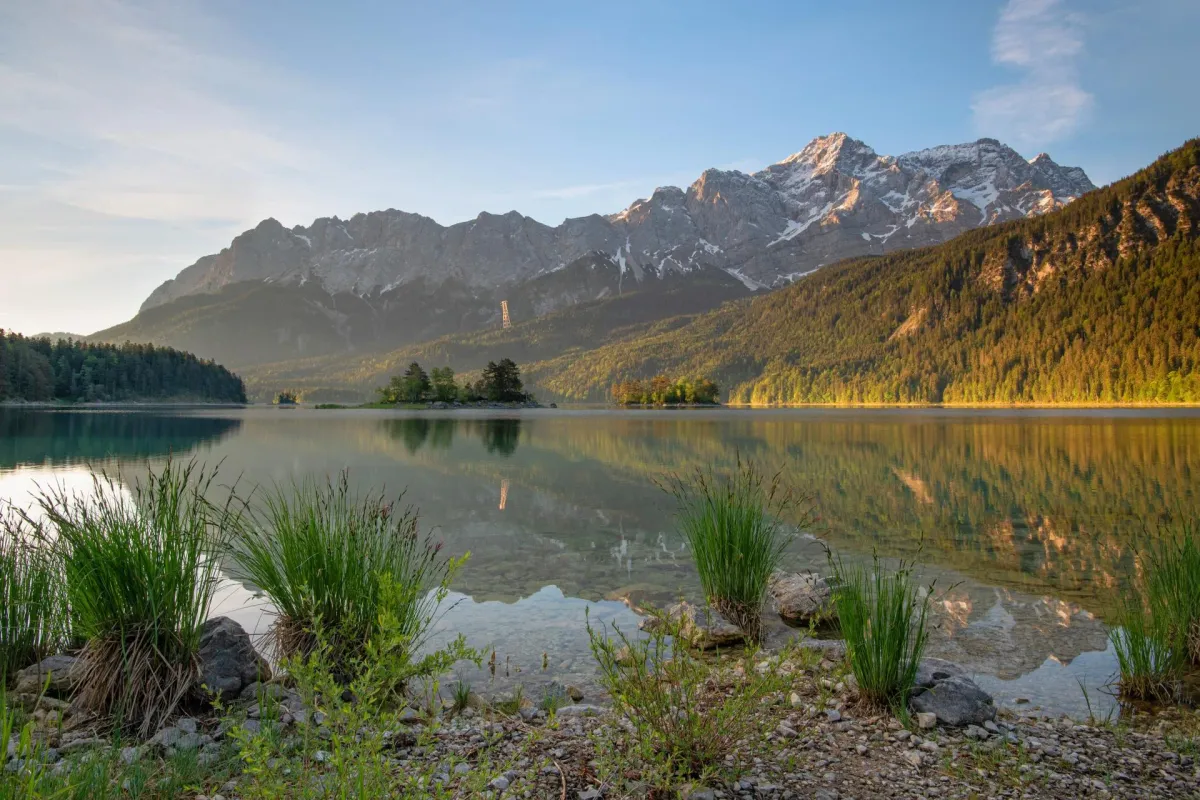
Eibsee, right at the foot of the Zugspitze, is the one I send people to first — a turquoise lake with the reflection of Germany’s highest peak sitting right in the water, and a lakeside path easy enough for a stroller on the flat sections. Hintersee and Geroldsee, both near Garmisch-Partenkirchen, are quieter and smaller, and Geroldsee in particular photographs beautifully with the Karwendel range as a backdrop — this is the “postcard Bavaria” shot people don’t realize has a name. Just over the Austrian border in Tyrol, Plansee and Heiterwanger See reward an early start with valley fog and a sunrise that turns the whole sky orange; I shot Plansee from a viewpoint above the lake, which is the better vantage if you don’t mind a short climb.
Don’t skip Neuschwanstein, even though “the fairytale castle” is the single most photographed building in Germany. The postcard view is from Marienbrücke, the bridge above the castle, and it’s worth the walk up for the reason everyone says it is — but I got a more interesting frame from a hillside further out, with both Neuschwanstein and its older neighbor Hohenschwangau in the same shot against the mountains. Down in Berchtesgaden, the little Maria Gern pilgrimage church with the Watzmann massif behind it is a five-minute stop that photographs like a much bigger production, and the Obersee, reached by a short boat ride or lakeside walk from the Königssee dock, is the most dramatic fjord-like water in Bavaria — bring a longer lens if you want the old wooden boathouse as a foreground subject.
Pros
- Shortest drive from a major international airport (Munich) of any cluster in this guide
- Most locations have flat, short, genuinely stroller-friendly access from parking
- The highest concentration of classic 'this is what I pictured' Alpine shots per day of driving
- Good backup plan when weather closes a mountain pass elsewhere — there's always another lake nearby
Cons
- Eibsee and Neuschwanstein see real tour-bus traffic in July and August — arrive at first light
- Obersee requires either an early boat or a longer lakeside walk to avoid the crowds at Königssee itself
The Dolomites: Worth the Extra Driving Day
This is the cluster that made me buy a second camera body. The Dolomites sit in Italy’s South Tyrol, a genuine detour from the Bavaria loop rather than a day trip, and they are the single most photogenic stretch of landscape on this entire list.
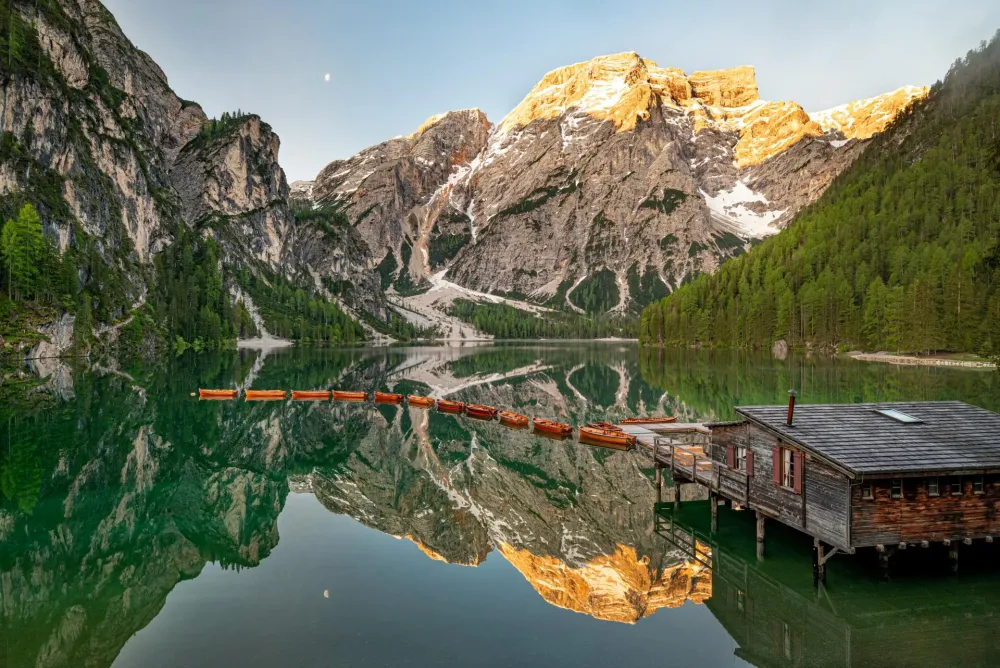
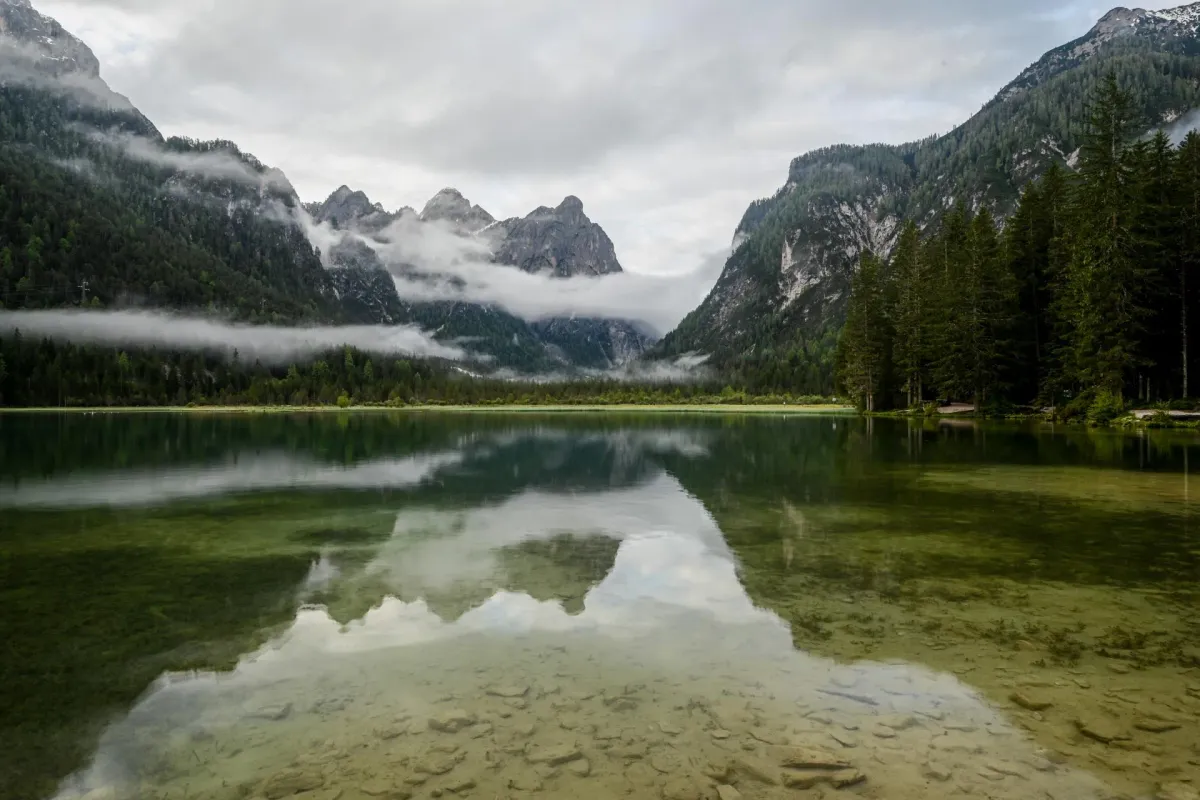
Pragser Wildsee (Lago di Braies) is the reason half the photography accounts you follow have visited South Tyrol — a row of wooden rowing boats tied at a dock, jagged peaks behind, water so still at sunrise it barely looks real. It has also become genuinely popular, so if you want the shot without fifty other tripods in frame, you need to be lakeside before sunrise, which in practice means staying nearby the night before. A short drive away, Toblacher See and Dürrensee get a fraction of the visitors and are, honestly, nearly as good — Dürrensee in particular gives you a jaw-dropping wall of the Cadini di Misurina peaks reflected in glass-flat water. Misurina, further east, adds the classic Sorapiss and Cristallo ranges to the same formula.
Nikon Z8 Body (opens in a new tab)
The endgame body for a trip like this — 45.7MP of dynamic range for blue-hour lake reflections, and a buffer deep enough to still shoot fast when a kid does something photogenic on the trail.
Budget an extra travel day for this cluster rather than trying to bolt it onto a Bavaria itinerary. The driving is genuinely mountainous, and rushing it both risks safety on unfamiliar alpine roads and defeats the point — these are sunrise locations, and a sunrise location you arrive at exhausted from a six-hour drive isn’t going to produce your best work anyway.
Hallstatt: Beautiful, But Manage Your Expectations
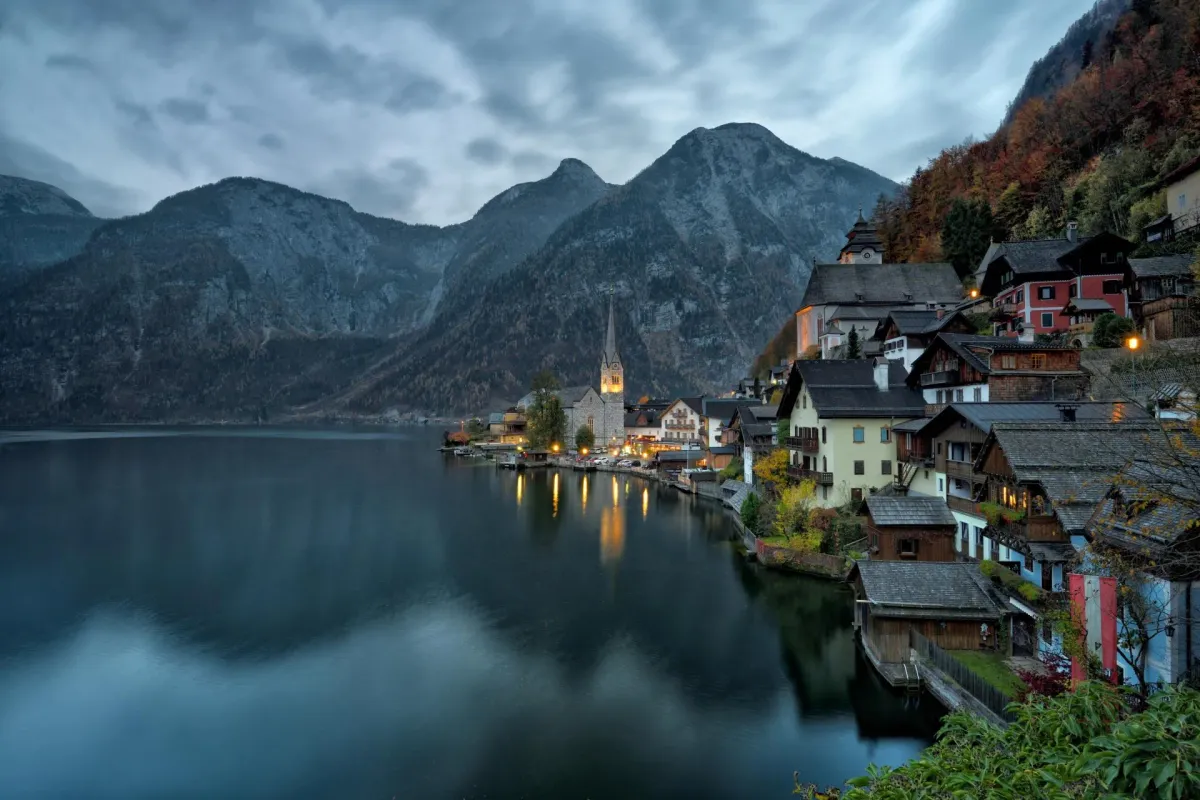
I’m putting Hallstatt in its own section because it deserves an honest flag the way most “best of Europe” lists won’t give it. The lakeside view across to the church spire, backed by the mountains of Austria’s Salzkammergut, is a genuinely gorgeous composition, and it earned its reputation honestly before it became one of the most Instagrammed villages in the world. The problem now is volume: cruise-ship day-trip buses can turn the main viewpoint into a crowd by mid-morning, which is a rough experience with kids in tow and murder for a clean photograph.
The fix is simple and worth committing to: shoot it at sunrise, or pick a shoulder-season weekday and get there before the first tour buses arrive. Get your frame in that first hour, then treat the rest of the day as wandering the village rather than fighting for a repeat of the same shot. Go in expecting a beautiful but busy place, not a hidden gem, and you won’t be disappointed.
Graubünden, Switzerland: The Reward for Going Further
Switzerland is expensive and the driving distances from a Munich-based trip are real, which is exactly why fewer people bother — and exactly why Saoseo and Palpuogna See, both in the canton of Graubünden near the Bernina Pass, are some of the least crowded shots in this entire guide. Palpuogna sits right beside a mountain road, ringed by golden larch trees in autumn, with a small rocky island that makes an obvious foreground anchor. Saoseo is a genuine reward for the drive: clear, shallow water over stones, larches turning gold, and the kind of silence you don’t get anywhere in the Dolomites cluster anymore.
If your trip has room for a genuine “off the main circuit” add-on, this is where I’d send the extra day. If it doesn’t, it’s the first thing I’d cut — the driving cost is real, and everything else on this list gets you further per hour spent behind the wheel.
The Black Forest: The Underrated Slow-Down Day
Every location so far has been about big open water and mountains. The Schwarzwald — Germany’s Black Forest, in the country’s southwest — is the opposite: dense, mossy, intimate forest photography, and I’d argue it’s the most underrated cluster on this whole list precisely because nobody puts it on a bucket list next to Neuschwanstein.
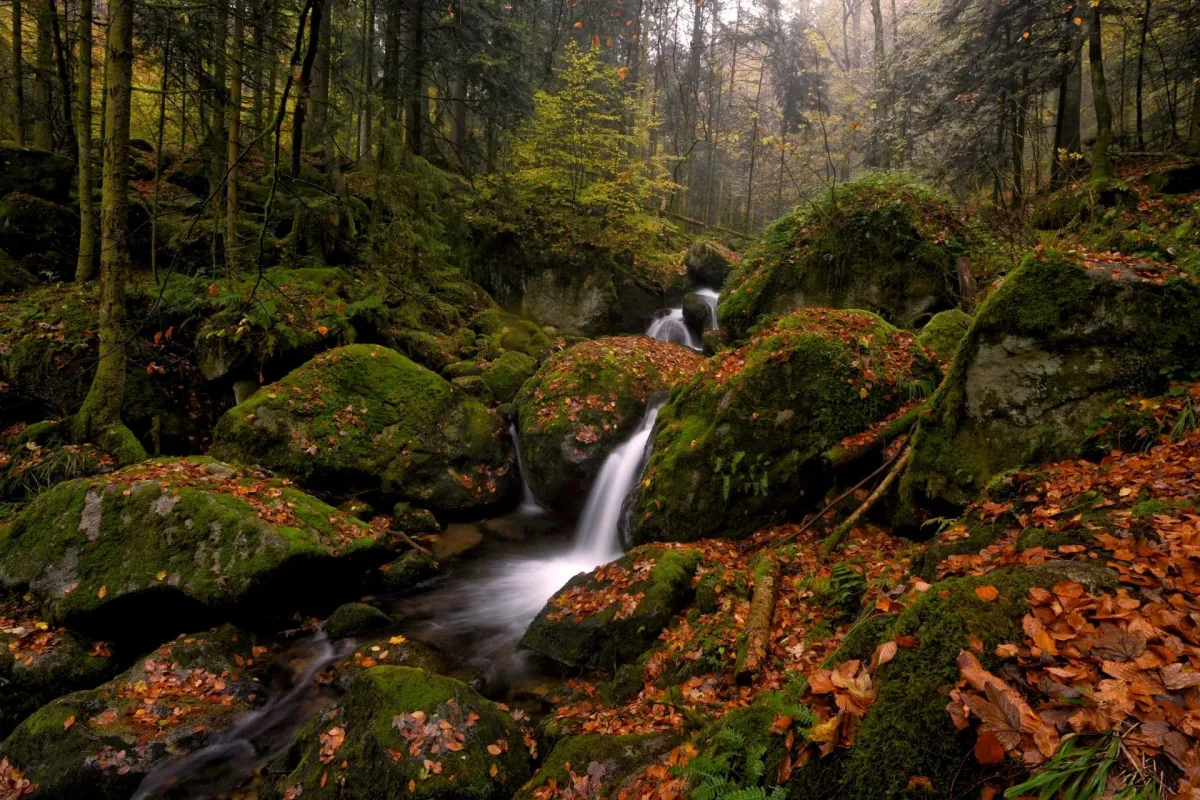
The Gertelbach waterfalls and the Krai-Woog-Gumpen pools are both short, well-marked forest walks that end at genuinely photogenic cascades over moss-covered boulders — bring the tripod, because these are slow-shutter shots by nature, water smoothed to silk over rock. Deeper in the forest, thick moss climbing straight up century-old trunks and swirling reflections in a dark, tannin-stained pool are the kind of frames that don’t photograph as “famous” but hold up as genuinely striking, moody images. This is also, practically speaking, the easiest cluster on the whole list to shoot midday — dense forest canopy means the harsh light problem that ruins an open lake shot at noon barely applies here.
Northern Germany: A Completely Different Country
If your trip includes Berlin or Hamburg rather than only Munich, it’s worth knowing the Alps aren’t the whole photographic story. The Baltic coast near Darss gives you wind-bent pine forest right up against open sand and sea — a genuinely different palette from anything in the south, especially in the low, warm light of a coastal evening. The Lüneburg Heath, a protected heathland south of Hamburg, turns a deep purple-pink in late August when the heather blooms, and a misty sunrise there with low sun cutting shafts of light through the bushes is unlike anything else on this list.
Neither of these belongs on the same trip as the Alps cluster — the driving distance makes that impractical — but if northern Germany is part of your itinerary for other reasons, both are worth an early morning.
What’s Actually In My Bag for This
I get asked this every time I post one of these shots, so here’s the honest answer rather than a marketing spec sheet. For the vast majority of the frames in this guide, I reached for the Nikon Z 14-30mm f/4 S — compact enough to travel with, weather-sealed for the mist and spray these locations throw at you, with a standard 82mm thread that takes either a quick screw-in filter or a holder system mounted via an adapter ring. Paired with either the Nikon Z8 or, for a meaningful chunk of the Dolomites and northern Germany shots, the lighter and cheaper Nikon Z5, that’s the two-item kit that did most of the actual work.
AdLeofoto LS-324CX Carbon Tripod with LH-40 Ball Head (opens in a new tab)
Long-exposure lake reflections and waterfall shots need a stable base. This is the internationally available equivalent to the Novoflex-with-ball-head kit that actually shot every long exposure in this guide.
Three more things earned a permanent spot in the bag. A compact carbon travel tripod is not optional if you want the reflections and waterfall shots in this guide — they’re long-exposure images, full stop, and you cannot hand-hold your way to them. The Haida Red Diamond M10 filter kit shot every one of them — its graduated NDs are what hold a bright sky and a dark foreground in the same frame, and the built-in CPL cut glare off nearly every lake surface here. I still carry a small Hoya screw-in polarizer in a pocket for the days I want glare control without digging the holder kit out — our filter holder vs screw-in filters guide covers exactly why both live in the bag rather than just one. And on the days I wanted a compressed, dramatic frame — an isolated ridgeline, a single beam of light through Black Forest canopy — the Nikon Z 70-200mm f/2.8 S came out, though it’s genuinely the one piece of gear you could leave home without missing the trip. The Nikon Z 24-70mm f/2.8 S is what I’d grab if I could only bring one lens — it won’t get you the widest vista, but it covers a castle courtyard, a portrait with peaks behind, and everything in between.
| What You're Shooting | Recommended Gear | Why |
|---|---|---|
| Wide lake/mountain vistas | 14-30mm f/4 S + Haida filter kit | Fits the whole scene, cuts glare off water |
| Reflections & waterfalls | Any lens + travel tripod | These are long-exposure shots by nature |
| One-lens-only travel day | 24-70mm f/2.8 S | Covers castles, portraits and general scenes |
| Compressed ridgelines/forest light | 70-200mm f/2.8 S | Isolates a subject, stacks distant light |
| Budget-conscious full-frame body | Nikon Z5 | Shot a third of this guide, holds up fine |
| No-compromise body | Nikon Z8 | 45.7MP dynamic range for blue-hour shadows |
How to Choose: Building Your Actual Route
If you have five to seven days and this is your first Europe trip, fly into Munich and do the Bavaria/Tyrol cluster plus a two- or three-day extension into the Dolomites. That’s the highest-payoff, lowest-logistics version of this whole guide.
If you have kids under six with you, lean hard toward Bavaria and Tyrol and treat the Dolomites as optional. The short, flat lake walks in Bavaria are genuinely manageable with a stroller or a tired toddler; the Dolomites mean more driving on mountain roads and earlier alarms for the best light, which gets harder fast with young kids.
If you’ve already done a “greatest hits” Europe trip and want something quieter, skip straight to Graubünden and the Black Forest. Fewer names you’ll recognize, far fewer other photographers, and honestly some of the best individual frames in this guide.
If Hallstatt is non-negotiable for your itinerary, build your schedule around being there for sunrise specifically, not “sometime during the day.” It’s the difference between the shot everyone shares and a photo of someone else’s tour group.
The Mistake Almost Every First-Timer Makes
The single biggest mistake I see in trip-planning threads is treating this like a shopping list: cramming Neuschwanstein, Hallstatt, and the Dolomites into four days because they’re all “must-sees.” Every location on this list rewards being there at the right light — usually sunrise, sometimes the last hour before sunset — and a rushed itinerary means you arrive at your golden-hour location in the middle of the afternoon, or exhausted from six hours of driving right before the one window that actually matters. Pick fewer regions and give each one an actual morning. You’ll come home with better photos from three clusters shot properly than from five clusters shot in passing.
Conclusion: Build a Route, Not a List
Twenty-three photographs, eight years, three camera bodies, and more early alarms than I’d like to admit — and the one thing I’d tell a first-time visitor above everything else is to pick a region and commit to it rather than chasing every famous name on a map. The Bavaria and Tyrol cluster is the easiest, highest-payoff place to start, and it’s genuinely family-manageable in a way the Dolomites and Switzerland aren’t. From there, add the Dolomites if you have the days, treat Hallstatt as a sunrise-only stop, and don’t skip the Black Forest just because it’s not on anyone else’s bucket list.
The Final Word: For a first Alps photography trip built around real family logistics, the Bavaria and Tyrol lake cluster is the one to build your whole route around — it earns a 5/5 for exactly what it’s asked to do.
Related Dadnology reviews: Nikon Z 14-30mm f/4 S Review · Nikon Z8 Review · Nikon Z5 Review · Best Landscape Photography Cameras 2025
What is the best time of year to photograph the Alps and the Dolomites?
Do I need a full-frame camera for landscape photography in Europe?
Is Hallstatt worth visiting for photography given how crowded it gets?
Can these photography spots be visited with young kids?
What camera gear should I pack for a two-week photography road trip through the Alps?
Should I fly into Munich or elsewhere for a trip built around these locations?
Keep this in your inbox
One email a week: what we actually watched, built and reviewed — the stuff worth a dad's time. No hype, no daily spam.
Dadnology Weekly
One email a week: the LEGO, gaming and movie news worth a dad's time — plus what we actually reviewed. No hype, no daily spam.
Disclaimer: This review and its visuals were created with the help of AI. Some links may be affiliate links – we may earn a commission if you make a purchase, at no extra cost to you.
You might also like
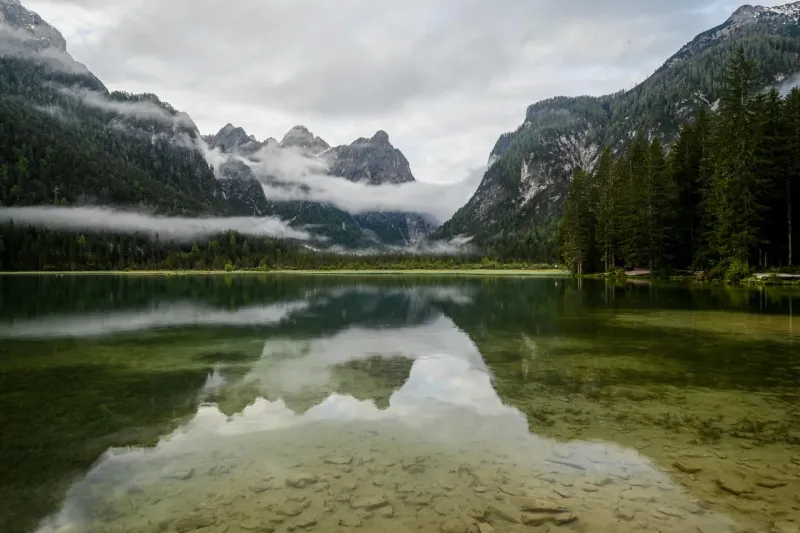
Filter Holder System vs Screw-In Filters: Why I Carry Both
Why a landscape photographer carries a 100mm holder kit AND a screw-in polarizer — what each is actually for, and when each one wins.
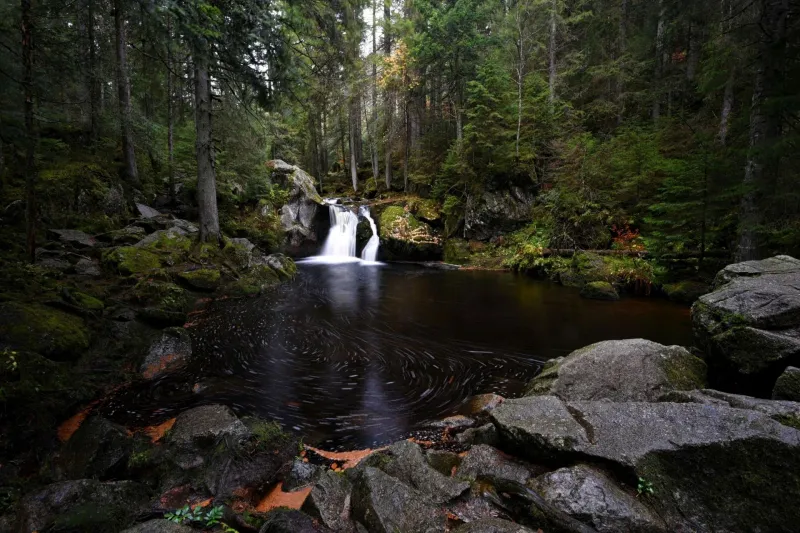
How to Shoot Long Exposure Water Photography (Real Settings)
The real camera settings behind 8 long-exposure water shots — from a 20-second glass-flat lake to a 1/15s waterfall, explained step by step.
Nikon's New Full-Frame Camera Ditches the Viewfinder Entirely
A genuinely interesting entry-level full-frame body with a real trade-off at its center. The specs are nearly identical to the Z5 II for $300 less — you're just composing every shot on the back screen, phone-style.