
Best Instant Cameras & Photo Printers for Families (2026 Guide)
Our dad-tested guide to the best instant cameras and photo printers for families in 2026, from the classic Instax to phone printers and rugged kids' cameras.
This post contains affiliate links. We may earn a commission if you make a purchase, at no extra cost to you. As an Amazon Associate, Dadnology earns from qualifying purchases.
📸 This guide is part of our Amazon Prime Day 2026 Deals Hub — our curated buying guides of the gear actually worth a dad’s money.
Real Photos in a World That Forgot to Print Them
Here is a quiet truth about modern parenting: we take more photos of our kids than any generation in history, and they see almost none of them. Thousands of pictures sit trapped in a phone, backed up to a cloud, scrolled past, and forgotten. Meanwhile the photos that actually get loved in our house are the handful of printed ones stuck to the fridge with magnets and curling at the corners. A four-year-old can’t grab a JPEG. They can grab a print, carry it around, give it to grandma, and lose it under the sofa — and that simple physical-ness is exactly what makes it special.
This guide is for the dad who wants to fix that. Maybe you want a foolproof camera that spits out a photo at a birthday party while the cake’s still on faces. Maybe you’ve got ten thousand phone photos and just want to print the good ones. Maybe you want to hand a five-year-old their first real camera that won’t shatter on the first drop. There’s a right tool for each of those jobs, and they are genuinely different tools — so we picked five, across instant film, phone printing, and rugged kids’ cameras.
Now the honest part nobody on the packaging tells you: these things cost money to feed. Instant film is the printer-ink of the photography world — the camera is cheap, the film is forever. Plan for that up front and you’ll love the result. Buy on impulse, run out of film at the party, and discover a refill costs more than you expected, and you’ll resent it. We’ll be blunt about the running cost of every single pick, because that’s the bit that actually decides whether you keep using it.
The big decision isn’t really brand — it’s how you want to make the photo: shoot-and-print on the spot, print-from-phone later, or hand it to a kid. So we’ve ranked these by the job they do best. Let’s dig in.
1. Fujifilm Instax Mini 11 — The Foolproof Family Classic
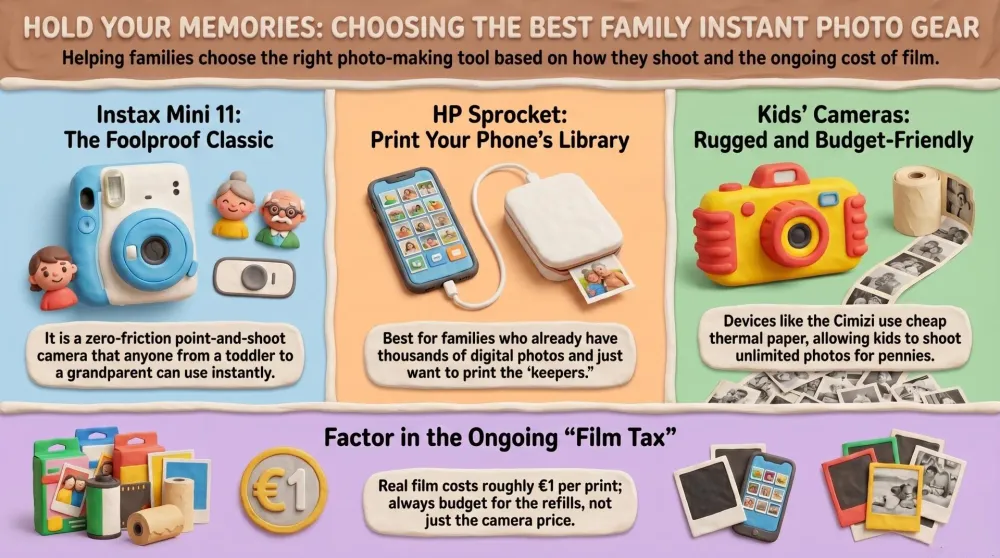
If you want one instant camera for the whole household and you don’t want to think about settings, this is the one. The Instax Mini 11 is the descendant of the camera that single-handedly brought instant photography back, and it earned that crown by being almost impossible to get wrong. Point, press, wait, and a credit-card-sized print hums out the top.
AdFujifilm Instax Mini 11 (opens in a new tab)
Best overall: the classic, foolproof instant camera the whole family loves, point-and-shoot simple with a print in seconds.
What it does well
The magic here is zero friction. There is essentially one control — you pull the lens out to switch on, and an automatic exposure system handles the rest, picking the shutter speed for you so indoor party shots and bright garden shots both come out usable. A four-year-old can operate it. So can a grandparent who refuses to learn any new technology. The built-in selfie mirror and a close-up adapter mean the kids can shoot themselves and their LEGO builds without help.
The prints themselves have that unmistakable soft, warm, slightly dreamy Instax look — not technically sharp, but full of character, and genuinely lovely as keepsakes. They’re stable for years if you keep them out of direct sun, which is what makes them worth the per-print cost. It runs on two AA batteries (no charging cable to lose), it’s light, it’s cheap, and it survives being chucked in a changing bag. As a pure “press the button, get a real photo” machine, nothing beats it for the money.
Where it falls short
The big one, and we promised to be honest: the film is the real cost. Each Instax Mini print works out to roughly a euro, give or take, which means a single birthday party can quietly burn through more money in film than the camera cost. There’s no screen, so you can’t review or delete — every shot prints, blurry or not, and that wasted film adds up. The fixed-focus lens and basic exposure mean it’s a fair-weather performer; very dim rooms will defeat it. And the prints are small. This is a fun camera, not a serious one — which is exactly the point.
Who should buy it
The family that wants instant, tactile fun at parties, holidays, and on the fridge, and accepts that film is an ongoing cost. If you want one camera anyone in the house can use, buy this and a multipack of film, and you’re done.
2. Fujifilm X Half — The Hybrid for the Keen One
This is the pick for the dad (or the photography-curious teenager) who loves the instant-film aesthetic but resents wasting film on every misfire. The X Half is a proper digital camera that captures the look, feel, and vertical half-frame format of film — but stores the shots as files, so you choose which ones become physical prints later via Instax.
AdFujifilm X Half Digital Camera (opens in a new tab)
Best hybrid/creative: a digital camera with the instant-film aesthetic, for the keen one who wants both the print and the file.
What it does well
The X Half is the thinking person’s instant camera. You get a digital sensor and a small screen, so you can shoot freely, review, and keep only the keepers — no film burned on blurry shots. It leans hard into the analog vibe with film-simulation looks and a vertical half-frame style that’s genuinely fun and a little nostalgic, and it pairs with the Instax ecosystem so you can print the shots you actually love rather than all of them. For someone who cares about how the photo looks, it’s a far more deliberate creative tool than a point-and-shoot.
It’s also the most pocketable “real camera” here, the build quality is a clear step up from the toy-ish options, and because printing is optional and curated, it can actually work out cheaper to run than a straight Instax in heavy use — you only spend on film for the photos worth keeping.
Where it falls short
It’s the most expensive pick in this guide by a distance, and it asks more of the user — there’s a learning curve, settings to understand, and a charging routine, none of which suit a toddler or a tech-averse grandparent. The instant-print “magic” is a two-step process now (shoot, then print), which loses some of the press-and-watch-it-develop wonder that makes the Mini 11 such a hit with kids. This is a camera for the enthusiast in the family, not the whole family.
Who should buy it
The keen photographer, the creative teenager, or the dad who wants the film look without the film waste and is happy to curate before printing. If you find yourself annoyed by the Mini 11 spitting out blurry rejects, this is your upgrade.
3. HP Sprocket Photo Printer — Print the Photos You Already Took
Here’s the reframe most parents need: you probably don’t have a shooting problem, you have a printing problem. You already took ten thousand great photos on your phone. The HP Sprocket exists to drag the best of them off the screen and into your hand, no new camera required.
AdHP Sprocket Photo Printer (opens in a new tab)
Best phone printer: print the photos already on your phone, pocket-sized, no special camera required.
What it does well
The Sprocket is brilliantly simple in concept: it’s a pocket-sized Bluetooth printer that pairs with your phone, you pick a photo in the app, and out comes a small sticky-backed print the kids can peel and stick on a lunchbox, a notebook, or the fridge. Because you’re choosing from photos you’ve already shot and curated, you waste almost nothing on bad frames — every print is one you actually wanted. The app lets you crop, add filters, frames, and stickers before printing, which kids love.
It charges over USB, slips into a bag, and turns “I’ll print those someday” into a ten-second job at the kitchen table. For a family with a mountain of phone photos and no instant camera, this is the most efficient way to make physical photos.
Where it falls short
It uses ZINK (zero-ink) cartridge paper, and that’s the running cost — roughly comparable per-photo to instant film, so the “free photos on my phone” feeling evaporates a bit once you’re buying paper packs. The prints are small, low-ish resolution, and the ZINK process gives slightly muted, less punchy color than a lab print; don’t expect framing-quality enlargements. And it’s a printer, not a camera — there’s no in-the-moment, press-and-it-develops thrill, which is the whole appeal of an Instax for younger kids. This is a tool for curators, not party magicians.
Who should buy it
The dad whose photos all live on his phone and who wants to print the genuine keepers without buying a separate camera. If your problem is “I have great photos nobody ever sees,” the Sprocket is the fix.
4. Cimizi Kids Instant Digital Camera — The Kid’s First Real Camera
Hand a four-hundred-euro phone to a six-year-old to take photos and you’ll age a decade. Hand them a chunky, rugged kids’ instant camera and they’ll vanish for an hour, come back grinning, and present you with forty photos of the dog’s nose. The Cimizi is built for exactly that, and it prints on the spot.
AdCimizi Kids Instant Digital Camera (opens in a new tab)
Best for kids: a rugged instant-print camera children can actually use, with cheap thermal paper they can scribble on.
What it does well
This is a proper kid-operated instant-print camera — rugged, lightweight, sized for small hands, and with a little screen so children can actually see what they’re shooting before they print. The killer feature for parents is the paper: it prints on cheap thermal paper, the same tech as a receipt printer, which costs a fraction of Instax film. That means a kid can shoot and print to their heart’s content without you wincing at the cost — they can even doodle on the prints, which they will.
It typically comes loaded with kid-friendly extras (frames, filters, sometimes simple games), takes video and photos digitally so the files are saved too, and shrugs off the inevitable drops. For unlimited, low-cost creative play, it’s hard to beat.
Where it falls short
The trade-off for cheap printing is honesty about quality: thermal prints are black-and-white-ish, low resolution, and they fade over months — treat them as disposable fun, not keepsakes. The build and image quality are toy-grade, the menus can be fiddly for the youngest kids, and battery life is modest. This isn’t a camera you’ll borrow for your own photos; it’s purpose-built for the kids, and judged on that, it nails it.
Who should buy it
Parents of roughly five-to-ten-year-olds who want to feed a budding photographer’s habit without feeding a film budget. The near-zero print cost is the whole point — let them shoot a thousand pictures and don’t think about it.
5. Careenoah Kids Instant Camera — The Toddler-Proof Gift
For the youngest hands in the house — and for the gift that actually survives until next Christmas — simplicity and indestructibility beat features every time. The Careenoah leans all the way into that, with fewer buttons, a friendly shape, and a silicone cover that absorbs the drops a toddler guarantees.
AdCareenoah Kids Instant Camera (opens in a new tab)
Best toddler-proof gift: drop-proof, dead-simple, with a silicone cover that survives the youngest hands in the house.
What it does well
This is the most drop-proof and simplest pick here, which is exactly what you want for a three-to-six-year-old. The silicone bumper cover turns the inevitable tumble off the kitchen table into a non-event, the controls are pared back so a small child isn’t overwhelmed, and like the Cimizi it prints instantly on cheap thermal paper, so running it costs next to nothing. It makes a fantastic, genuinely-used gift — the kind that doesn’t end up in a drawer by February.
It saves photos and usually video digitally too, often ships with a memory card and fun frames, and the whole thing is light enough for tiny arms. For a first camera that prioritizes survival and ease over everything else, it’s the right call.
Where it falls short
Same honesty as the Cimizi, more so: image quality and thermal prints are basic, low-res, and fade — this is a toy that takes photos, not a camera that happens to be tough. The feature set is deliberately thin, which is a plus for toddlers and a limit for older kids who’ll quickly want more control. Don’t buy this expecting to be impressed by the photos; buy it expecting your three-year-old to be delighted and the camera to still work after being thrown down the stairs.
Who should buy it
Parents and gift-givers aiming at the youngest kids, roughly three to six, who need drop-proof simplicity over everything. As a present that gets real, repeated use, it’s one of the safest bets going.
How They Compare: The Print-Tech Showdown
This is where the decision actually gets made. Watch the print tech and running cost rows especially — for most families, those two lines settle the argument faster than any feature list.
| Feature | Instax Mini 11 | Fujifilm X Half | HP Sprocket | Cimizi Kids | Careenoah Kids |
|---|---|---|---|---|---|
| Type | Instant film camera | Hybrid digital + print | Phone photo printer | Kids instant-print cam | Kids instant-print cam |
| Print tech | Instax film | Instax film (curated) | ZINK cartridge paper | Thermal paper | Thermal paper |
| Running cost | High (~€1/print) | Medium (you curate) | Medium (ZINK packs) | Very low (thermal) | Very low (thermal) |
| Best for | Whole family / parties | Keen photographer | Printing phone photos | Kids ~5-10 | Toddlers ~3-6 |
| Verdict | Best overall | Best hybrid/creative | Best phone printer | Best for kids | Best toddler-proof gift |
The table tells a clear story. If you want shoot-and-print magic for the whole family, it’s the Mini 11 — just respect the film cost. If you already have the photos and just want them printed, the Sprocket wins outright. And if it’s for a child, the thermal-paper kids’ cameras let them shoot unlimited photos for almost nothing — pick by age and durability.
How to Choose: A Decision Framework
If you’ve read this far, here’s how to decide without overthinking it. The whole thing comes down to two questions: how do you want to make the photo, and what are you willing to spend per print.
If you want instant, foolproof fun for the whole family — buy the Instax Mini 11. Press the button, watch it develop, stick it on the fridge. Just buy film in multipacks and accept that the film, not the camera, is the real cost.
If you’re a keen photographer who hates wasting film — buy the Fujifilm X Half. You shoot digitally, keep only the keepers, and print the ones that earn it. More money up front, less waste over time.
If your photos already live on your phone — buy the HP Sprocket. You don’t have a shooting problem, you have a printing one. This drags your best phone shots into the real world, sticker-backed and kid-approved.
If it’s for a child — buy a kids’ camera by age. The Cimizi for roughly five-to-ten-year-olds who want more to play with; the Careenoah for toddlers who need it drop-proof and simple. Both print on cheap thermal paper, so they can shoot all day for pennies.
AdFujifilm Instax Mini 11 (opens in a new tab)
Best overall: the classic, foolproof instant camera the whole family loves, point-and-shoot simple with a print in seconds.
The meta-advice, in proper tech-dad spirit: the running cost matters more than the sticker price. A cheap instant camera with expensive film will cost you far more over a year than a slightly pricier one you barely feed. Work out roughly how many photos you’ll actually print, multiply by the per-print cost, and that’s the number that should drive your choice. Nail that and you’ll keep using it instead of leaving it in a drawer.
Common Mistakes to Avoid
- Ignoring the film or paper cost. The camera is the cheap part. Instax film runs roughly a euro a print and a busy party can out-cost the camera; ZINK packs aren’t far behind. Always price the refills before you buy, and stock up so you don’t run dry mid-birthday.
- Buying a fragile instant camera for a toddler. A delicate Instax in three-year-old hands has a short, tragic life. For the youngest kids, durability beats image quality every time — get the silicone-covered Careenoah and save the nice camera for the grown-ups.
- Expecting photo-lab quality. None of these match a proper lab print, and instant film is deliberately soft and dreamy. If you want crisp enlargements, shoot on a real camera and order prints. These are for immediacy and the physical object, not technical perfection.
- Buying an instant camera when you really wanted a printer. If your photos already live on your phone, an instant camera just adds a second photo library. The Sprocket prints what you already have — match the tool to the job.
- Treating thermal-paper prints as keepsakes. Kids’ camera prints are fun but fade over months. Let them be disposable fridge art, and scan or reprint anything you genuinely want to keep forever.
Pros
- Genuinely foolproof — a four-year-old or a grandparent can use it
- Instant, tactile prints with a lovely warm, characterful Instax look
- Built-in selfie mirror and close-up mode the kids love
- Runs on simple AA batteries, no charging cable to lose
- Cheap, light, and robust enough for the changing bag
Cons
- Film is the real cost — roughly a euro per print, and it adds up fast
- No screen, so every shot prints whether it's good or blurry
- Basic fixed-focus lens struggles in dim rooms
Conclusion: The Bottom Line
After comparing five ways to make physical photos, the honest take is simple: the best one for you depends on how you want to make the photo and how much you’ll spend per print — but there’s a clear winner for most families.
For the shoot-and-print majority, the Instax Mini 11 is the easy call: foolproof, fun, instantly rewarding, and beloved by everyone from toddlers to grandparents — just go in knowing the film is the ongoing cost. The Fujifilm X Half is the curated, creative upgrade for the keen photographer; the HP Sprocket is the smart pick if your photos already live on your phone; and the Cimizi and Careenoah kids’ cameras let children shoot unlimited photos on cheap thermal paper without denting your budget.
The Final Word: if you want one instant camera the whole family will use, buy the Instax Mini 11 and a multipack of film, and start filling the fridge. Period.
Related Dadnology guides: Best First Cameras & Creative Tech for Kids (Screen-Free Creativity) · Best APS-C Mirrorless Cameras for Beginners (2025) · Best Entry-Level Full-Frame Mirrorless Cameras for Beginners (2025)
What is the best instant camera for families in 2026?
How much do instant cameras cost to run?
Is an instant camera or a phone photo printer better?
What is the best instant camera for young kids?
Do instant camera prints fade over time?
Should I expect photo-lab quality from these?
Keep this in your inbox
One email a week: what we actually watched, built and reviewed — the stuff worth a dad's time. No hype, no daily spam.
Dadnology Weekly
One email a week: the LEGO, gaming and movie news worth a dad's time — plus what we actually reviewed. No hype, no daily spam.
Disclaimer: This review and its visuals were created with the help of AI. Some links may be affiliate links – we may earn a commission if you make a purchase, at no extra cost to you.
You might also like
Prime Big Deal Days October 2026: What a Dad Should Actually Buy
Amazon's October sale runs 6-7 October 2026. Here is what a dad should buy, what to skip, and how to plan the two days without falling for decoy discounts.
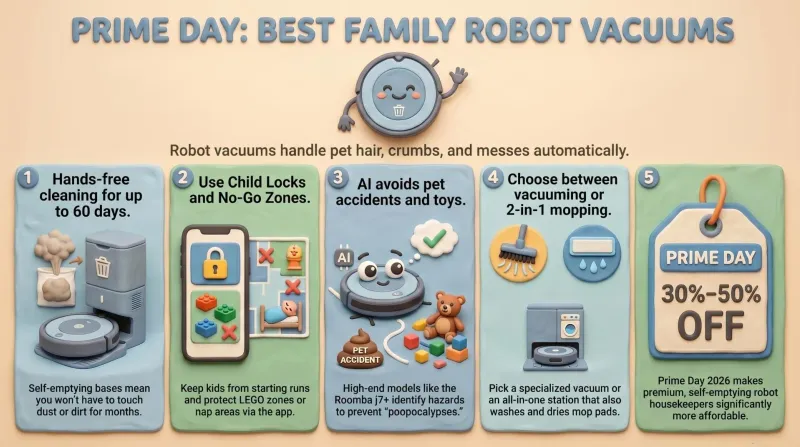
Prime Day 2026: 5 Best Robot Vacuums for Family Households
Our dad-focused Prime Day guide to the top 5 robot vacuums in 2026 that keep family homes clean – from self-emptying Roombas to powerful all-in-one stations from Shark, Dreame, and eufy.
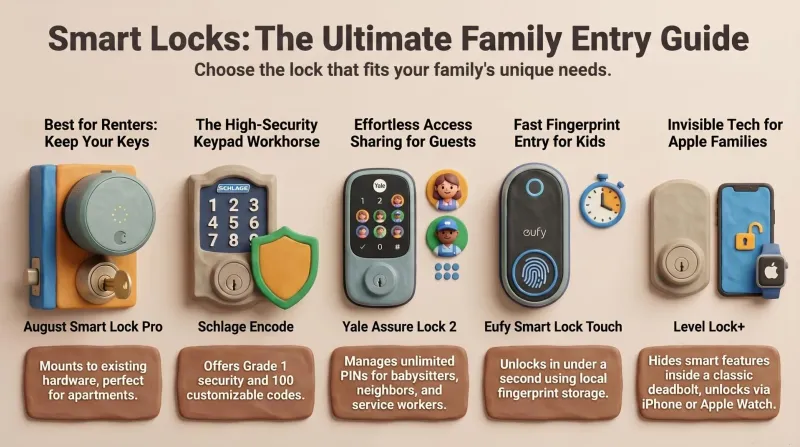
Never Get Locked Out Again: 5 Best Smart Locks for Families (Prime Day 2026)
A dad-focused guide to the best smart locks for U.S. family homes in 2026 – including August, Schlage, Yale, Eufy, and Level – with picks for renters, Apple families, fingerprint fans, and more.