
MacBook Neo review: A windows family switches to Mac
A few weeks with the MacBook Neo as our daughter's school laptop, bought by a Windows household. The switch, the Photos trick, and the cuts that are real.
This post contains affiliate links. We may earn a commission if you make a purchase, at no extra cost to you. As an Amazon Associate, Dadnology earns from qualifying purchases.
We are a windows family. This is a Mac review.
That is the context for everything below, and it is the reason this review exists at all. Our Surface Pro 9 has been the family computer for four years and is still on the kitchen table today. Nobody here was looking to leave Windows. What we needed was a second machine, because one computer shared by five people had quietly become a scheduling problem - and the person losing that competition most often was our daughter, who needed it for schoolwork on exactly the evenings everyone else did too.
So the Neo is mainly hers, and it is Blush, which was not an accident. Apple selling a cheap laptop in four actual colours instead of two shades of grey is a small thing that matters a lot when the machine belongs to a teenager.
The MacBook Neo was the answer, and I will say the surprising part immediately: the switch we were braced for did not really happen. After a few weeks it is a 5/5 in this house, and the caveat is right there in the phrase - a few weeks is a few weeks.
So let me be honest about what this review can and cannot tell you. It can tell you what the machine is like to live with, whether it is fast enough, whether the switch hurts, and which cuts you feel daily. It cannot tell you how the battery holds up in year three, whether 8GB of soldered memory ages badly, or how the hinge feels after two thousand openings. Our Surface review is what a four-year answer looks like. Come back in 2030 for this one.
The specification that matters least is the chip, which is the same A18 Pro as an iPhone 16 Pro and is comically over-qualified for homework. The one that matters most is not on the list at all, and it took a week to notice it.
The feature nobody advertises: the photos app
Here is what actually changed day to day, and it is not a spec.
Every photograph anyone in this house takes is on an iPhone. On the Surface, getting one onto the computer is a small chore - a cable, or a cloud upload, or emailing it to yourself like it is 2011. On the Neo, you open the Photos app and the photographs are simply there. All of them, at full resolution, the ones taken twenty minutes ago included.
That sounds trivial written down. In practice it removed an entire category of small daily friction. A picture of a school worksheet, a photograph of a whiteboard, a snapshot of a form that needs printing - all of it goes from phone to screen with no transfer step to think about. For a family where the phone is the camera and the scanner and the note-taker, this is the single strongest argument for putting a Mac next to the iPhones. It is also the argument Apple somehow never leads with.
The same logic runs through everything else. Something copied on the iPhone pastes on the Neo. A document started on the iPad finishes on the laptop. None of it is new to anyone who already lives in the ecosystem, and all of it is new if the computer in your house has always been the odd one out.
The switch: Easy for the family, mildly irritating for me
The prediction was that the switch would be the hard part. The prediction was wrong, and wrong in an interesting direction.
The family took to it almost immediately. Days, not weeks. That is not because macOS is simple - it is because they were already fluent in Apple. If you use an iPhone every day, you already know the settings app, the share sheet, the way apps update, what iCloud is and where files go. macOS is a bigger version of a thing they already understood, and the parts that are genuinely different are the parts they rarely touch.
The person who found it annoying was me, and for exactly the opposite reason. Twenty-odd years of Windows means a great deal of knowledge stored in reflexes rather than memory: where a setting lives, which key combination does what, how the file manager behaves, what right-click gives you. None of that is hard on a Mac. All of it is somewhere else. The result is not difficulty, it is friction - a hundred small pauses a day, each a second long, while a hand reaches for a shortcut that does something different here.
That gap closes. It closed faster than I expected. But it is worth naming clearly, because it inverts the usual advice: the more confident a Windows user you are, the more the switch will bother you, and the less confident everyone else in your house is, the less they will notice. If you are weighing this for a family, weigh it for the family and not for yourself.
Two practical things removed most of the remaining fear. Office did not go anywhere - Microsoft 365 Family runs on macOS with the same subscription, the same Word, the same Excel, so nobody had to learn a new word processor on top of a new operating system. And the Surface is still here. Having a Windows fallback in the house meant the switch never had to be a commitment, which is a much easier decision to make than a permanent one. We wrote the full version of this up separately, because it turned into more advice than fits in a review.
What it is actually for: School, research, browsing
The job is unglamorous and the Neo is comprehensively over-specified for it.
Homework, research, a browser with too many tabs, documents, video calls, and an increasing amount of study work through AI tools. The A18 Pro is the chip out of a flagship iPhone; a word processor and thirty tabs do not trouble it in any way you can perceive. In a few weeks of daily use I have not once seen it hesitate at anything the family asked of it.
The AI side works well and is worth a specific mention, because it is a real part of how school revision happens here now. Google Gemini and NotebookLM both run in the browser and both are perfectly happy on the Neo - the workflow we described in our guide to studying with NotebookLM transferred over with no changes at all. We are on the Google AI Pro plan shared through Google Family, which gives every family member their own profile under one subscription, and that arrangement is entirely independent of which computer they sit down at.
Two things punch above the price and are worth naming, because a spec sheet flattens both. The build does not feel like a budget machine - it is the same aluminium construction as the expensive Macs, with no flex in the lid and no creak in the chassis. And the speakers are genuinely good: loud enough and clear enough that streaming something in the kitchen does not immediately send you looking for a Bluetooth speaker, which is not how cheap laptops usually behave.
The battery does a school day. Apple quotes up to 11 hours of web use and 16 of video, and the web figure is the honest one to plan around - it is the number that matches what a laptop actually does. In practice it means the machine leaves in the morning and comes back without a charger, which is the only battery specification that matters to a student.
The one boundary worth stating: 8GB of memory is soldered in and cannot ever be changed. For this workload it is a non-issue. For a course that needs heavy video work, large datasets or serious code, it is the ceiling you will hit, and no amount of chip performance moves it. That is what the $1,299 MacBook Air still exists for, and our launch analysis of the Neo goes deeper into exactly where Apple made these cuts.
Photo culling, which it should not be this good at
I did not buy a $799 laptop to work on photographs. I ended up doing it anyway.
The display is the reason. At 13 inches and 2408 x 1506 with 500 nits it is sharp and bright enough to judge whether a frame is actually in focus, which is 90 percent of what culling is. Combine that with the Photos app pulling the iPhone library in automatically and the first pass through a weekend’s shooting becomes something you do on the sofa rather than something you schedule.
We added a Magic Mouse almost immediately. The Neo’s trackpad is a plain Multi-Touch pad rather than the pressure-sensitive Force Touch one from the more expensive Macs, and it is perfectly good - but clicking through several hundred images is a mouse job. We also have a Magic Trackpad in the house already, bought for the Vision Pro, and it pairs with the Neo too. The gestures make some photo work genuinely nicer. That is a first impression rather than a verdict - I have only used it briefly this way.
The honest limit is colour. The Neo’s panel is sRGB, not a wide-gamut display, and 8GB is not much memory for large raw files. Anything colour-critical still belongs on a proper desktop with a calibrated monitor. Picking keepers and making quick corrections, though, it does better than the price suggests.
The cuts, and which one you actually feel
At $799 there are compromises, and Apple made them deliberately. Most are invisible in this use case. One is not.
There is no keyboard backlighting. None, on any configuration. In daylight it is irrelevant and you forget the feature exists; in a dim room in the evening, which is when homework happens, it is a genuine irritation. It is not dramatic and it has not stopped anyone doing anything - but it is the one cut we notice weekly, and if Apple offered it as a $50 option we would have taken it without thinking.
The rest are easier to live with. The 8GB of memory is soldered, discussed above. One of the two USB-C ports runs at USB 2 speed, which matters if you move large files over a cable and matters not at all if you do not - use the other one. The trackpad is not Force Touch. The display is sRGB. There is no MagSafe.
Two things Apple did include deserve credit, both of which the more expensive Surface leaves out. There is a 3.5mm headphone jack, which after four years of hunting for a USB-C adapter on the Surface feels almost luxurious. And on the 512GB configuration - the only one that has it - there is Touch ID, which turns unlocking from a typed password into a finger on a key. On a laptop that gets opened and shut twenty times between breakfast and bedtime, that is the actual reason to spend the extra $100. The storage is a bonus.
Who the MacBook Neo is actually for
A cheap machine from an expensive company invites the wrong question, which is whether it is a real Mac. It is. The better question is who it suits, and after a few weeks the answer sorts into three groups fairly cleanly.
Students, from school to university. Office, research, video calls, presentations, streaming. The Neo has more performance than any of that asks for, and the battery covers a day away from a socket. This is the group the machine is most obviously built for, and at $699 it is the easiest recommendation on the market.
Families and occasional users. Anyone who wants a light, reliable laptop for the web, email, photos, streaming and general household admin gets a genuinely rounded package. Nothing here is a compromise version of a computer - it is a well-built machine that happens to be cheap.
Windows users curious about macOS. If you have never used a Mac and want to find out whether you get on with one, this is the cheapest honest way to do it. Not a hand-me-down, not a five-year-old refurbished machine that will give you a bad impression of the platform, but a current Mac running current software.
And who should not buy it: anyone doing professional work. Regular video editing, large photo projects, or any workload that wants real memory and storage will hit the 8GB ceiling quickly, and no amount of chip performance moves it. That is not a flaw in the Neo, it is the line Apple drew - and it is where the more expensive Air starts to make sense.
Family fit: the second computer test
The Neo was bought to solve a scheduling problem, so the fair question is whether it solved it. It did, completely and boringly, which is what success looks like here.
There are now two computers, and there are no longer negotiations about who gets one. The Neo drifted into being the machine that gets picked up, partly because it opens instantly and partly because it is light enough to move around the house. The Surface stayed the machine for anything needing Windows specifically. Nobody planned that division; it happened in about a week.
One thing that did change is where files live. OneDrive used to be the shared exchange point in this household, and with a Mac in the mix it stopped making sense as the default - iCloud does that job now. Nothing was lost and nothing broke, but if your family runs on OneDrive today, know that adding a Mac will quietly reorganise that habit.
Pros
- The Photos app puts every iPhone photo on the laptop with no transfer step - the strongest reason to add a Mac to an iPhone household
- Fast far beyond the job: the A18 Pro never hesitates at schoolwork, browsing or a browser full of tabs
- The switch from Windows is genuinely easy for anyone already using an iPhone or iPad
- Around 11 hours of real web use means it leaves in the morning without a charger
- Touch ID on the 512GB config makes a shared machine much less annoying to unlock
- It has a 3.5mm headphone jack, which the far more expensive Surface Pro does not
- The display is sharp and bright enough to make photo culling genuinely pleasant
Cons
- No keyboard backlighting on any configuration - the one cut you feel every single week
- 8GB of memory is soldered in forever, which sets a hard ceiling for heavier work
- Confident Windows users will find the first fortnight full of small friction, even though the family will not
- One of the two USB-C ports is USB 2 speed
- sRGB display and limited memory rule out serious colour work
- This is a few-weeks verdict: nothing here can speak to how it ages
Conclusion: Not a cheap MacBook. A surprisingly good inexpensive one.
The MacBook Neo is not a half-price MacBook Air. There are far too many differences for that, and anyone selling it to you on those terms is setting you up to be disappointed. It also does not need to be, and that is the whole point of it.
What $699 buys is a light, properly built laptop with genuinely good everyday performance, a convincing display, better speakers than the price suggests, and battery life that is strong for the class. The 8GB of memory, the entry model’s 256GB, the missing keyboard backlight, the absent Touch ID below 512GB and the slow second USB-C port are all real compromises rather than marketing quibbles. For ordinary daily use, not one of them is automatically disqualifying.
That is exactly what makes it interesting: it feels considerably more expensive than it is. If you are looking for a Mac for school, university, home office or normal household use, you can buy this one with a clear conscience. If your work is more demanding than that, go and look hard at what the extra money buys you in an Air, because that gap is where the Neo’s limits live.
The Final Word: Not a cheap MacBook - a surprisingly good inexpensive one, and there is a real difference between those two things.
Is the MacBook Neo good enough for school and university?
How hard is switching from Windows to Mac?
Does the MacBook Neo have a backlit keyboard?
Which MacBook Neo should I buy, 256GB or 512GB?
Can you edit photos on a MacBook Neo?
Do you lose Microsoft Office when you switch to a Mac?
Keep this in your inbox
One email a week: what we actually watched, built and reviewed — the stuff worth a dad's time. No hype, no daily spam.
Dadnology Weekly
One email a week: the LEGO, gaming and movie news worth a dad's time — plus what we actually reviewed. No hype, no daily spam.
Disclaimer: This review and its visuals were created with the help of AI. Some links may be affiliate links – we may earn a commission if you make a purchase, at no extra cost to you.
Current deals in Tech & gadgets
Verified live discounts tracked on Amazon
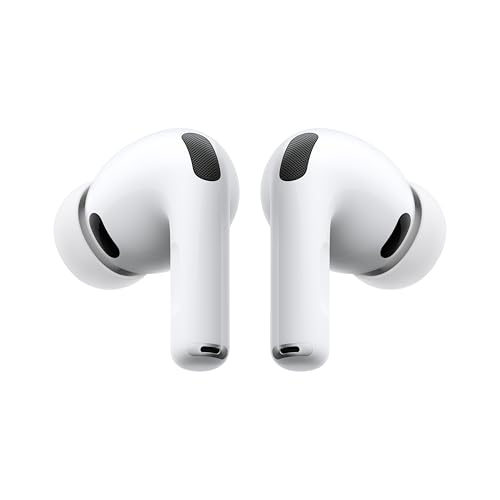
Apple AirPods Pro (3rd generation)
Delivers immersive Spatial Audio and Noise Cancellation. Ideal for privacy and focus during long editing sessions.
Price as of Oct 11, 09:14 PM UTC. Subject to change.
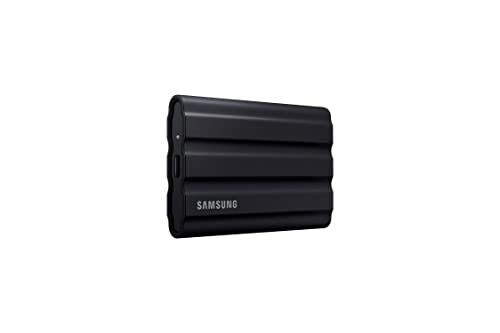
Samsung T7 Shield 2TB
Fast, rugged USB-C storage. The essential companion to avoid Apple's overpriced internal SSD upgrades.
Price as of Oct 11, 09:15 PM UTC. Subject to change.
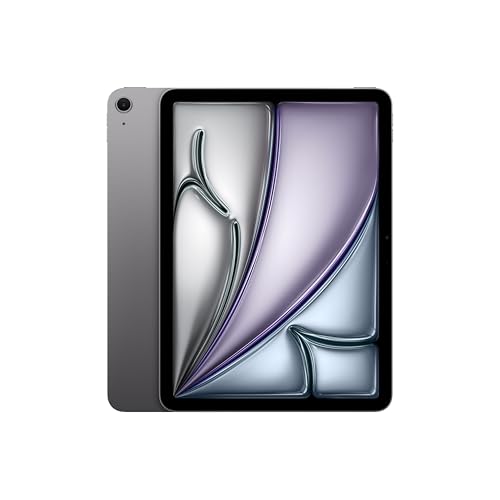
Apple iPad Air (M4, 11-inch)
Price as of Oct 11, 09:14 PM UTC. Subject to change.
You might also like
iPad air 11-inch (M4) review: The second most-used device in the house
The iPad Air 11-inch M4 is close to a perfect product: fast, light, an excellent Liquid Retina display for browsing and media, and — paired with an Apple Pencil (USB-C) — a genuinely good tool for school learning. iCloud makes it the natural second screen for photos shot on the iPhone. After the iPhone, it is the most-used device in our house. A 5/5.

Apple Watch Series 11 review: The most practical Apple product I own
The Apple Watch Series 11 is the practical, unglamorous MVP of the Apple ecosystem: notifications on your wrist from every app that matters, a silent vibrating alarm and timer, Siri-created reminders, and — with the cellular model — the freedom to leave the phone behind. The Nike Sport Loop and hybrid digital face make it comfortable and genuinely readable at a glance. Health tracking is there if you want it; for me it is the least-used feature on a watch I wear every single day.
Switching from windows to Mac: A family's honest guide
What actually changes when a Windows family adds a Mac: Office, OneDrive, the Photos advantage, and why the confident Windows user struggles most.